
Why Lake Levels Matter When Buying Waterfront Property on Lake Norman This Fall
Why lake levels matter when buying waterfront property becomes especially clear on Lake Norman in September and October. As water levels move lower, conditions that can stay hidden during higher-water months become easier to see, from dock depth and shoreline erosion to pilings, boat-lift clearance, and submerged hazards.
That makes fall more than a beautiful time to tour waterfront homes. It can be one of the most informative times to evaluate what you are actually buying.
We’re Vic and Amy Petrenko of The Petrenko Group at Premier Sotheby’s International Realty. After more than a decade working in the Lake Norman and greater Charlotte market and helping more than 158 families buy and sell homes, we’ve learned that evaluating waterfront property requires looking beyond the house itself. The dock, shoreline, water access, permits, and how the property performs when the lake is lower can matter just as much as the kitchen, floor plan, or view.
Why Do Lake Levels Matter When Buying Lake Norman Waterfront Property?
Lake levels matter because the waterfront experience you see on showing day may not represent the conditions you will have throughout the year. A dock with plenty of water during a higher-water period may have substantially less clearance when the lake is lower.
Lake Norman is a managed reservoir. Duke Energy identifies full pond as an elevation of 760 feet above mean sea level, represented as 100 feet on its lake-level gauge. Water depth changes as lake elevation changes. According to Duke Energy, even the depth of its McGuire discharge canal varies directly with Lake Norman's level. (Duke Energy)
For a waterfront buyer, that makes a simple question incredibly important:
What happens to this property when the water goes down?
You are not only buying a view. You may be buying boat access, a dock and lift, a shoreline, and a particular relationship with the lake. Those features deserve the same level of due diligence as the home.
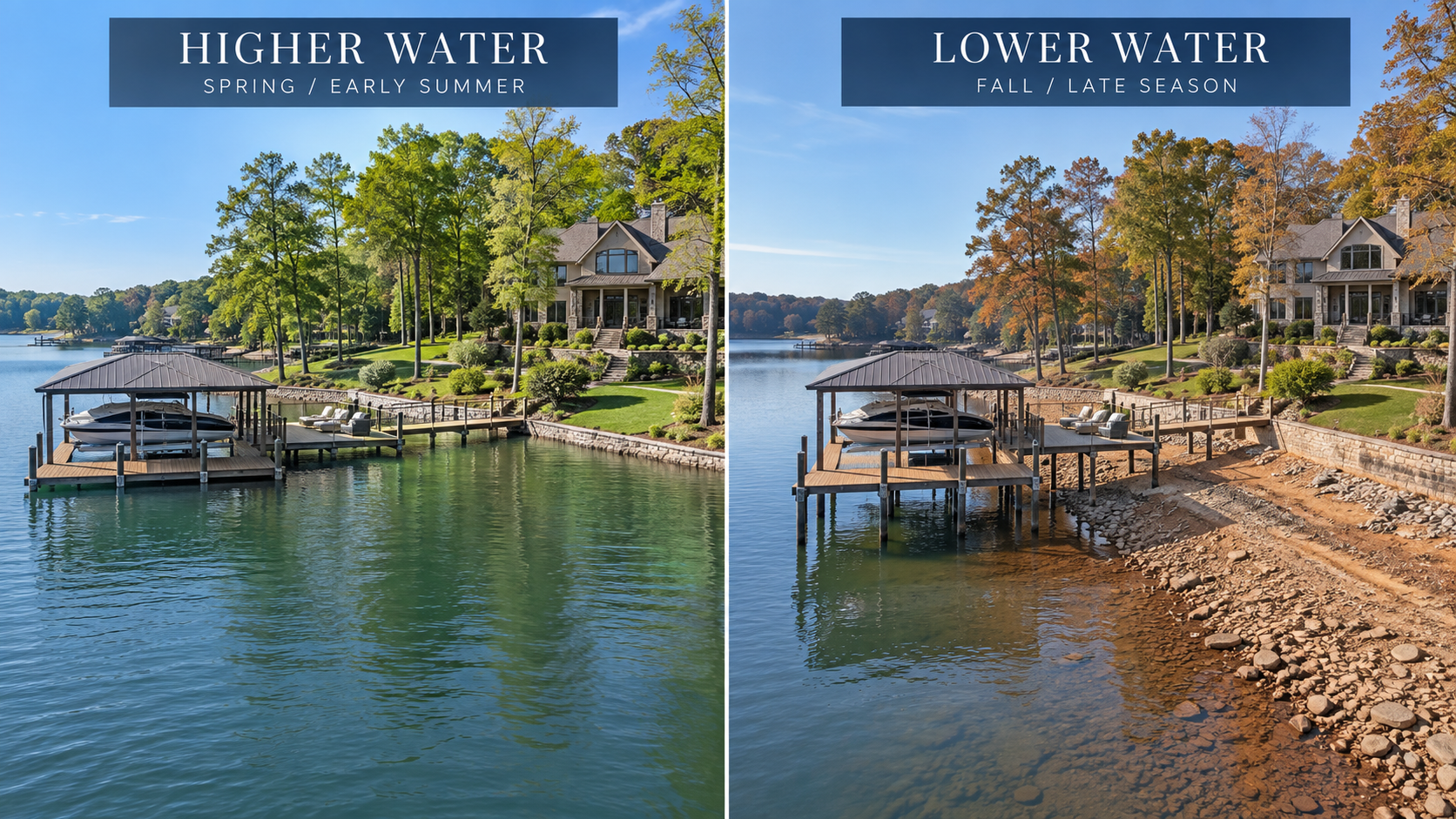
Why Is Fall a Smart Time to Evaluate a Lake Norman Waterfront Home?
Fall can give buyers a clearer look at waterfront conditions because lower water exposes portions of the property that may be hidden when the lake is higher.
In our Lake Norman fall waterfront guidance, we recommend using lower-water conditions to examine shoreline condition, dock footings and pilings, lift clearance, and the way the dock actually sits when water recedes. (The Petrenko Group)
Think about the difference between touring a house with every light on and inspecting it in daylight. Both views tell you something, but one may reveal details the other does not.
Fall can do the same thing at the waterline.
You may be able to see:
Erosion or exposed roots along the shoreline
Missing or displaced riprap
Seawall issues
Dock pilings and footings normally hidden by water
Rocks, stumps, shoals, or other underwater features
Reduced clearance around a boat lift
How shallow an approach to the dock becomes
Takeaway: Do not automatically view lower water as a negative when you're shopping. Treat it as information.
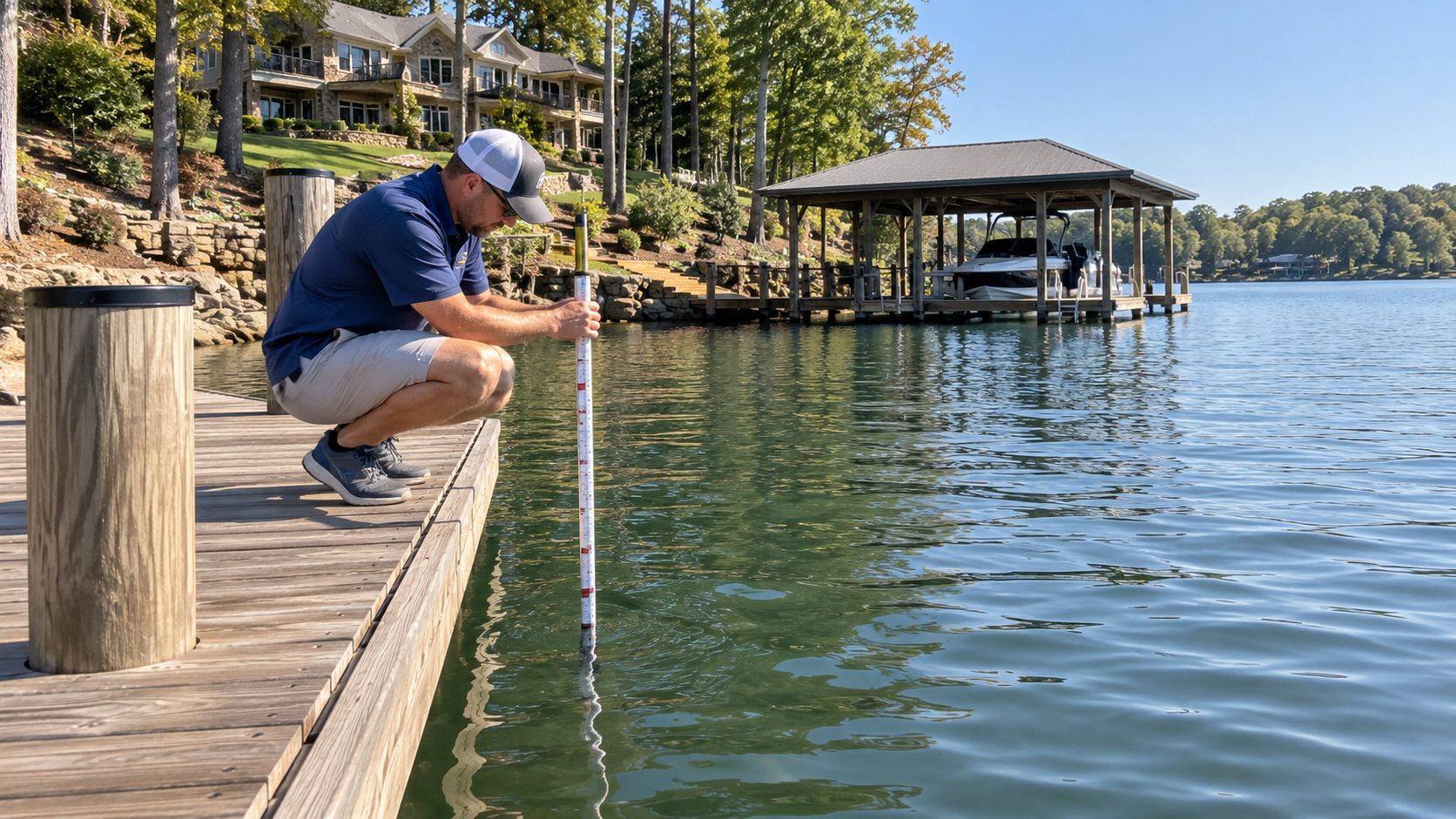
How Does a Lower Lake Level Reveal the True Water Depth at a Dock?
Lower lake levels give you a better stress test of whether a dock's water depth works for the boat and waterfront lifestyle you plan to have.
This is one of the most important distinctions we make with waterfront buyers.
There is no single ideal water-depth number for every Lake Norman property. The right amount depends on the boat, its draft, the lift configuration, the dock location, and how conditions change when the lake is lower.
A pontoon and a larger cruiser, for example, do not have identical requirements.
That is why we encourage buyers to think beyond the depth measurement taken on one particular day. You want to understand how that number relates to current lake elevation and what it could mean under lower conditions.
For a deeper discussion, read our guide on how deep the water should be at a Lake Norman dock.
The key question is not simply, “How deep is it today?”
It is, “Will this dock work for my boat when the lake is lower?”
That small change in the question can prevent a very expensive surprise.
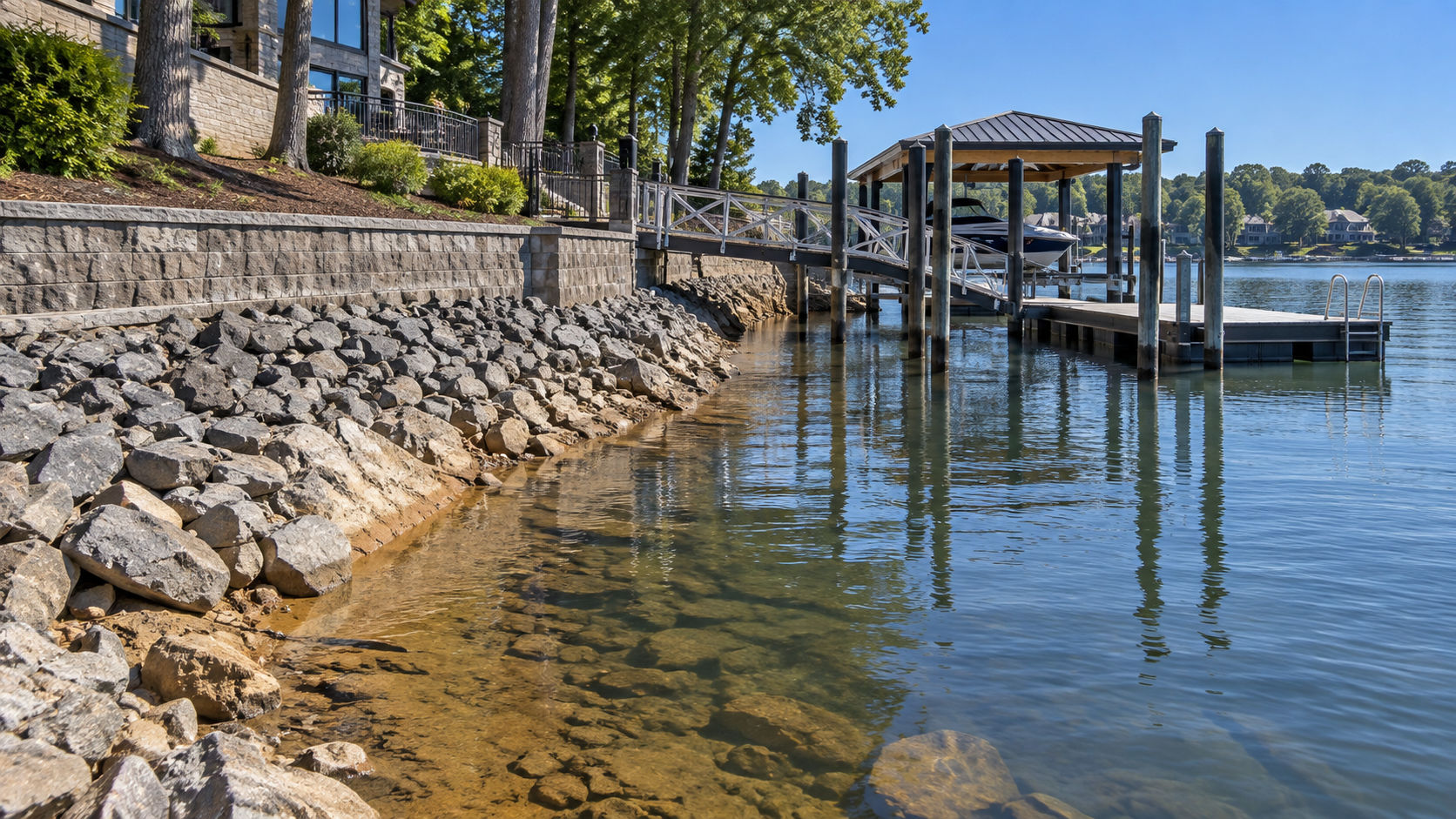
What Can September and October Lake Levels Reveal About the Shoreline?
Lower water can expose shoreline conditions that buyers cannot easily evaluate when those areas are submerged.
Walk the shoreline carefully during your showing or inspection. Look at the land immediately behind the waterline as well as the areas that have become exposed.
Pay particular attention to erosion, displaced stabilization material, exposed roots, deterioration around seawalls, and unusual changes in the bank.
This matters because your waterfront extends beyond the view from the back porch. The shoreline is part of the property's infrastructure.
Our guide to what low water levels reveal for Lake Norman waterfront buyers goes deeper into these inspection opportunities.
Duke Energy has also emphasized that shoreline structures must remain in good repair and has historically inspected piers and other structures for issues including structural failure and inadequate flotation. (Duke Energy)
If something looks questionable, investigate it rather than assuming it is cosmetic.
Could a Dock That Works in Summer Become Too Shallow in Fall?
Yes. A dock that provides comfortable access during higher water can have significantly less usable depth when lake levels fall.
This is particularly important when you're comparing a protected cove with a main-channel property.
A quiet cove can offer privacy, calmer water, and an incredible lifestyle. But two coves that look similar on a map can behave very differently when water levels drop.
The same is true of two neighboring docks.
Depth, bottom contours, sediment, the approach to the dock, and the precise location of the lot can all matter.
That is why we would never recommend choosing between a main-channel property and a cove property based solely on a label. You need to evaluate the individual property.
Our main channel vs. cove Lake Norman real estate guide explains those tradeoffs in greater detail.
The goal is not necessarily to find the deepest water on Lake Norman. It is to find water that supports the way you intend to use your property.
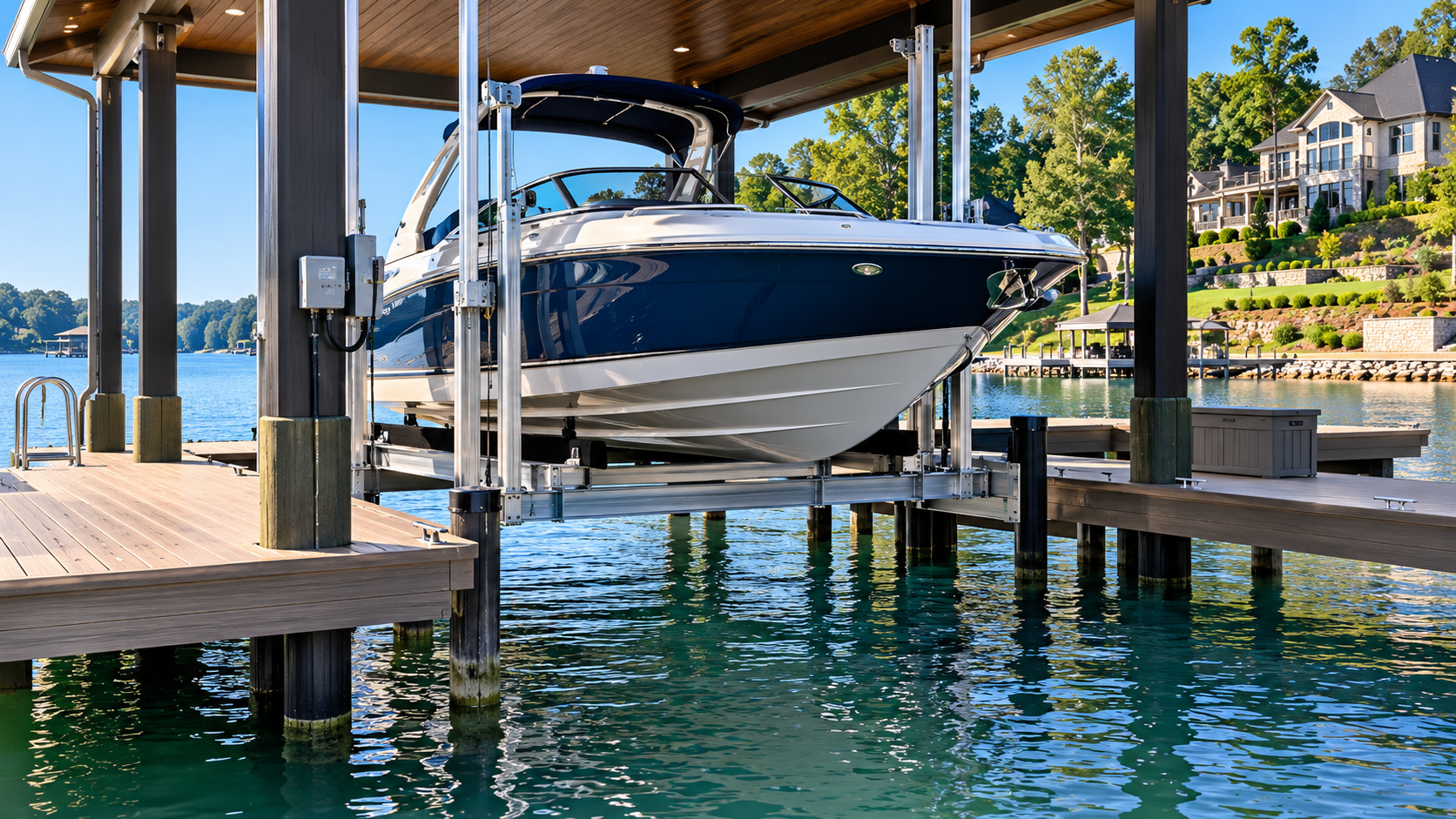
How Should Your Boat and Lift Affect the Water Depth You Need?
Your boat's draft and lift configuration should help determine how much water you need, rather than relying on a generic waterfront depth rule.
This is where buyers sometimes work backward.
They fall in love with the house first, admire the dock second, and only afterward ask whether their boat will actually work there.
We prefer to bring that question forward.
If boating is a major reason you are purchasing Lake Norman waterfront property, know your boat specifications before evaluating dock depth. If you expect to purchase a different boat in the future, consider that too.
Then examine the lift.
Does it have adequate clearance under lower-water conditions? Can the boat enter and leave comfortably? What happens along the approach to the dock?
A gorgeous dock that cannot accommodate your boating lifestyle is not necessarily an asset to you.
What Should You Inspect Around a Waterfront Property When the Lake Is Low?
Use lower-water conditions as a due-diligence opportunity and inspect the waterfront systematically, not just visually.
When we evaluate Lake Norman waterfront property with buyers, the waterfront deserves its own checklist. Important questions include:
What is the current water depth at the dock?
What is the lake elevation when that measurement is taken?
How much clearance does the boat lift have?
What does the approach to the dock look like?
Are rocks, stumps, shoals, or other hazards visible?
Are there signs of shoreline erosion?
What condition are the seawall or shoreline stabilization materials in?
What do the dock pilings and footings look like?
Are the dock and shoreline improvements properly documented?
Are there repairs or modifications that should be investigated before closing?
This is also where documentation matters.
Duke Energy's lake-management responsibilities include permitting piers, seawalls, and other shoreline activities. Do not assume that a desired dock alteration or shoreline project can automatically be completed simply because you will own the property. (Duke Energy)
Buying the house and understanding the waterfront should be part of the same due-diligence process.
How Do Lake Levels Affect Main-Channel and Cove Properties Differently?
The effect depends on the individual lot, but lower water can make differences in depth and access between main-channel and cove properties much easier to recognize.
Main-channel homes often attract buyers who prioritize open-water views and direct boating access. Cove homes may appeal to buyers who want calmer water, privacy, and less passing boat traffic.
Neither description tells you everything you need to know.
A deep protected cove may be ideal for one buyer. Another cove may become challenging for a particular boat during unusually low water. Likewise, a main-channel property may offer excellent depth but have more exposure to waves and boat traffic.
This is why we look at three things together:
Depth. Exposure. Access.
Those characteristics tell you much more about how a waterfront property will live than the words “main channel” or “cove” alone.

What Should You Ask Before Making an Offer on a Lake Norman Waterfront Home?
Before making an offer, ask questions that help you understand how the waterfront performs across different conditions, not just on showing day.
Start with the current lake elevation and dock depth. Ask about previous low-water conditions and whether the seller has photographs from those periods. Determine what boat and lift have historically been used at the property.
Then go deeper.
Ask about dock documentation, shoreline work, repairs, septic considerations where applicable, flood-zone information, and restrictions affecting the property.
And remember that fall conditions can be useful precisely because they may make some of those answers easier to verify.
One beautiful October afternoon can tell you more about a waterfront lot than a dozen listing photos taken at peak summer water.
How Can The Petrenko Group Help You Evaluate Lake Norman Waterfront Property?
Our job is to help you evaluate both the home you love and the waterfront lifestyle attached to it.
We work with buyers throughout Lake Norman, including Cornelius, Davidson, Mooresville, Huntersville, Denver, Sherrills Ford, Troutman, Terrell, Westport, and surrounding communities.
Waterfront due diligence can include factors that do not appear in a standard listing description, such as dock depth, permits, shoreline conditions, septic considerations, restrictions, and the practical usability of the waterfront.
Technology helps us organize information, research properties, communicate efficiently, and market real estate effectively. As AI Certified Agents, we use modern tools as part of that process while keeping the judgment, negotiation, local knowledge, and client relationship where they belong, with experienced professionals.
For a broader look at the process, read The Ultimate Guide to Buying a Waterfront Home on Lake Norman.
Fall Can Show You the Waterfront You Are Really Buying
Buying waterfront property on Lake Norman is different from buying a home that happens to have a beautiful backyard.
The water is part of the property experience.
September and October can give you an unusually useful window into that experience. Lower water may reveal dock limitations, shoreline conditions, lift clearance, and underwater features that are much harder to recognize at higher levels.
That does not mean every shallow cove is a problem or every deep-water property is automatically the right purchase. It means you should understand the water as thoroughly as you understand the house.
Considering a Lake Norman waterfront home? Schedule a private consultation with The Petrenko Group before you make an offer. We’ll help you evaluate the home and the water in front of it, so you can make your decision with a clearer picture of what you’re actually buying.
Frequently Asked Questions About Lake Norman Water Levels
How much do Lake Norman water levels drop in the fall?
Lake Norman's level varies with reservoir operations, weather, rainfall, and other conditions, so buyers should check the current Duke Energy lake-level information rather than assume a fixed seasonal drop. The Petrenko Group's fall guidance notes that lower autumn and winter conditions can expose shoreline and dock features that are less visible during higher water. That makes the current elevation important context for any depth measurement you take. (The Petrenko Group)
How deep should the water be at a Lake Norman dock?
There is no single depth that is right for every buyer. Your boat's draft, lift, dock configuration, approach, and lower-water conditions all affect how much depth you need. Instead of relying on one generic number, evaluate whether the dock remains functional for your specific boat when the lake is lower. Read our complete guide to Lake Norman dock water depth for more detail.
Can a waterfront dock become unusable when the lake level drops?
It can, particularly if the dock or lift has limited clearance to begin with. Lower lake levels can also make the approach to a dock more challenging by bringing rocks, shoals, or other hazards closer to the surface. That is one reason buyers should investigate lower-water performance rather than judging a dock only under favorable conditions.
Is fall a good time to buy waterfront property on Lake Norman?
Fall can be an excellent evaluation period because lower water may expose conditions around the dock and shoreline that are harder to observe at higher water. Buyers still need to consider the home, price, location, financing, inspections, and their individual goals. But from a waterfront due-diligence perspective, September and October can provide valuable information.
How can I check water depth before buying a Lake Norman home?
Start by measuring depth at relevant points around the dock and recording the lake elevation at the time of measurement. Then evaluate those numbers against your boat, lift, approach, and potential lower-water conditions. Historical photographs, seller information, professional inspections where appropriate, and current lake-level information can provide additional context. A depth number without knowing the lake level when it was measured tells only part of the story.
Sources
Duke Energy, Lake Norman full-pond elevation and relationship between lake level and water depth:
https://nuclear.duke-energy.com/2015/05/21/the-mysterious-hot-hole
Duke Energy, shoreline structures, pier inspections, seawalls, and lake-use permitting:
https://news.duke-energy.com/releases/duke-energy-carolinas-shoreline-structure-renovation-and-removal-program-moves-to-the-western-shoreline-of-lake-norman
The Petrenko Group, Fall 2026 Lake Levels and Dock Care on Lake Norman:
https://communities.thepetrenkogroup.com/blog/lake-norman-fall-2026-lake-levels-dock-guide/
The Petrenko Group, What Low Water Levels Reveal: A Lake Norman Waterfront Buyer's Guide:
https://communities.thepetrenkogroup.com/blog/evaluating-waterfront-low-water-lake-norman-buyer-guide/
The Petrenko Group, How Deep Should the Water Be at a Lake Norman Dock?:
https://communities.thepetrenkogroup.com/blog/how-deep-should-the-water-be-at-a-lake-norman-dock/
The Petrenko Group, Main Channel vs Cove Lake Norman Real Estate:
https://communities.thepetrenkogroup.com/blog/main-channel-vs-cove-lake-norman-real-estate/


