
When Selling a Lake Norman Luxury Home, Is the Highest Offer Really the Best Offer?
If you are selling a luxury home on Lake Norman, determining the strongest offer requires looking well beyond the number at the top of the contract.
A $5.2 million offer arrives on your waterfront estate. Then another buyer offers $5.1 million. At first glance, the choice appears obvious.
It may not be.
The lower offer could include a substantially larger due diligence fee, stronger financial documentation, fewer opportunities for renegotiation and a closing structure that fits your plans. The higher offer may depend on financing, appraisal, a lengthy due diligence period and a buyer who intends to revisit the condition of the house after inspections.
Luxury sellers should evaluate what an offer is likely to be worth at closing, not simply what it promises on the day it is signed.
That distinction matters on Lake Norman, where custom architecture, waterfront position, acreage, private docks, long-range views and unusual amenities can make two multimillion-dollar properties dramatically different from one another.
The market itself demonstrates that range. Lake Norman recorded 178 closings above $2 million in 2025, an increase from 152 in 2024, according to Ivester Jackson Christie's International Real Estate. In the first quarter of 2026, active luxury inventory expanded while Mooresville recorded particularly strong activity above $3 million.
At the very top of the market, Mansion Global reported a $12.5 million sale of a 4.5-acre private island on Lake Norman in June 2026. Properties at this level illustrate an important point: luxury real estate is not a commodity, and neither are the offers made on it.

What Actually Makes an Offer Strong on a Lake Norman Luxury Home?
The strongest offer combines compelling net economics with a high probability that the transaction will close on terms that work for you.
Price certainly matters. It simply cannot be considered in isolation.
The National Association of REALTORS® specifically advises sellers that financial terms, contingencies, timelines and deposits can make one offer more attractive than another, and that the strongest offer may not carry the highest purchase price.
When I evaluate competing luxury offers, I want to understand six things:
What will the seller realistically net?
How much money is the buyer willing to put at risk?
How thoroughly has the buyer demonstrated financial capacity?
How exposed is the transaction to appraisal or financing issues?
How likely is the buyer to reopen negotiations during due diligence?
How well do the closing and possession terms fit the seller's plans?
In other words, an offer has two numbers.
There is the headline value, which appears on the contract.
Then there is the risk-adjusted value, which considers what you are reasonably likely to receive after the transaction has survived due diligence, financing, appraisal and final negotiation.
For a sophisticated seller, the second number deserves just as much attention as the first.
Why Can the Highest Offer Be the Riskier Offer?
A higher purchase price can become less valuable when it comes with greater uncertainty.
Consider two hypothetical offers on a $5 million Lake Norman estate.
Offer A
$5,250,000 purchase price
Financing required
Long due diligence period
Relatively modest due diligence fee
Appraisal exposure
Several requested concessions
Buyer appears highly inspection-sensitive
Offer B
$5,125,000 purchase price
Strong proof of funds
Meaningful due diligence fee
Shorter due diligence period
Limited financing uncertainty
Clean closing terms
Buyer demonstrates realistic expectations about the property's condition
Offer A begins $125,000 ahead.
But is it actually worth $125,000 more?
Not necessarily.
If Offer A creates a meaningful probability of a $75,000 repair request, a valuation dispute, an extension or a failed transaction that puts the house back on the market several weeks later, the difference becomes much less compelling.
This is why luxury offer analysis should not be reduced to a spreadsheet sorted from highest price to lowest.
Price tells you what the buyer would like to pay. Terms tell you how serious the buyer is about actually getting there.
How Should Known Repairs or Deferred Maintenance Affect Which Offer You Accept?
If you already know your luxury home has aging systems or deferred maintenance, you should consider how likely each buyer is to turn those issues into a second negotiation.
A luxury home does not need to be new to be exceptional.
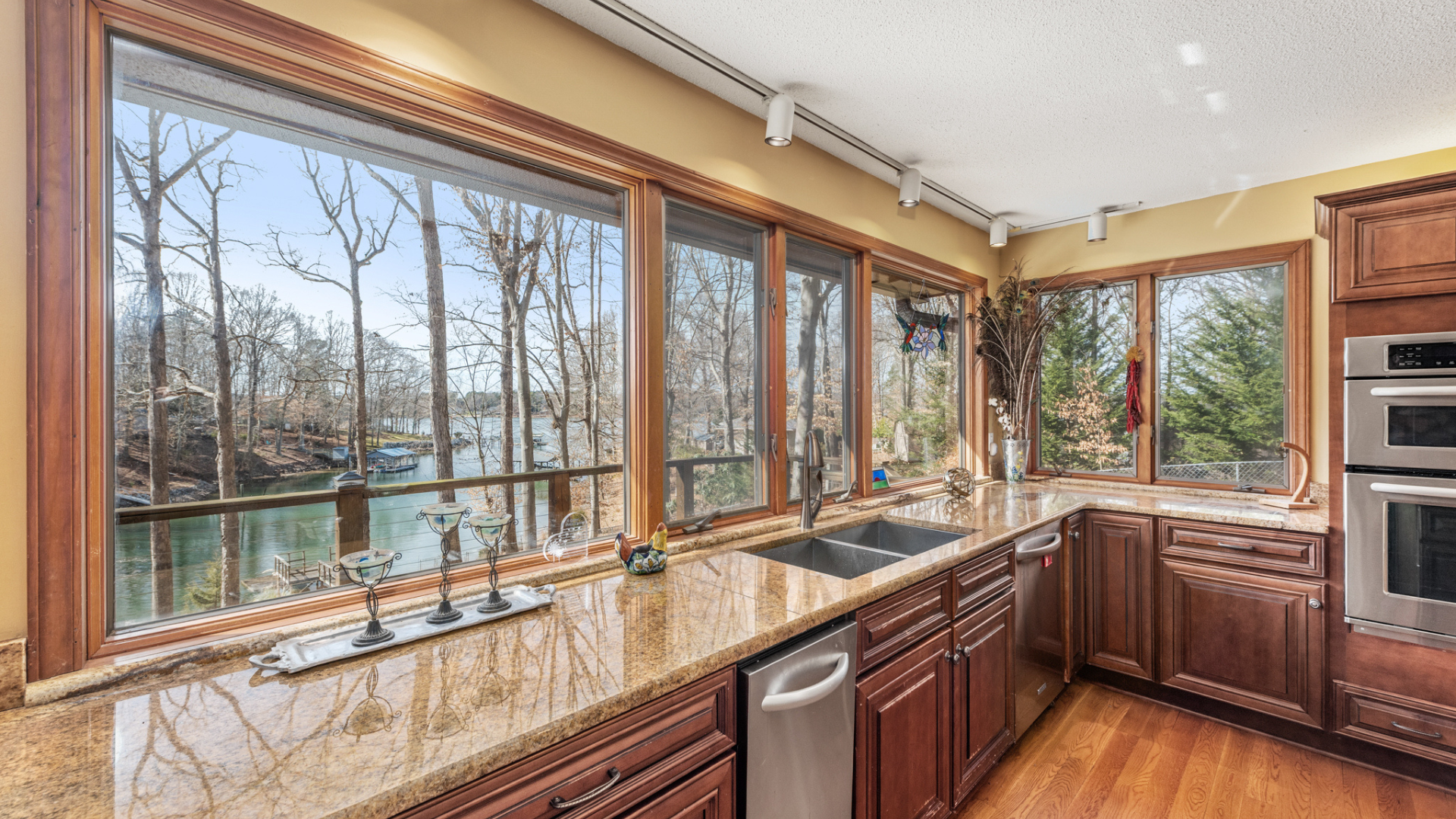
Perhaps you already know that several windows will eventually need replacement. Maybe one HVAC system is approaching the end of its useful life. The refrigerator may be older. A pool component may eventually need attention. There might be exterior woodwork, roofing, mechanical equipment or another capital item that a future owner will likely address.
Those conditions may already be reflected in your expectations for the property.
The question is whether the buyer understands that too.
Inspections are designed to help buyers understand the condition of a property, and contractual structures can allow issues uncovered during an inspection period to become part of subsequent discussions.
That leads to one of the most important questions I would ask when evaluating a luxury offer:
How likely is this buyer to negotiate the house twice?
The first negotiation determines the contract price.
The second can occur after inspections.
Suppose one buyer offers $100,000 more than another, but that buyer has committed relatively little money during due diligence and appears likely to revisit every aging system in the house.
A slightly lower buyer may understand that they are purchasing a substantial residence with substantial systems, accept the home's existing condition more realistically and place significantly more money at risk.
That difference matters.
In luxury real estate, the strongest offer is not simply the one that wins the first negotiation. It is often the one least likely to require a second one.
This does not mean sellers should conceal known material defects or assume a buyer will ignore legitimate concerns. Disclosure obligations and contractual requirements must always be handled properly, with appropriate real estate and legal guidance.
It means the seller should evaluate the buyer's expectations, commitment and contractual position before removing an important property from active competition.
How Much Should the Due Diligence Fee Matter When You Take a Luxury Home Off the Market?
The due diligence fee remains one of the most important measures of buyer commitment in a North Carolina offer, particularly when you are removing a multimillion-dollar property from the market.
Under the revised 2026 North Carolina Form 2-T, the due diligence fee remains due to the seller on the Effective Date. However, beginning with the July 2026 form changes, the buyer has until the end of the next banking day following the Effective Date to deliver it before being considered in breach.
The revised contract also gives sellers an important new protection. A seller may limit or deny the buyer physical access to the property until the due diligence fee has been delivered. The change was intended to address situations in which buyers began inspections before paying the agreed fee and then terminated the contract.
For a luxury seller, that makes the mechanics of the offer worth examining almost as carefully as the amount itself.
You should consider:
How much is the due diligence fee?
How quickly must it be delivered?
How long is the due diligence period?
How much market exposure are you giving up?
How much inspection and renegotiation risk exists?
What financial commitment does the buyer actually have at stake?
If your home is attracting serious interest, accepting an offer means temporarily stepping away from other potential buyers. That commitment should not be taken lightly.
What About Proposals to Change How North Carolina Due Diligence Money Is Handled?
There has been continuing discussion around North Carolina’s unusual due diligence structure, and legislation has been introduced seeking changes to how much sellers may require. For example, Senate Bill 453 proposed limiting due diligence funds to 1% of the purchase price, although that proposal should not be confused with current contract requirements.
I have not found an authoritative current 2026 source confirming that North Carolina has adopted a requirement for due diligence fees to be held by the closing attorney. The current Form 2-T guidance continues to treat the due diligence fee as money due to the seller, while earnest money is the amount typically held in escrow.
If that structure changes in the future, sellers will need to reconsider how they interpret due diligence money as a measure of buyer commitment.
For now, I would keep the blog precise:
The rules surrounding due diligence continue to evolve, which makes current contract knowledge increasingly important when comparing competing offers.

What Unique Advantages Can a Cash Offer Provide?
A cash offer can offer a luxury seller meaningful advantages because it removes several layers of transaction uncertainty.
Without a lender involved, there is typically less dependence on financing approval, fewer lender-driven conditions, and often a more streamlined path to closing.
That can be especially attractive when a seller values:
Greater certainty
A cleaner transaction
Fewer financing-related delays
More flexibility around closing
A shorter path from contract to settlement
For a Lake Norman luxury seller, those advantages can carry real value.
A cash buyer may also be in a stronger position to move quickly on inspections, title work, surveys, and closing coordination because the transaction does not have to move through the same lending process as a financed purchase.
That does not mean every cash offer should automatically be accepted.
The seller should still evaluate the entire transaction, including the due diligence fee, buyer commitment, closing timeline, proof of funds, property-condition expectations, and the likelihood of a second negotiation.
But when the terms are otherwise comparable, cash can provide a meaningful advantage because it reduces friction and increases certainty.
Could a Survey Delay the Closing on a Lake Norman Luxury Home?
Yes. Sellers should not assume that a survey on a luxury or waterfront property can always be completed at the last minute.
A straightforward mortgage or house-location survey around Lake Norman may move relatively quickly. For example, Dedmon Surveys, which serves the Lake Norman area, currently estimates approximately four to five days for a typical mortgage or house-location survey.
But not every luxury property is typical.
More complicated surveys can take longer because the surveyor may need to research deeds, easements, previous plats, boundary evidence, rights-of-way, acreage, unusual lot configurations, or other recorded information. Charlotte-area surveying sources indicate that many residential surveys can take several days to a couple of weeks, with more complex assignments taking longer.
On Lake Norman, that distinction can be particularly important when the property includes:
Extensive shoreline
An unusual point or peninsula lot
Acreage or multiple parcels
Older boundary records
Easements or rights-of-way
Docks or shoreline improvements
Encroachments
Structures positioned close to property or waterfront boundaries
A survey may also uncover something that requires additional review by the closing attorney or other professionals.
So when a buyer proposes an aggressive closing date, I would ask:
Has enough time actually been built into the transaction to obtain and review the survey?
An attractive 30-day closing date is less compelling if the buyer waits until the final week to order a survey on a complex waterfront estate.
A strong offer includes a realistic path to closing, not simply an attractive closing date written on paper.
How Do Closing Date and Possession Terms Change the Value of an Offer?
The strongest offer should accommodate the seller's life, not merely produce the largest theoretical check.
For one seller, speed is everything.
For another, a closing three weeks later may allow time to complete a purchase elsewhere, relocate, move valuable furnishings or coordinate an estate transition without unnecessary disruption.
A buyer who accommodates that schedule may provide real value.
The same applies to possession.
Perhaps the buyer is willing to provide a carefully structured post-closing occupancy arrangement. Perhaps another insists on immediate possession.
Those differences may carry little meaning to one seller and significant meaning to another.
NAR specifically cites closing timeline as one of the variables sellers should consider when comparing competing offers.
The strongest offer is personal to the seller.
That is why I want to understand my client's priorities before the first serious offer arrives, not after.

Should You Counter the Highest Offer or Negotiate With the Strongest Buyer?
Sometimes the smartest strategy is not to push every buyer for more money. It is to improve the weakest term in the buyer you most want to close with.
For example, perhaps one buyer is clearly the strongest financially but has proposed a due diligence period that feels unnecessarily long.
The strategic response may be to negotiate the timeline.
Another buyer may have excellent terms but insufficient due diligence money.
Address the commitment.
A third may offer the highest price but leave too much appraisal exposure.
Address that risk.
Multiple-offer negotiations do not have a single formula. NAR's 2026 guidance specifically notes that sellers can accept an offer, invite buyers to improve their offers, counter one buyer or use other negotiation strategies, each of which has potential advantages and risks.
This is where experienced representation matters.
The objective is not to make every term maximally aggressive. The objective is to create the strongest executable transaction.
What Would a Luxury Offer Scorecard Look Like?
A structured scorecard can help a seller compare very different offers objectively without pretending that every consideration carries equal weight.
For illustration, I might organize the discussion this way:
Offer Factor | Illustrative Weight |
|---|---|
Net Economic Value | 30% |
Due Diligence Commitment | 25% |
Certainty of Closing | 20% |
Condition & Renegotiation Risk | 15% |
Survey & Transaction Timeline | 5% |
Seller Timing & Fit | 5% |
These percentages are not a formula for every seller.
A seller prioritizing certainty could place more weight on financial strength.
A seller who already knows the property needs substantial windows, HVAC equipment or other capital improvements might place greater emphasis on due diligence commitment and renegotiation risk.
A seller facing a specific relocation deadline may weight closing timing much more heavily.
The scorecard's purpose is not to replace judgment.
It is to prevent one seductive number, the purchase price, from overwhelming every other part of the decision.

How Can an AI-Certified Agent Improve the Offer-Evaluation Process?
AI can help organize complex information and reveal differences between offers more clearly, while the final judgment remains a human, fiduciary decision.
As an AI-Certified Agent, I can use modern AI tools to help streamline the administrative and analytical side of a complicated luxury transaction.
For example, technology can assist me in organizing contract variables, comparing multiple sets of terms, preparing clear seller-facing summaries and maintaining efficient communication as negotiations evolve.
That saves time and makes complicated information easier to evaluate.
But technology does not decide which buyer should purchase your home.
It cannot understand your priorities as deeply as a conversation can. It does not replace experience, negotiation skill, financial verification, inspection expertise, legal guidance or professional judgment.
The advantage is not having AI make the decision. The advantage is using technology to make the information surrounding your decision clearer and more manageable.
That client-first approach is also consistent with the blog's AI positioning guidance, which emphasizes technology as a tool supporting personal professional service, rather than replacing it.
The Best Luxury Offer Is the One You Still Want at Closing
The excitement of receiving a remarkable offer can make the purchase price feel like the entire story.
It is only the opening chapter.
For a Lake Norman luxury seller, the best offer should be evaluated through the lens of net proceeds, financial strength, due diligence commitment, appraisal exposure, property condition, renegotiation risk, timing and probability of closing.
And if you already know that your house will eventually need windows, an HVAC replacement, appliances or another significant improvement, that knowledge should inform how much commitment you expect from a buyer before taking the property off the market.
A higher offer that is easy to retrade may ultimately be worth less than a slightly lower offer backed by significant commitment and clean execution.
The goal is not simply to get your home under contract.
The goal is to choose the transaction you will still feel good about when you reach the closing table.
Considering selling a Lake Norman luxury or waterfront property? Before you focus on the number at the top of an offer, let's evaluate the strength of the transaction behind it. Contact me for a confidential conversation about your property, your priorities and the offer strategy designed to protect both.
The conclusion and CTA intentionally keep the tone advisory rather than high-pressure, consistent with the conversion framework you provided.
Frequently Asked Questions About Luxury Home Offers on Lake Norman
Should I accept a lower cash offer instead of a higher financed offer?
Not automatically. A cash offer eliminates certain financing risks, but the seller should still evaluate due diligence, proof of funds, closing timing, concessions and the buyer's overall commitment. A well-qualified financed buyer with stronger overall terms may still present the better transaction.
How important is the due diligence fee when selling a luxury home in North Carolina?
The due diligence fee can be very important because it helps demonstrate how much the buyer is willing to risk while the seller takes the property off the market. The amount is negotiable and should be considered alongside the home's value, length of the due diligence period, market conditions and other contract terms. NCREC explains that due diligence fees vary based on these transaction-specific factors.
What if I already know my Lake Norman home needs new windows or HVAC systems?
Known deferred maintenance should become part of your offer-risk analysis. You should consider whether a buyer appears to understand the home's condition, how much due diligence commitment the buyer is providing and how likely inspections are to produce another major negotiation. Known material defects should always be disclosed as required and addressed with the appropriate professional advice.
What happens if my luxury home does not appraise for the offer price?
The consequences depend on the contract and financing structure. A financed buyer may need additional cash, renegotiation may occur, or other contractual rights may become relevant. Sellers should examine appraisal-related terms before accepting an offer rather than waiting until the appraisal arrives.
Can I accept a lower offer even if another buyer offered more?
Yes, sellers generally evaluate the entire offer rather than purchase price alone, subject to their contractual and legal obligations. NAR specifically recognizes that financial terms, contingencies, timelines and deposits can make a lower-priced offer more attractive.
The FAQs are deliberately concise and front-loaded for Answer Engine Optimization, following the FAQ methodology in your source material.
Sources
National Association of REALTORS®, Navigating Multiple Offers: NAR Consumer Guide: Navigating Multiple Offers
National Association of REALTORS®, Real Estate Sales Contract Contingencies: NAR Consumer Guide: Contract Contingencies
National Association of REALTORS®, Presenting and Negotiating Multiple Offers, 2026: NAR Multiple Offer Negotiation Guidance
North Carolina Real Estate Commission, Due Diligence Fees: NCREC Due Diligence Fee Guidance
North Carolina Real Estate Commission, When Due Diligence Fees Are Refunded: NCREC Due Diligence Fee Refund Guidance
Ivester Jackson Christie's International Real Estate, Q4 2025 Lake Norman Luxury Market Report: Lake Norman Luxury Market Report
Ivester Jackson Christie's International Real Estate, Q1 2026 North Carolina Luxury Market Report: Q1 2026 Lake Norman Luxury Market Update
Mansion Global, A North Carolina Private Island Sells for $12.5 Million: Mansion Global Lake Norman Sale


