
Main Channel or Cove on Lake Norman? How to Choose Your Ideal Waterfront Lifestyle
If you are comparing main channel vs. cove on Lake Norman, the real question is not simply which one has the better view. It is how you want to live once you walk out your back door and reach the water.
That distinction matters on a lake this large. Lake Norman has roughly 520 miles of shoreline, and two homes that look similar online can deliver completely different experiences once you consider boat traffic, water depth, wind, wakes, privacy, swimming, and everyday dock use.
The good news? Neither setting is automatically better. A spectacular main-channel property may be perfect for someone who wants open-water views and easy cruising, while a protected cove may be exactly right for someone who pictures quiet mornings on a paddleboard.
The key is to choose the water as carefully as you choose the house.
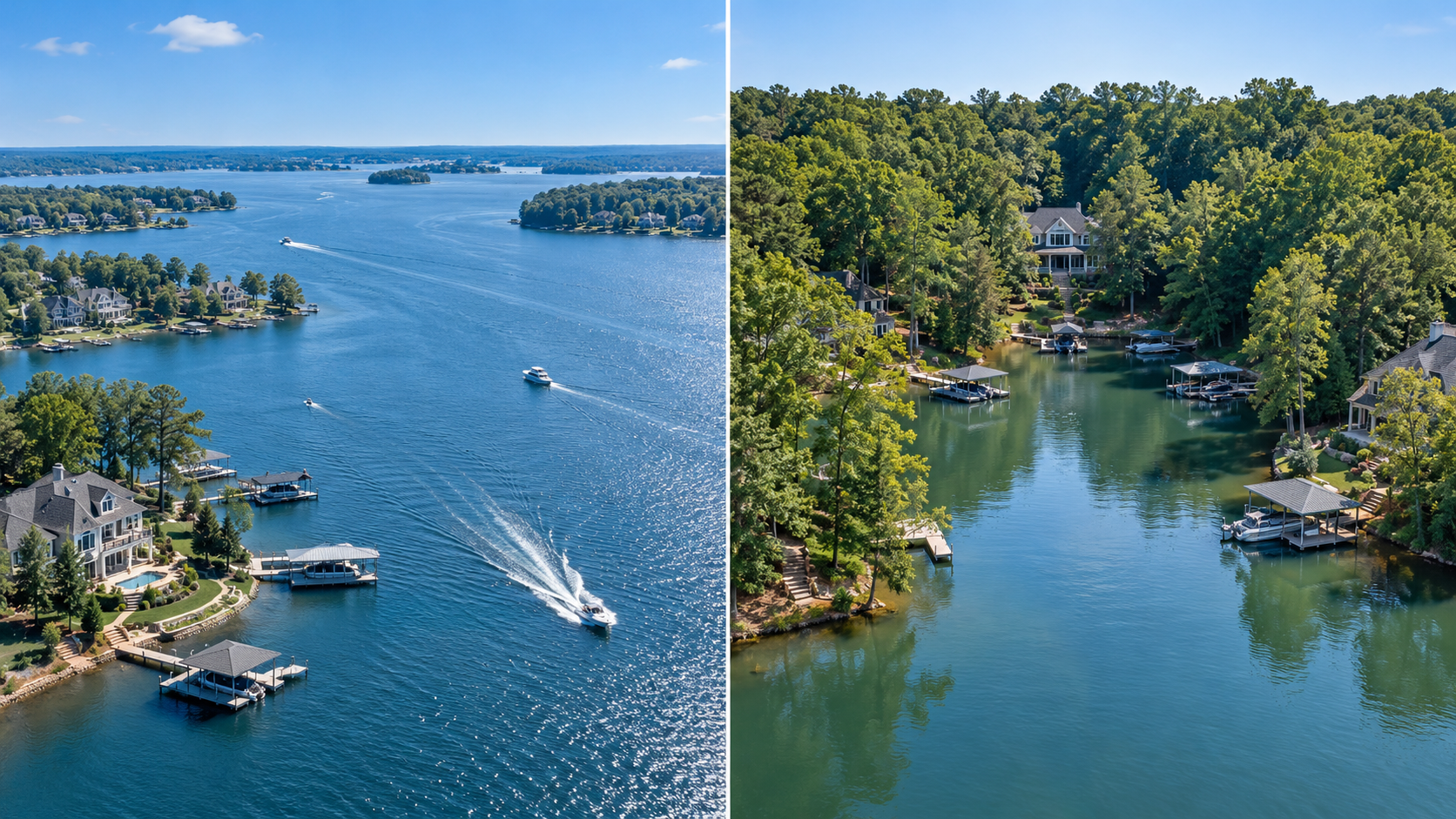
What Is the Difference Between Main Channel and Cove Living on Lake Norman?
Main-channel living generally gives you wider water views and more direct access to open boating routes, while cove living usually provides a more sheltered, intimate waterfront environment. That difference can affect almost everything you do outside the house.
Main-channel homes tend to face broader stretches of Lake Norman. Buyers are often attracted to their long sightlines, open-water atmosphere, and convenient boating access. At the same time, those homes can experience more activity, wind, wake, and exposure.
Coves extend away from the larger body of the lake. Depending on the individual cove, that can mean calmer water, less passing traffic, and a more private feeling around the dock. Lake Norman waterfront guides consistently emphasize, however, that coves vary dramatically in depth, width, orientation, and access to open water.
So when someone asks me, “Which is better?”, I would reframe the question.
What do you want an ordinary Saturday at the lake to feel like?
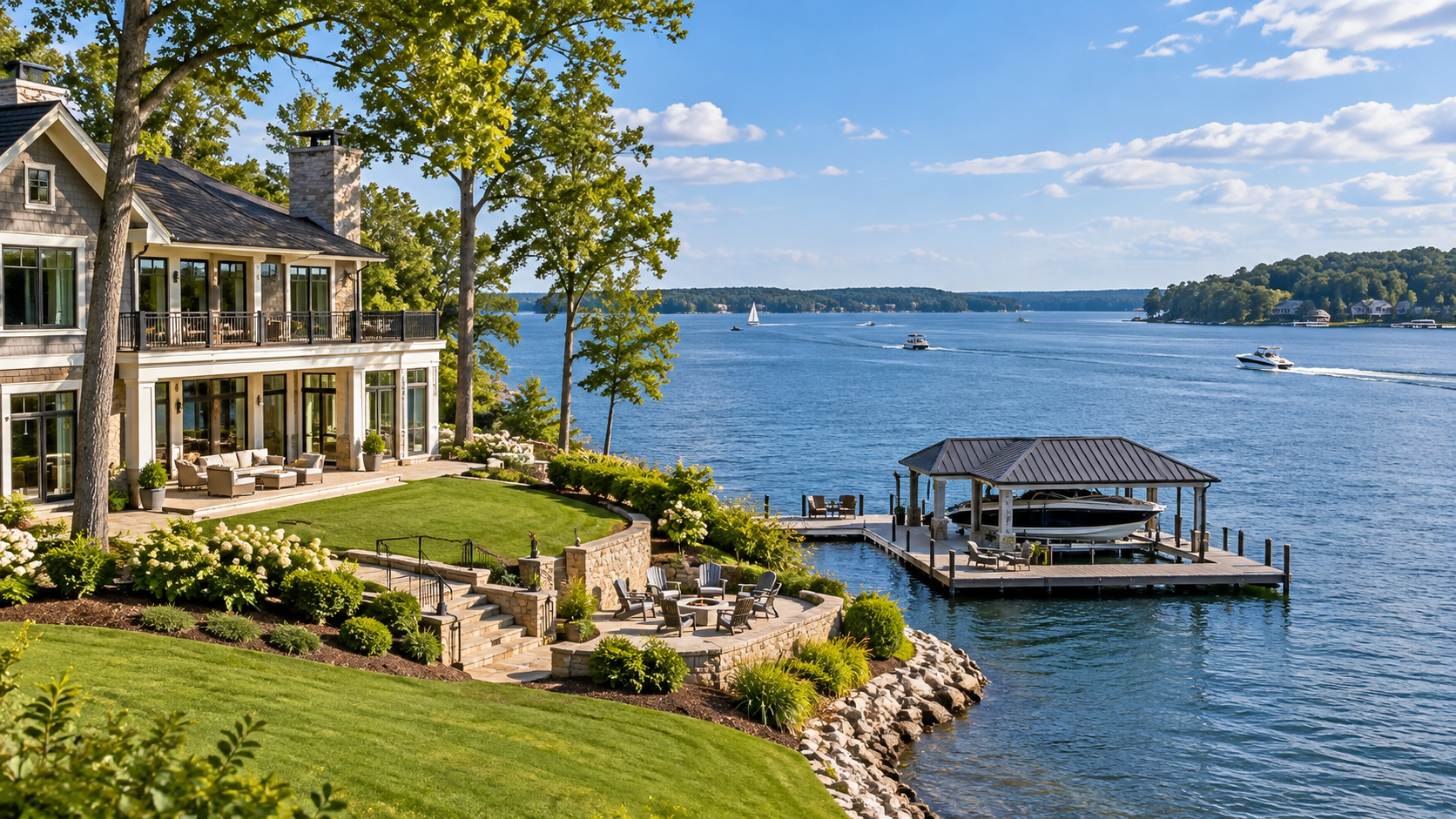
What Is It Really Like to Live on Lake Norman’s Main Channel?
Main-channel living tends to feel bigger, more open, and more connected to the activity of the lake.
For many buyers, this is the classic Lake Norman dream. You step outside, look across an expansive stretch of water, see boats moving in the distance, and feel like the lake is part of the view from almost every outdoor living space.
The boating convenience can also be appealing. Instead of navigating farther through an inlet before reaching larger water, many main-channel properties provide relatively direct access to common cruising routes.
But that openness has tradeoffs.
North Carolina wildlife officials note that wakes can contribute to erosion and dock or boat damage, and the agency specifically encourages boaters to stay at least 200 feet from shorelines, docks, and other structures when generating wake.
That means the gorgeous expanse you love on a calm weekday morning may feel quite different during a busy boating period.
Takeaway: Main-channel property often suits buyers who value big-water views and easy lake access enough to accept more activity around them.
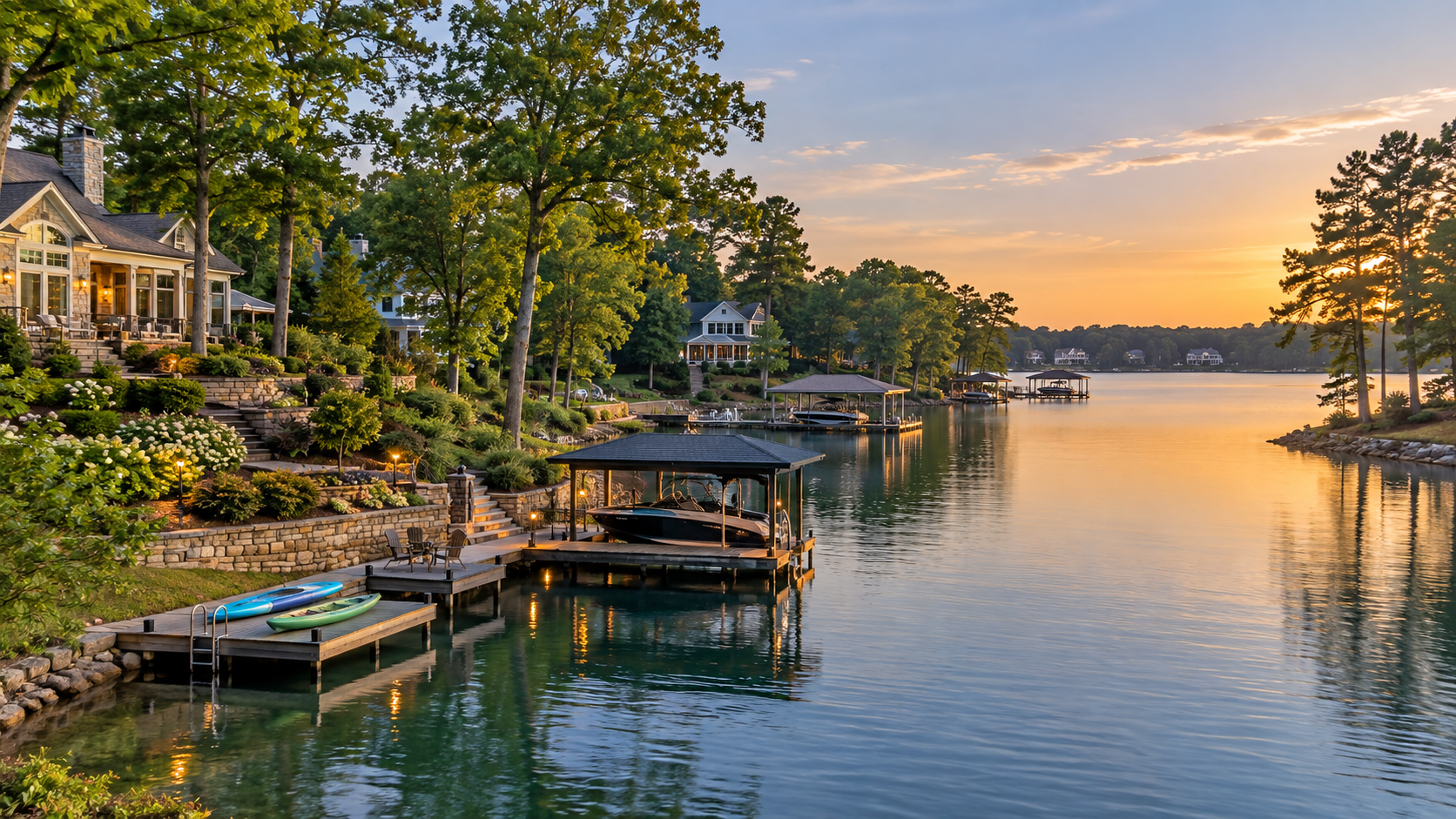
What Is Cove Living on Lake Norman Like Day to Day?
Cove living generally feels quieter, more protected, and more private, although the experience depends heavily on the specific cove.
Picture coffee on the dock with fewer boats passing directly in front of you. Maybe the kids are swimming nearby, someone is launching a kayak, or you are simply floating without as much open-water movement around you.
That is the emotional appeal of cove living.
Current Lake Norman buyer guides frequently describe protected coves as attractive to people who prioritize privacy, swimming, paddling, and calmer waterfront use.
But here is the important part: “cove” is not a guarantee of ideal water.
Some coves are wide and deep with quick access to the main channel. Others narrow significantly, become shallower toward their interior, or require more navigation before you reach open water.
That is why I would never evaluate a cove property from the listing photos alone.
Which Is Better for Boating, a Main Channel Home or a Cove Home?
Main-channel homes generally offer more immediate access to open-water boating, but a well-positioned deep-water cove can provide an appealing combination of protection and convenience.
If boating is central to your Lake Norman lifestyle, think beyond whether a dock exists.
Ask yourself how you actually use your boat.
Do you want to leave the dock and quickly begin a longer cruise? Are you operating a larger boat that makes water depth particularly important? Do you want easy access to marinas, fuel, restaurants, or recreational routes?
Lake Norman supports everything from pontoons and powerboats to sailing, wake sports, fishing, kayaking, and rowing. Local tourism resources describe the lake as a major boating destination with numerous marinas, launches, storage facilities, repair services, and fuel stops.
A cove can still work beautifully for an active boater. The difference is that you need to understand the route from the dock to navigable open water.
Do not ask only, “Is there a dock?” Ask, “Will this dock work for the way I boat?”
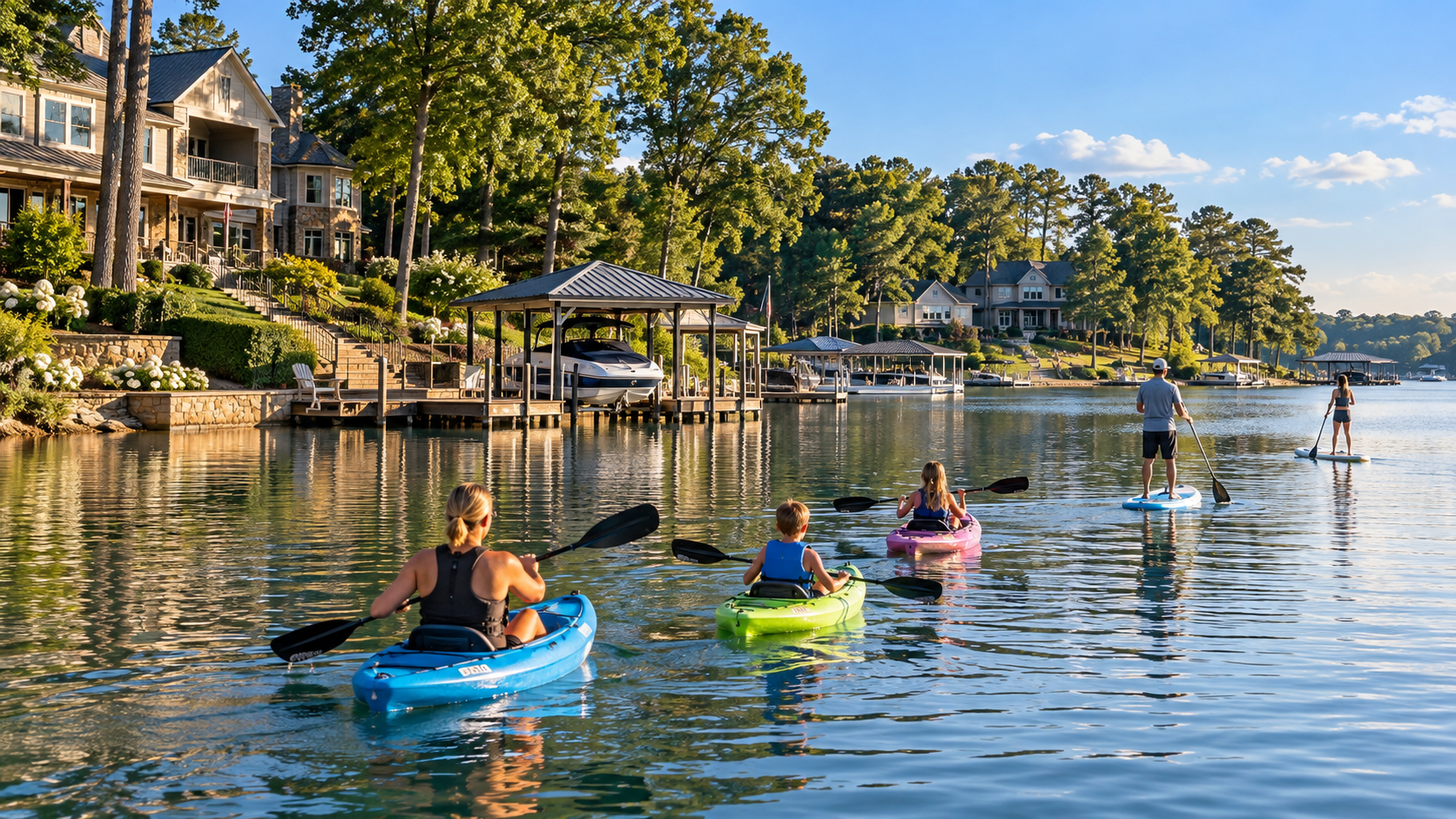
Which Waterfront Setting Is Better for Swimming, Kayaking, and Paddleboarding?
A protected cove will often feel more comfortable for swimming and paddle sports because it can reduce exposure to passing traffic and larger wakes.
That does not mean every cove is automatically safe or every main-channel property is unsuitable for swimming. Local conditions, vessel activity, water depth, dock configuration, and designated boating rules all matter.
Still, there is a practical difference between trying to enjoy a paddleboard beside frequent open-water boat traffic and launching it from a protected inlet.
North Carolina also has specific rules for personal watercraft near docks, swimmers, manually propelled vessels, and other users. For example, PWC operators generally must observe no-wake speed within specified distances of docks, swimmers, and manually propelled vessels.
If your dream Lake Norman day involves more floating than cruising, the personality of the water directly outside the house becomes especially important.
How Do Boat Traffic, Wakes, Wind, and Noise Compare?
Main-channel properties generally have greater exposure to lake activity, while coves often reduce that exposure, although neither setting is completely predictable.
This is one of those factors that buyers can underestimate during a quiet showing.
Visit a main-channel home on a Tuesday morning and the lake may look almost glassy. Return during a busy recreational period and the experience can change.
The same principle applies to coves. Some are tucked away and peaceful. Others serve as routes for many neighboring homes, so you may still see considerable boat traffic.
North Carolina wildlife officials also clarify an important misconception: there is not a blanket statewide statute creating a no-wake zone around every dock or pier. Authorized no-wake zones are established through specific rules or local processes, including areas overseen by the Lake Norman Marine Commission.
That makes real-world observation incredibly useful.
If you are serious about a property, visit more than once. Listen. Watch the water. Notice the wind. See how the dock moves when boats pass.
The lake can tell you things a listing description cannot.
Does Water Depth Matter More in a Lake Norman Cove?
Water depth deserves special attention in coves because depth can vary considerably between locations and may affect how comfortably you can use your boat and dock.
A beautiful cove view does not tell you what is happening underneath the surface.
If boating matters to you, measure or independently verify depth at the dock and, when appropriate, along the route you will actually use to reach larger water. Consider your boat’s draft and whether the existing lift and slip work for your vessel.
Lake Norman is a managed reservoir. Duke Energy publishes current lake-level information, and Lake Norman’s full-pond elevation is 760 feet above mean sea level.
That is why one depth measurement on one afternoon should not be the end of your due diligence.
Think in terms of usable water, not simply waterfront.
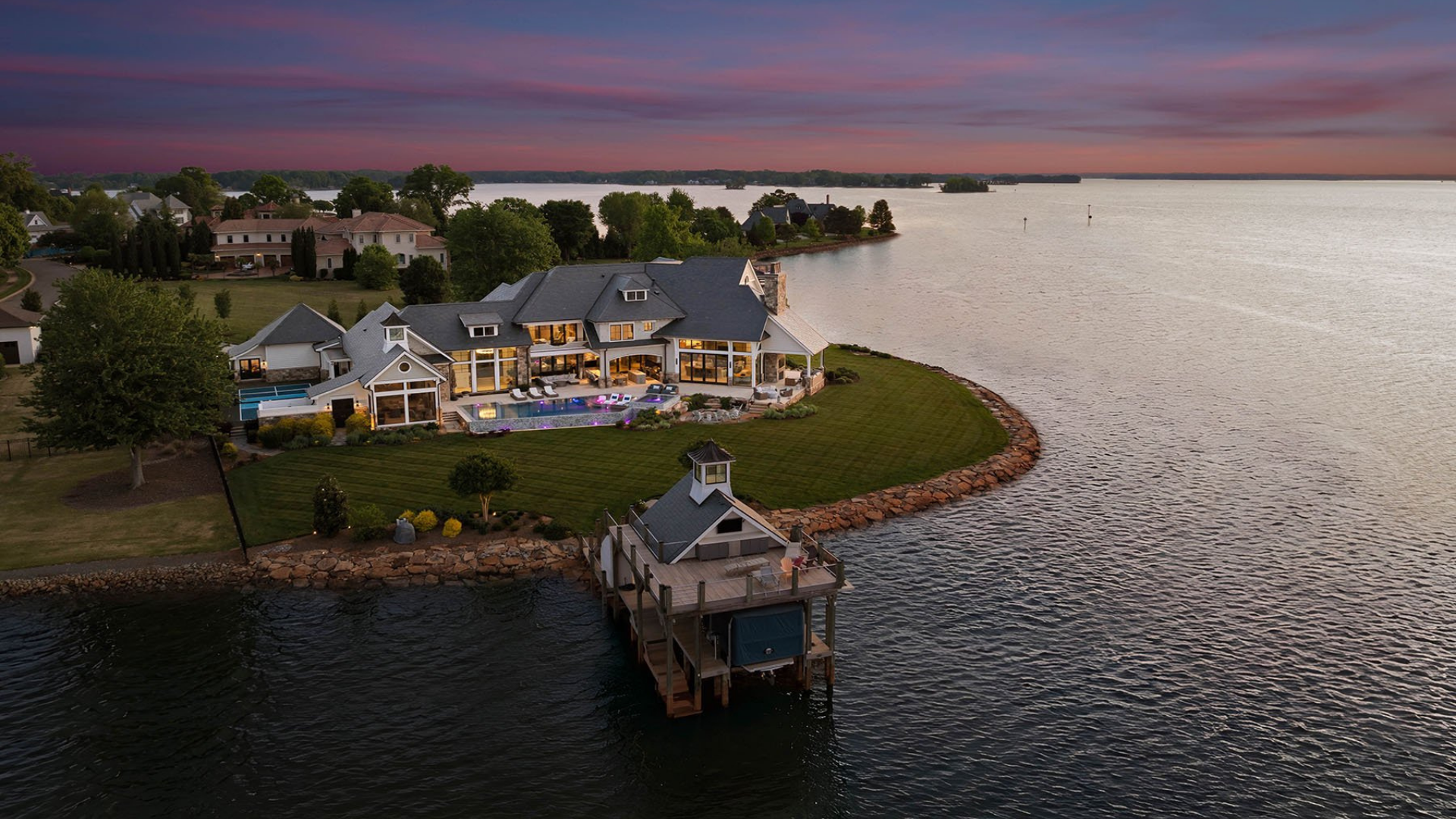
What Should You Check About the Dock and Shoreline Before Buying?
Before buying a Lake Norman waterfront property, verify the existing dock, shoreline improvements, permits, condition, and what future work may be allowed.
This is where waterfront buying becomes more technical than buying a conventional home.
Duke Energy manages shoreline activities across its Catawba-Wateree reservoir system and maintains a permitting process for activities such as piers, docks, and shoreline work. Duke's Lake Services says proposed shoreline projects are reviewed against shoreline classifications and the applicable Shoreline Management Plan.
That means you should not assume that an existing structure can automatically be enlarged, replaced in the same configuration, or modified however you wish.
Before closing, review the property's circumstances with the appropriate professionals and agencies. Depending on the property, that may include permit documentation, surveys, HOA restrictions, dock condition, lift capacity, shoreline stabilization, electrical systems, and marine construction concerns.
A beautiful dock is an amenity. A verified, functional dock is an asset.
Does Main Channel or Cove Location Affect Waterfront Home Value?
Water position can influence what buyers are willing to pay, but “main channel versus cove” should not be treated as a stand-alone valuation formula.
Main-channel homes often attract buyers who place a premium on broad views, deeper water, and open-lake presence. Cove homes can attract buyers who prioritize privacy, protected water, and everyday recreational usability.
Current Lake Norman real estate guides repeatedly identify water depth, view corridor, cove protection, dock condition, orientation, and shoreline characteristics as important components of waterfront appeal.
But no single feature determines value on its own.
A superb deep-water cove property with an excellent dock, appealing orientation, and quick main-channel access can be extraordinarily desirable. Meanwhile, a main-channel property may have impressive views but a steep walk to the water, significant wake exposure, or a dock setup that does not fit your needs.
The smartest comparison is property against property, not label against label.
Could a Deep-Water Cove Near the Main Channel Give You Both?
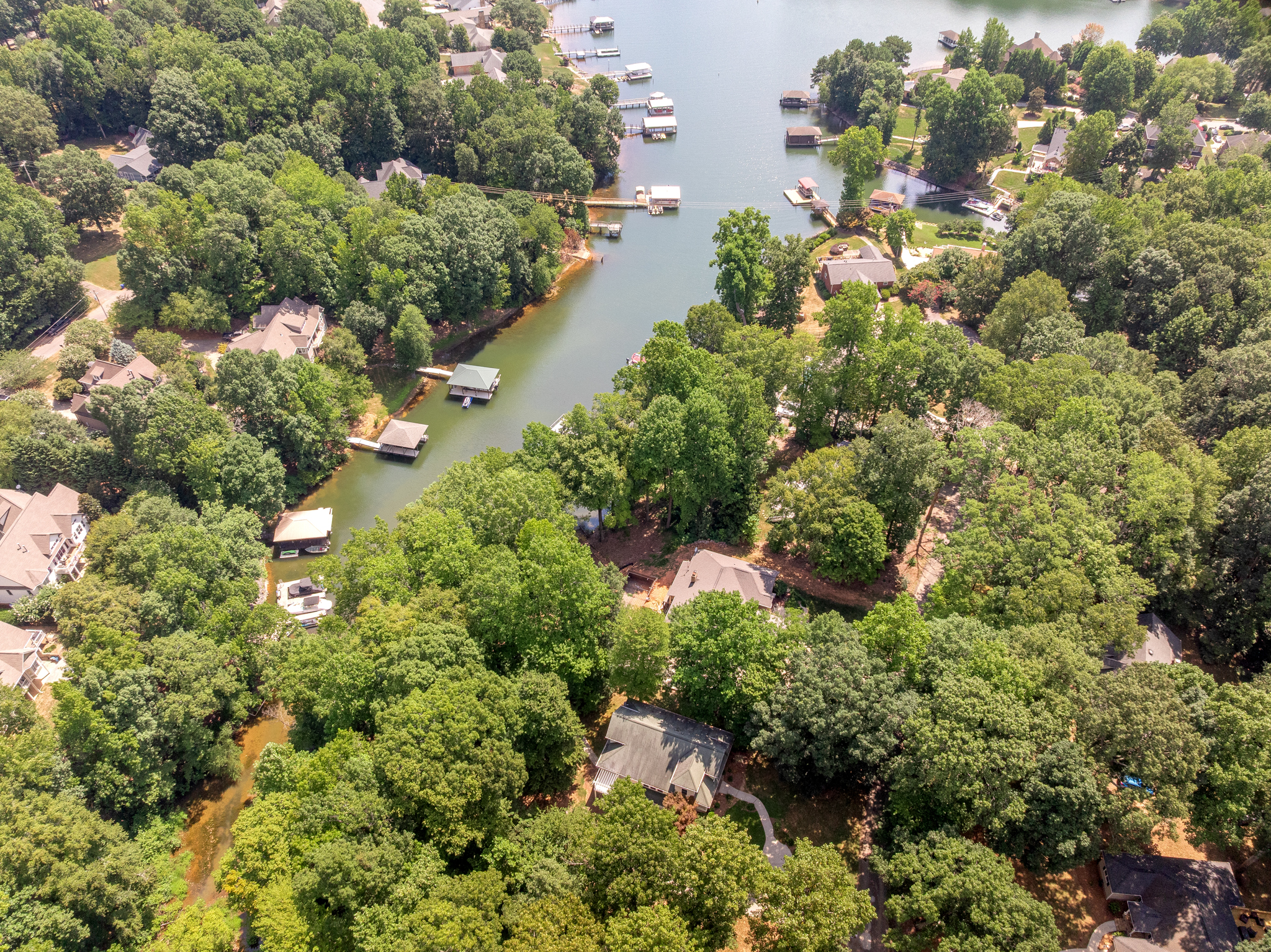
Yes. For some buyers, a protected deep-water cove with quick main-channel access can offer an attractive middle ground.
This is where waterfront searches become interesting.
You may not need to choose between total tranquility and immediate open water. Certain properties can provide protected dock conditions while keeping you reasonably close to broader boating routes.
The tradeoff is availability. The combination of good water depth, appealing views, protection, strong dock usability, and convenient open-water access is property-specific.
When you find it, look carefully.
This is also why I prefer creating a waterfront lifestyle profile before focusing too heavily on bedrooms, countertops, and finishes. Interior finishes can often change. The home's position on the lake cannot.
How Can an AI-Certified Agent Help You Compare Lake Norman Waterfront Homes?
An AI-certified real estate agent can use modern tools to organize property information, improve search efficiency, and help clients compare options more clearly, while still relying on professional judgment and property-specific verification.
For a waterfront buyer, that can mean spending less time sorting through homes that fail obvious lifestyle criteria.
For example, technology can help organize your search around factors such as location, dock features, waterfront descriptions, commute needs, home characteristics, and your preferred lifestyle. It can also make marketing and communication more efficient when you need to act on a property.
But technology does not replace waterfront due diligence.
No AI tool should substitute for verifying water depth, permits, surveys, physical condition, HOA restrictions, or information from Duke Energy and other relevant authorities.
That human-plus-technology approach is the real advantage. Use technology to narrow the search, then use local knowledge and proper verification to understand what you are actually buying.
Which Lake Norman Waterfront Setting Fits Your Lifestyle?
The right setting depends on what you want to do on the lake most often, not which label sounds more prestigious.
A main-channel home may fit beautifully if you picture long views, regular boating, open-water energy, and a strong visual connection to the larger lake.
A cove may feel more like home if your ideal afternoon involves swimming near the dock, kayaking, paddleboarding, entertaining outside, or simply enjoying a quieter stretch of water.
And for many buyers, the answer is somewhere between the two.
Here is the simplest way I would frame the decision:
Lean toward the main channel if panoramic water, direct boating access, and an active lake atmosphere rank highest on your list.
Lean toward a protected cove if calmer water, privacy, paddling, swimming, and quieter dock time matter more.
Look for a deep-water cove near open water if you want elements of both lifestyles.
Regardless of setting, investigate water depth, dock status, wake exposure, shoreline condition, orientation, and lake access before deciding.
The house matters, of course. But on Lake Norman, you are buying something the inspection report cannot remodel later: your exact relationship with the water.
Ready to Find the Right Lake Norman Waterfront Setting?
Buying on Lake Norman becomes much easier when you know what kind of waterfront experience you are actually searching for.
If you are deciding between a main-channel home, a protected cove, or something in between, schedule a Lake Norman waterfront consultation or private home tour. We can compare properties through the lens of how you want to boat, swim, entertain, relax, and live on the lake, not simply what looks best in listing photos.
Frequently Asked Questions
Is a cove or main channel better on Lake Norman?
Neither is universally better. Main-channel properties generally appeal to buyers seeking expansive views and direct open-water access, while coves often appeal to buyers who prefer calmer water and privacy. Your boating habits, tolerance for wakes, swimming plans, and desired dock experience should guide the decision.
Are Lake Norman coves deep enough for a boat?
Many are, but water depth varies significantly by property and location within a cove. A buyer who plans to keep a boat should verify depth at the dock and consider the navigable route to open water rather than relying on a listing description alone.
Are main-channel homes on Lake Norman noisier because of boat traffic?
They can experience more boating activity, wake, and sound because they are more exposed to open-water traffic, but the actual experience varies by location. Visiting the property at different times is one of the best ways to understand its day-to-day environment.
What should I check before buying a Lake Norman home with a private dock?
Check the dock's physical condition, permit or authorization history, lift and slip suitability, electrical systems, shoreline condition, water depth, HOA requirements, and any restrictions affecting alterations. Duke Energy maintains shoreline permitting requirements for applicable activities on Lake Norman.
Can lake-level changes affect a Lake Norman cove property?
Yes. Because Lake Norman is a managed reservoir, changing water levels can affect the amount of water beneath some docks, particularly where the lakebed is relatively shallow. Buyers should evaluate actual property conditions and consult current Duke Energy lake-level information rather than assuming every waterfront location performs the same way.
Sources
Duke Energy, Lake Services & Shoreline Management. Duke Energy shoreline management information
Duke Energy, Permits for Shoreline Activities. Duke Energy shoreline permitting information
Duke Energy, Catawba-Wateree Shoreline Management Plan. Catawba-Wateree Shoreline Management Plan
Duke Energy, Current Lake Levels. Duke Energy current lake-level information
North Carolina Wildlife Resources Commission, No Wake Zones. NC Wildlife no-wake-zone guidance
North Carolina Wildlife Resources Commission, Wake Responsibly. NC Wildlife wake guidance
North Carolina Wildlife Resources Commission, Personal Watercraft. North Carolina PWC regulations
Visit Lake Norman, Boat Access and Marinas. Lake Norman boat-access and marina guide


