
What Actually Makes a Lake Norman Waterfront Home More Valuable? 10 Waterfront Features That Matter
Lake Norman waterfront home value is determined by far more than square footage, finishes, and the number of bedrooms. On the lake, two beautifully renovated homes with similar interior specifications can occupy very different value positions because the waterfront itself is different.
That distinction matters whether you are preparing to sell a waterfront estate or deciding between two homes that look comparable on paper.
The surprising part? The most expensive feature inside the home may not be the feature that matters most to a future waterfront buyer.
At The Petrenko Group, we look at a Lake Norman property as two connected assets: the residence and the waterfront experience. We are Vic and Amy Petrenko, luxury real estate advisors with Premier Sotheby's International Realty. With more than 10 years of experience and 158+ homes sold, our work includes luxury and waterfront properties throughout Lake Norman and the greater Charlotte region.
Here are the 10 waterfront characteristics we believe deserve careful attention when evaluating what actually makes one Lake Norman home more desirable than another.
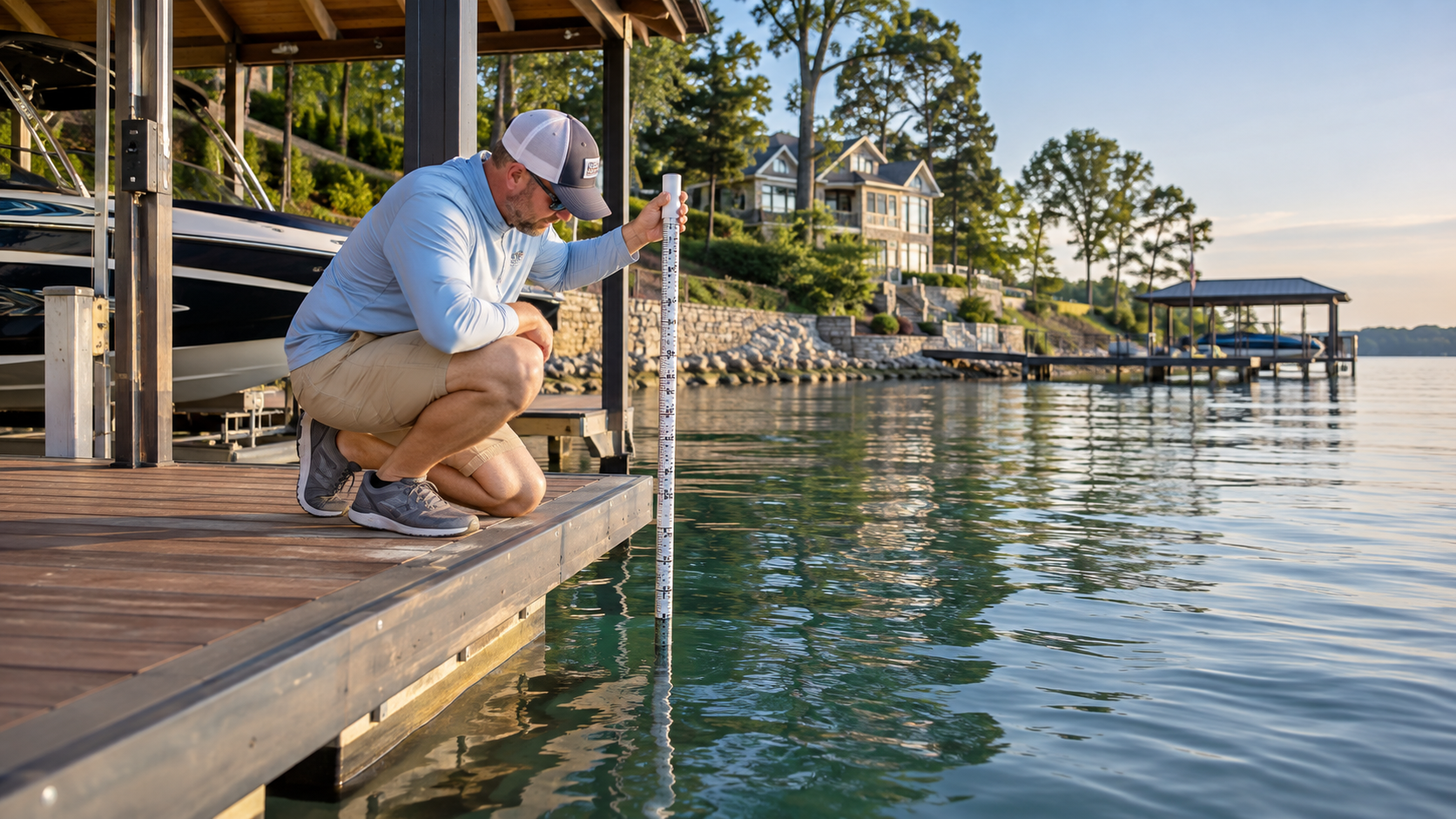
1. How Much Does Water Depth Affect Lake Norman Waterfront Home Value?
Water depth matters because it directly affects how reliably an owner can use the waterfront for boating.
A dock may photograph beautifully in June, but the more important question is what happens when lake levels change.
Lake Norman is part of Duke Energy's interconnected Catawba-Wateree hydroelectric system, and reservoir levels can rise and fall based on weather, inflow, operational requirements, and other conditions. Duke Energy specifically recommends monitoring current lake levels through its lake information resources.
For a buyer with a substantial boat, the relevant question is not simply, “Does this property have a dock?”
It is:
“Will this waterfront work for the way I actually intend to use the lake?”
That means understanding depth at the dock, depth approaching the dock, the vessel's draft, the lift configuration, and what the area looks like when water levels are lower.
Recent Lake Norman discussions illustrate why this matters. During lower-water conditions, residents have reported meaningful differences from one inlet to another, with some wider channels remaining usable while shallower areas become much more difficult to navigate.
For sellers, documented water depth can reduce uncertainty for serious boating buyers. For buyers, it is a fact worth verifying rather than assuming from photography or a listing description.
Key takeaway: A beautiful waterfront view is valuable. Reliable access to usable water can be even more important to the right buyer.
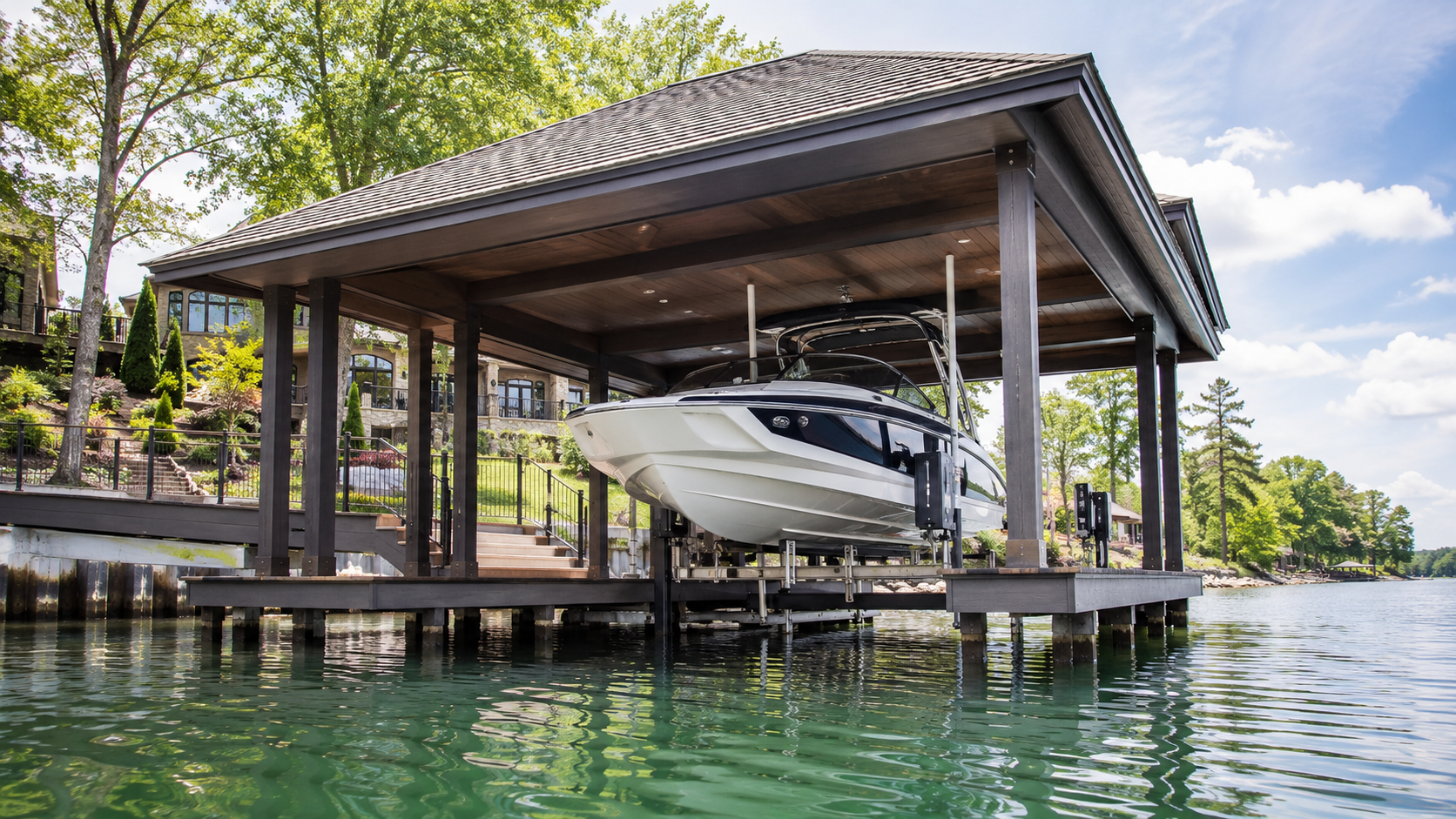
2. How Valuable Are a Private Dock, Boat Lift, and Verified Dock Rights?
A well-designed, functional dock can be a major waterfront asset, but the dock's documentation matters almost as much as the structure itself.
A covered slip, appropriate boat lift, generous sitting area, and convenient access from the house can transform how an owner experiences Lake Norman.
Yet buyers should not evaluate the dock by appearance alone.
Duke Energy oversees permitting for piers, docks, shoreline work, landscaping, and certain other improvements along lakes in the Catawba-Wateree system. Duke Energy has also noted that its federal license guides permitting for piers, seawalls, and other shoreline activities.
That makes waterfront due diligence different from evaluating a patio or kitchen renovation.
A sophisticated buyer may want to understand whether the existing configuration is properly documented, what improvements are permitted, and whether future plans are realistic before assigning significant value to them.
A current Lake Norman waterfront buying guide makes the same point: buyers should confirm that a dock is permitted as built and understand applicable shoreline restrictions before assuming an expansion or modification will be possible.
For a seller, organized dock and shoreline records can strengthen buyer confidence.
For a buyer, never assume that because something physically exists, every future modification will automatically be permitted.
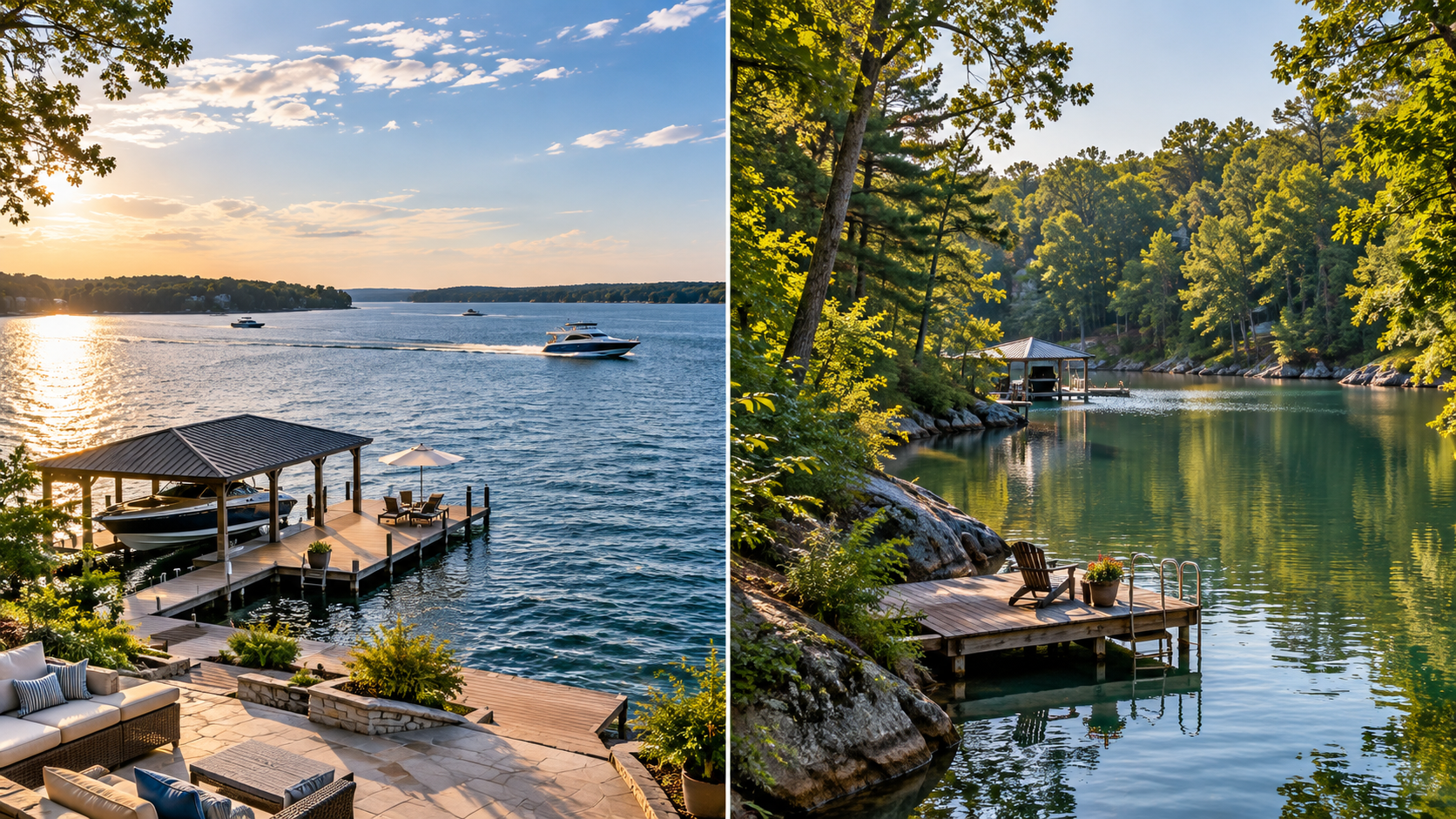
3. Is Main-Channel Waterfront Always More Valuable Than a Protected Cove?
Not necessarily. Main-channel waterfront and protected coves offer different advantages, and value depends on the quality of the specific setting.
Open-water frontage can deliver long views, stronger visual impact, and convenient navigation.
For some luxury buyers, that expansive sense of water is exactly what they came to Lake Norman to find.
But open exposure can also mean more wind, more wake activity, and a different experience at the dock.
A protected cove may offer calmer water, easier swimming and paddling, and greater privacy. The tradeoff is that some coves can become progressively shallower farther from the main channel.
That is why we avoid making blanket statements that one category is always superior.
A current Lake Norman waterfront guide notes that deep, open water often carries a premium, while protected coves may appeal strongly to owners who value calm water and everyday usability.
The best waterfront is the waterfront that combines strong physical characteristics with the lifestyle a particular buyer wants.
For sellers, that means marketing the experience correctly.
If your home sits on dramatic open water, show the scale.
If it sits in a peaceful protected cove, show the still mornings, easy paddleboarding, swimming, and quiet dock time.

4. How Much Do Wide Water Views and Lot Orientation Matter?
Waterfront buyers are not simply paying to be beside the lake. They are paying for how the lake appears and feels from the property.
There is a major difference between technically having waterfront frontage and walking into a great room where water fills the entire view.
Consider what the buyer sees from the kitchen, living spaces, primary suite, pool, terrace, and outdoor entertaining areas.
Is the view narrow or panoramic?
Does another shoreline sit immediately across the cove?
Are neighboring docks prominent?
Does the property face sunrise, sunset, or changing light throughout the day?
These questions influence the emotional response buyers have when they walk through a waterfront home.
And emotion matters in luxury real estate.
At The Petrenko Group, our existing waterfront guidance emphasizes that sellers should present the entire lakeside experience, including the relationship between interiors, outdoor spaces, views, docks, and the water itself.
A home can have extraordinary marble, millwork, and appliances.
But you cannot renovate a mediocre view into a mile of open water.
That is why orientation and view corridor should be evaluated as part of the underlying waterfront asset.

5. Does Shoreline Frontage and Lot Configuration Increase Waterfront Value?
Yes, but raw shoreline footage does not tell the entire story. The configuration and usability of that frontage matter.
Imagine two properties with similar total frontage.
One may have a long, attractive shoreline with space between neighboring docks and a broad view.
Another may have irregular frontage tucked tightly into a narrow inlet.
The numbers could appear similar on paper while the experiences feel completely different.
Point lots and peninsula-like settings can be particularly compelling when they create water views from multiple sides of the property. Generous frontage may also improve privacy and make the dock feel less crowded by neighboring structures.
But there is no universal formula where a specific number of shoreline feet automatically creates a specific premium.
Buyers do not simply value feet of shoreline. They value what those feet allow them to see, access, and experience.
For sellers, this is why good drone photography can be so important. It can reveal lot position, frontage, view corridor, and dock relationship in a way interior photography cannot.
For buyers, review the survey and walk the shoreline rather than relying only on the MLS acreage figure.
The Petrenko Group's waterfront due-diligence guidance specifically recommends reviewing surveys, shoreline condition, dock systems, seawalls, riprap, and related waterfront infrastructure.
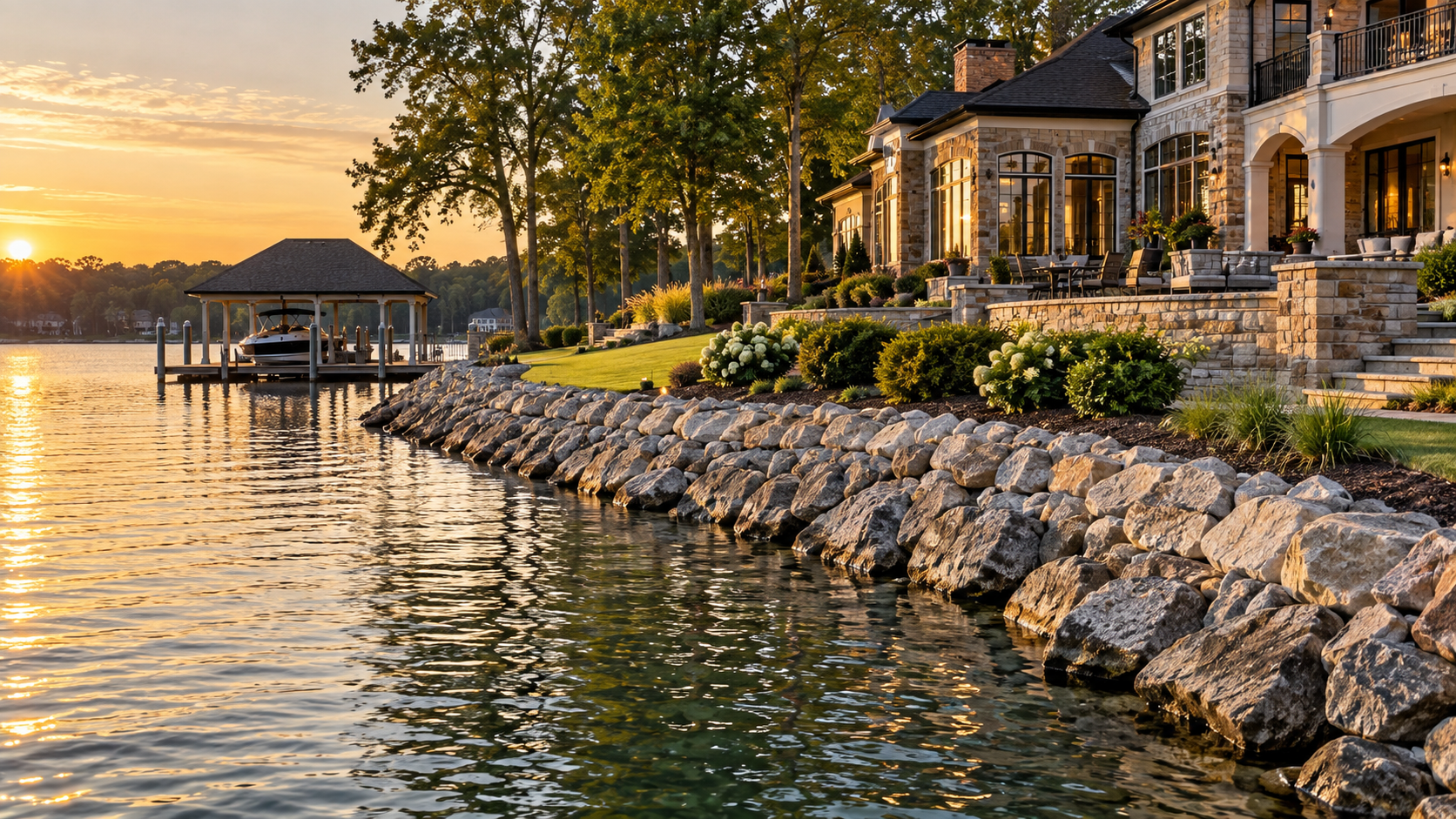
6. How Do Seawalls, Riprap, and Shoreline Condition Affect a Lake Norman Home?
Shoreline condition affects both presentation and future ownership responsibility.
A seller may focus naturally on the home itself, but experienced waterfront buyers often look beyond the back patio.
They are also evaluating what happens where land meets water.
Is the shoreline stable and well maintained?
Is there visible erosion?
What condition is the seawall in?
How does the landscaping transition to the shoreline?
Are there waterfront structures that may require future attention?
Duke Energy's historic shoreline inspection program has specifically addressed the condition of structures such as piers and other lake improvements, reinforcing that waterfront infrastructure must be maintained rather than treated as permanent and maintenance-free.
For sellers, addressing obvious maintenance concerns before listing can remove distractions that otherwise become negotiation points.
For buyers, waterfront structures deserve their own inspection mindset.
A beautiful kitchen can be remodeled.
A shoreline problem deserves a different type of investigation.
7. How Much Are Privacy, Boat Traffic, and Wake Exposure Worth?
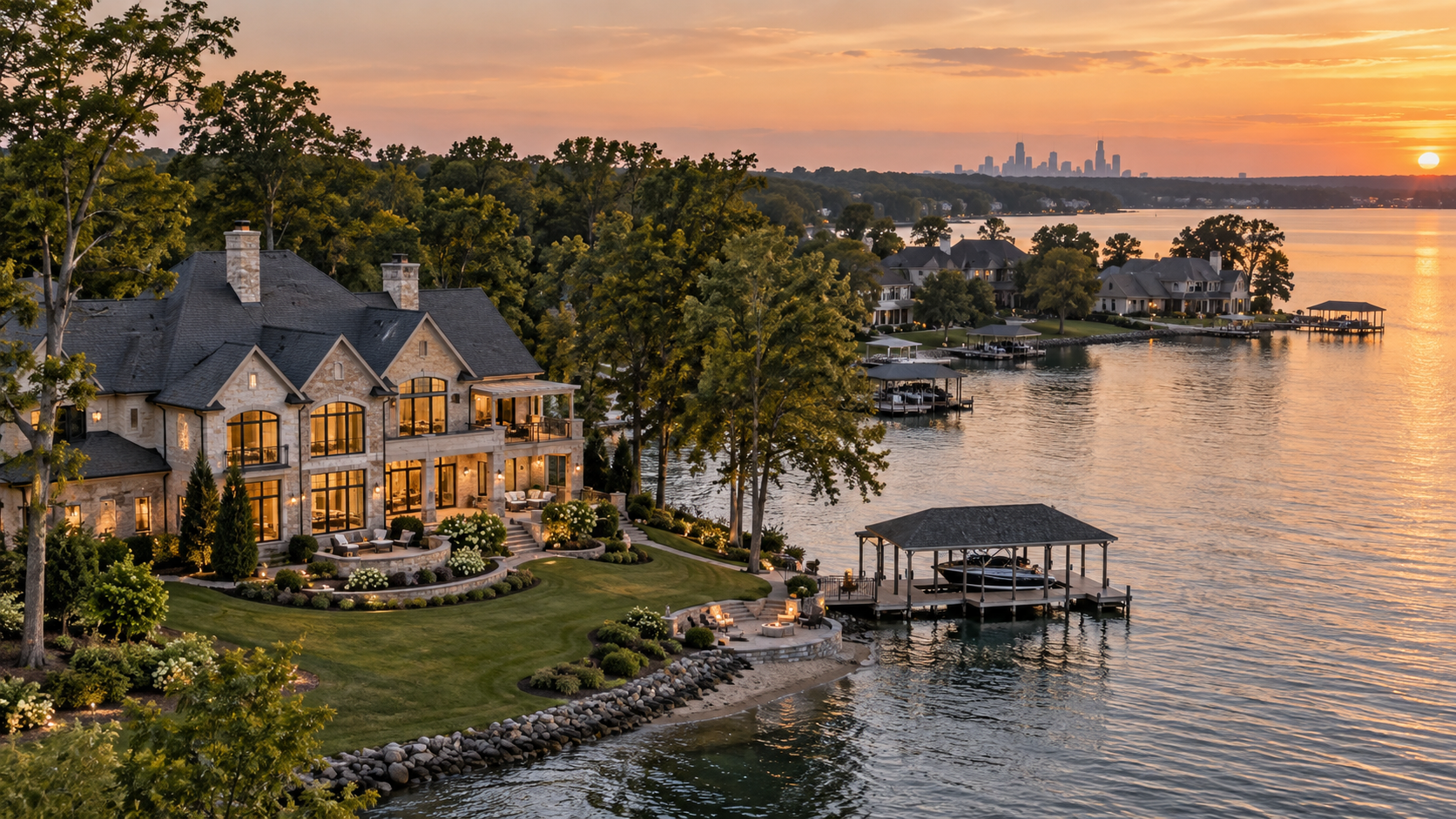
Privacy and water activity can substantially change the day-to-day experience of a Lake Norman property, even when two homes appear similar online.
This is one of those characteristics that is difficult to understand from listing photos.
A quiet Tuesday morning does not necessarily tell you what the water feels like on a warm Saturday afternoon.
Visit the property at different times if the waterfront experience is especially important to you.
Watch boat traffic.
Stand at the dock.
Listen.
Notice neighboring docks, public access points, marinas, restaurants, bridges, channels, and popular boating routes.
Ask yourself: Does this setting feel the way I imagined Lake Norman living would feel?
Open water can offer extraordinary views and direct navigation, but it may also expose a dock to more wake and activity. A protected location may trade some visual drama for calm.
Neither is inherently wrong.
The mistake is discovering the difference after closing.
This is exactly why firsthand evaluation matters. The Petrenko Group's Lake Norman content repeatedly distinguishes what technology can organize from what only physical experience at the waterfront can reveal.
For sellers, this also presents a marketing opportunity. If your property enjoys unusual privacy, protected water, or an especially peaceful shoreline, do not bury that advantage in the tenth paragraph of the listing description. Show it.

8. Does Indoor-Outdoor Living Increase a Waterfront Home's Appeal?
Yes. The strongest waterfront homes make the lake part of daily life rather than treating it as scenery in the backyard.
Luxury buyers often respond to homes where the transition from interior space to waterfront living feels effortless.
That may include retractable glass doors, covered terraces, outdoor kitchens, pools positioned toward the lake, generous entertaining spaces, or primary living areas designed around the view.
The important word is connection.
Can you see the lake while cooking?
Can guests move naturally from the great room to the terrace?
Does the pool visually connect to the water?
Does outdoor entertaining feel intentional?
Can you step outside in the morning and immediately understand why this home belongs on Lake Norman?
These attributes are not unique to waterfront real estate, but the lake magnifies their importance.
The Petrenko Group's luxury waterfront marketing philosophy is built around showing that complete lifestyle, from the home's interior through the outdoor spaces and down to the dock.
For sellers considering improvements, this is often a more strategic question than simply asking which interior finish is currently fashionable.
A waterfront home should help people live toward the water.

9. Why Does the Walk From the House to the Water Matter?
The path from the residence to the dock directly affects how often many owners will actually use their waterfront.
This feature is easy to overlook.
A steep lot may deliver elevated views, but it can also mean significant stairs.
A flatter lot can make carrying coolers, paddleboards, boating gear, children, or supplies to the dock considerably easier.
Neither configuration automatically determines value because different buyers prioritize different things.
But accessibility shapes usability.
Ask yourself what everyday life will look like.
Will you walk to the dock five times a day?
Will grandparents or guests use that route comfortably?
How easy is it to move food from the kitchen to a lakeside gathering?
Where will wet towels, life jackets, boards, and boating equipment go?
These are small questions until you live with the answers.
Our buyer guidance treats waterfront purchases as more complex than ordinary residential transactions precisely because the lot, shoreline, dock, septic considerations, and physical relationship to the lake all become part of the property decision.
For sellers, make an attractive and usable lake-access route part of the presentation.
For buyers, walk it more than once.

10. How Much Does Micro-Location Affect Lake Norman Waterfront Home Value?
Lake Norman is not one waterfront market. It is a collection of communities, shorelines, neighborhoods, coves, and locations that buyers evaluate differently.
Cornelius is not Mooresville.
Davidson is not Denver.
Huntersville is not Sherrills Ford.
Even within the same town, two waterfront neighborhoods can produce different buyer expectations.
Community amenities, architectural quality, proximity to dining and retail, commute patterns, lot sizes, nearby housing stock, club access, and recent comparable sales all contribute to the property's market position.
The Petrenko Group's recent valuation guidance notes that communities such as The Peninsula, The Point, Watermark, and Governors Island develop their own comparable-sale context.
This is where online valuation tools tend to struggle with luxury waterfront property.
An algorithm can identify square footage and bedrooms.
It cannot fully interpret whether a particular dock, water view, cove position, community, and home form the same value proposition as a property two miles away.
Waterfront valuation becomes more accurate as the comparison becomes more specific.
For sellers, that means the right question is not, “What are Lake Norman homes selling for?”
It is, “What are truly comparable waterfront properties competing with mine selling for?”
For buyers, it means a lower price per square foot does not automatically make one waterfront property the better value.
Which Lake Norman Waterfront Features Can Sellers Improve?
Some waterfront value drivers can be improved before a sale. Others are fundamentally attached to the land. Knowing the difference can help sellers spend strategically.
Dock condition, landscaping, shoreline presentation, outdoor living spaces, waterfront access, documentation, and marketing can often be addressed to varying degrees, subject to applicable rules and permitting.
Other characteristics are effectively fixed.
You cannot relocate the property to deeper water.
You cannot rotate the lot toward sunset.
You cannot create a mile-long view where geography does not provide one.
You cannot turn a steep shoreline into a flat point lot with ordinary staging.
That is why we encourage sellers to resist the instinct to improve everything equally.
The goal is not to make the house perfect. The goal is to understand what the market will value most and present those advantages clearly.
This is also where early planning helps. Duke Energy oversees permitting for various shoreline improvements, so sellers considering waterfront work should understand applicable requirements before beginning a project.
How Should Buyers Compare Two Lake Norman Waterfront Homes at Similar Prices?
Compare the waterfront first, then decide which home's compromises you are willing to accept.
A practical buyer comparison should consider water depth, dock configuration and documentation, view quality, shoreline condition, frontage, privacy, wake exposure, topography, indoor-outdoor connection, and micro-location.
Then compare the house itself.
Why reverse the normal order?
Because interiors can be changed.
Many waterfront fundamentals cannot.
A dated kitchen beside exceptional deep water may represent a very different long-term proposition from a newly renovated kitchen on waterfront that does not support the buyer's boating needs.
This does not mean the waterfront always wins.
It means the buyer should know which characteristics are fixable and which ones come permanently attached to the property.
That framework is especially useful on Lake Norman, where individual coves and shoreline positions can behave differently as water levels change.
Why Work With a Waterfront and AI-Certified Luxury Advisor?
Lake Norman waterfront transactions require both property knowledge and disciplined interpretation of details that ordinary home searches can overlook.
Vic and Amy Petrenko are luxury real estate advisors with Premier Sotheby's International Realty, with 158+ homes sold and more than a decade of experience serving Lake Norman and the greater Charlotte region. Their work includes luxury estates, waterfront properties, relocation, and complex transactions where strategy and careful due diligence matter.
We also bring AI-certified marketing expertise to our work.
For sellers, AI-supported tools can help us organize marketing workflows, develop audience-specific messaging, and communicate a property's distinctive features more efficiently.
For buyers, technology can help organize property information, documentation, questions, and comparisons during a complex search.
But there is an important distinction.
AI does not replace waterfront expertise.
It cannot stand on your dock.
It cannot inspect shoreline condition.
It cannot decide whether you would rather have a larger home or better water.
It cannot replace licensed inspectors, specialists, surveyors, attorneys, or the human judgment required in a significant real estate transaction.
Our own published guidance describes AI in precisely that role: technology supports organization and marketing, while professional judgment and waterfront knowledge remain human.
That is how we believe technology should be used in luxury real estate.
Quietly, intelligently, and in service of better decisions.
The Real Question Is Not Simply, “Is It Waterfront?”
Lake Norman waterfront home value is built from layers.
The residence matters.
The architecture matters.
Condition matters.
Location matters.
But once you cross into true waterfront real estate, the water becomes part of the property itself.
Depth, dock functionality, views, shoreline, privacy, topography, orientation, and access can separate two homes that initially appear comparable.
For sellers, understanding those distinctions can help you position the property around its strongest advantages instead of relying on generic luxury marketing.
For buyers, they can help you recognize why one home deserves a closer look, even when another has the more impressive kitchen.
Considering buying or selling a Lake Norman waterfront home?
The details at the waterline can have as much influence on your decision as the home itself. Schedule a private waterfront strategy consultation with Vic and Amy Petrenko of The Petrenko Group to understand the property, the market, and what truly matters before you make your next move.
For homeowners considering a sale, we can also prepare a waterfront-specific property valuation based on relevant comparable sales and the characteristics that make your particular shoreline, dock, location, and residence different.
Frequently Asked Questions About Lake Norman Waterfront Home Value
Does a dock automatically increase a Lake Norman home's value?
A private dock can strengthen a waterfront property's desirability, but its contribution depends on location, water depth, condition, configuration, documentation, and usability. A sophisticated buyer may also want to understand whether the existing structure complies with applicable shoreline requirements and whether planned modifications are feasible. Duke Energy oversees permitting for docks and certain shoreline activities in the Catawba-Wateree system.
How can I tell whether a Lake Norman property has enough water depth for my boat?
The best approach is to evaluate actual depth at the dock and along the approach while considering your specific boat's draft and changing lake levels. Do not rely solely on a listing's description of “deep water.” Lake Norman's water level varies, and local conditions can differ substantially between individual coves and channels.
Is a main-channel home always worth more than a home in a cove?
No. Main-channel frontage may appeal to buyers seeking broad views, deeper access, and direct navigation, while a protected cove can offer privacy and calmer water. The stronger property is the one whose depth, view, usability, and setting create the most compelling overall waterfront experience for the relevant buyer pool.
What should I verify about a Lake Norman dock before buying?
Buyers should understand the dock's physical condition, configuration, documentation, water depth, lift suitability, and any applicable permitting or shoreline limitations. If modifications are important to your plans, investigate feasibility before closing rather than assuming an expansion will be approved later. Duke Energy manages shoreline permitting across the Catawba-Wateree system.
Can an online home estimate accurately value a Lake Norman waterfront property?
An automated estimate can provide a general reference point, but it may not adequately capture waterfront-specific characteristics such as depth, dock quality, view corridor, shoreline condition, cove position, lot orientation, and micro-location. Accurate luxury waterfront valuation usually requires carefully selected comparable sales plus property-specific analysis. The Petrenko Group's current Lake Norman valuation guidance emphasizes these distinctions.
Sources
The Petrenko Group, About Vic and Amy Petrenko
The Petrenko Group, Lake Norman Luxury Real Estate Advisors
The Petrenko Group, Proven Results
The Petrenko Group, How Much Is My Lake Norman Waterfront Home Worth?
The Petrenko Group, Ultimate Guide to Buying a Waterfront Home on Lake Norman
The Petrenko Group, 7 Things to Know About Luxury Waterfront Homes
Duke Energy, High Water and Dam Safety


