
Lake Norman Waterfront Homes: Flood & Insurance Guide
Buying a Lake Norman waterfront home means looking beyond the view, the dock and the architecture. Before making an offer, one of the most important questions is whether you fully understand the property's flood exposure, insurance considerations, shoreline conditions and overall waterfront risk.
Here is the distinction many buyers miss: a waterfront address, a FEMA flood-zone designation, actual flood exposure and the cost of insurance are related, but they are not the same thing.
According to the National Flood Insurance Program, even properties outside FEMA's high-risk flood areas can experience flooding. From 2014 through 2024, nearly one-third of NFIP flood claims came from outside high-risk zones.
That is why we do not believe the right question is simply, "Is this home in a flood zone?"
The better question is, "What do we know about this specific property before I commit to buying it?"
We are Vic and Amy Petrenko of The Petrenko Group at Premier Sotheby's International Realty. After more than a decade serving Lake Norman buyers and sellers and more than 158 successful transactions, we have learned that waterfront real estate requires another layer of diligence. Our buyer process examines details including flood zones, dock conditions, shoreline characteristics, water depth, septic systems, HOA restrictions and construction quality before those details become expensive surprises.
Here is what we recommend checking before you make an offer on a Lake Norman waterfront home.
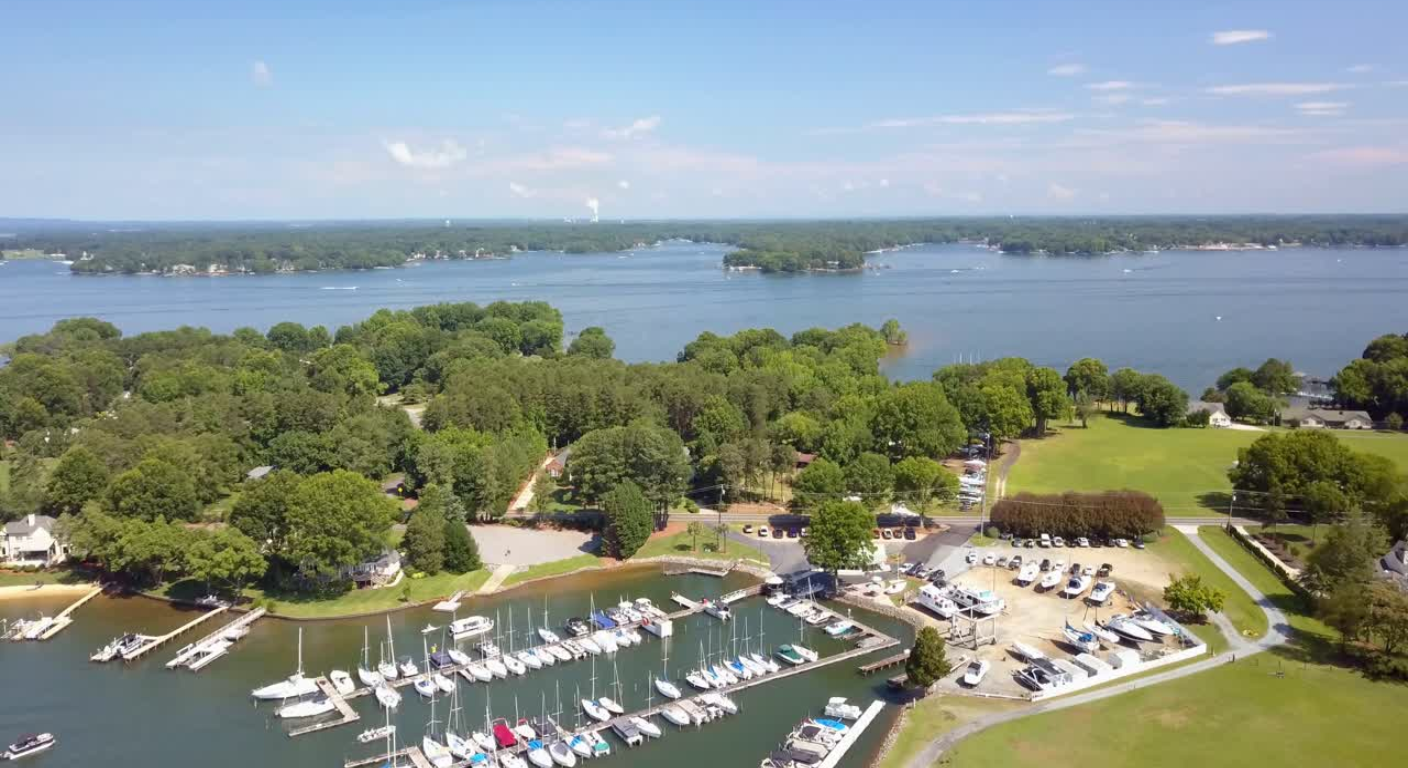
Is Every Lake Norman Waterfront Home in a Flood Zone?
No. A home sitting directly on Lake Norman is not automatically located in a FEMA high-risk flood zone.
Flood designations are property-specific. FEMA flood maps identify different levels of flood risk, including high-risk zones beginning with A or V, as well as moderate and lower-risk areas commonly designated B, C or X.
That means two waterfront properties near each other can have very different circumstances.
One home might sit well above the waterline with favorable topography. Another could occupy a lower portion of the shoreline where drainage, elevation or mapped flood risk requires additional investigation.
This is why we caution buyers against making assumptions based on the word waterfront alone.
The view tells you where the home is.
The flood information helps tell you something very different about how the property may behave when water conditions change.
Takeaway: Always evaluate the individual property and structure rather than assuming that every lakefront home carries the same flood risk.
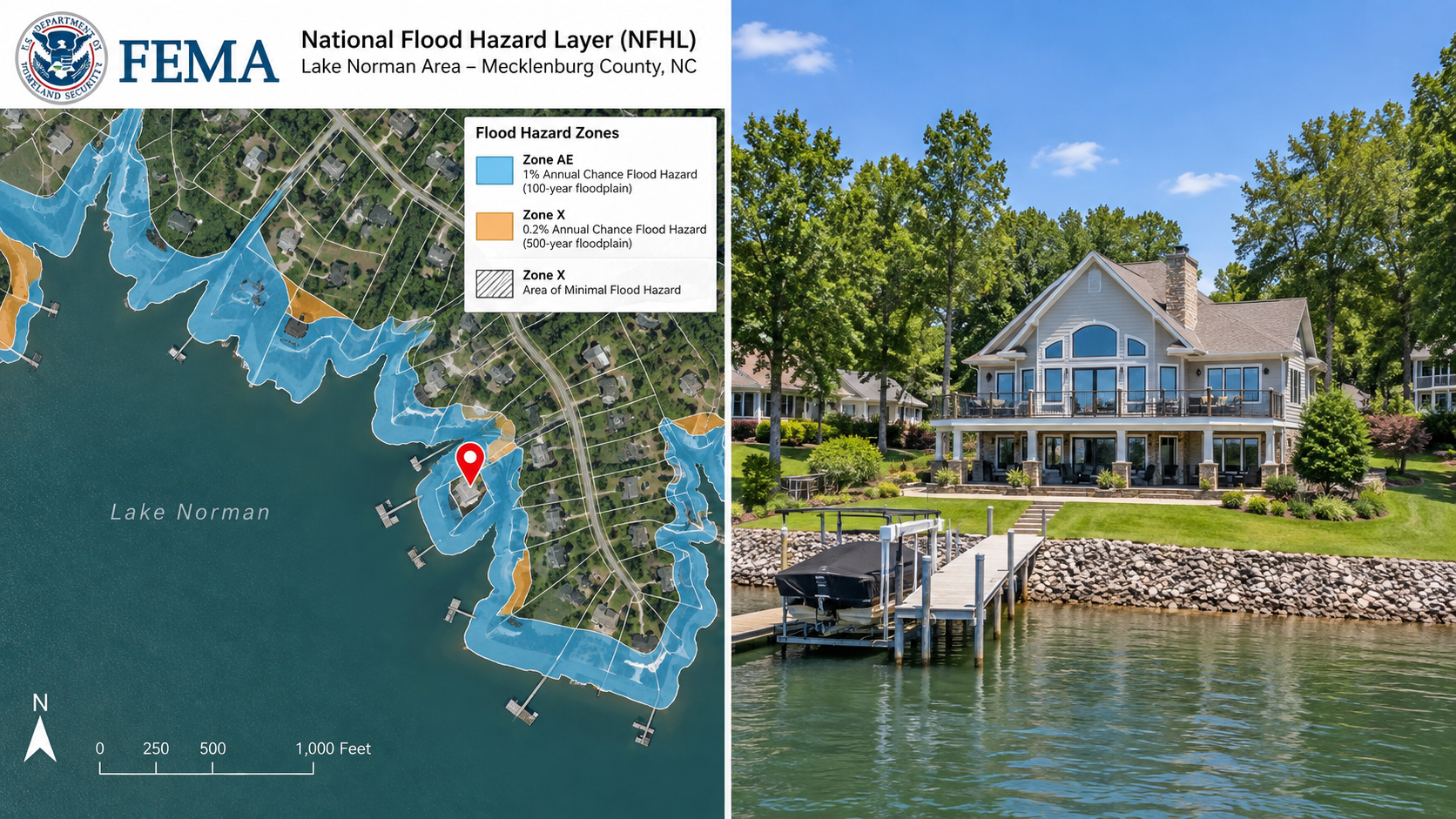
What Does a FEMA Flood Zone Actually Tell a Lake Norman Buyer?
A FEMA flood zone helps identify the mapped level of flood hazard around a property, but it should be treated as one part of your due diligence, not the entire answer.
FEMA's flood maps identify flood zones, floodplain boundaries and, where applicable, Base Flood Elevations. High-risk flood areas, commonly beginning with A or V, are referred to as Special Flood Hazard Areas.
A buyer reviewing a waterfront property should therefore determine:
Which FEMA flood zone applies to the parcel and structure
Whether the residence itself lies within a Special Flood Hazard Area
Whether different portions of the lot fall within different zones
Whether the community's flood map has changed or is scheduled to change
Whether additional elevation information exists for the property
And here is an important point: Zone X does not mean zero flood risk.
FEMA describes moderate and lower-risk areas separately from high-risk areas, but it also makes clear that lower mapped risk does not eliminate the possibility of flooding.
For a significant waterfront purchase, "not in the highest-risk zone" and "nothing to investigate" should never be treated as the same conclusion.
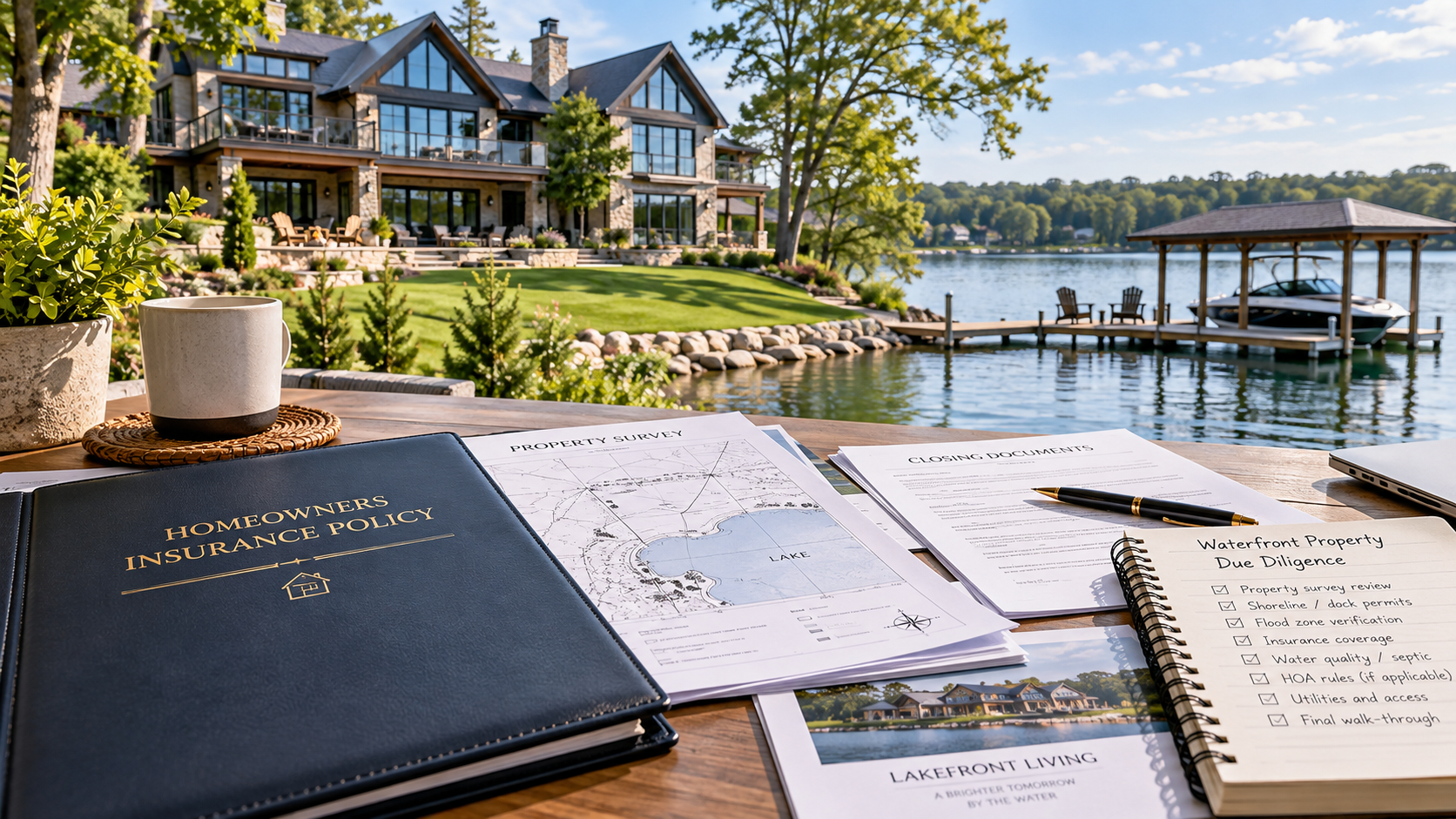
Does Homeowners Insurance Cover Flooding on a Waterfront Property?
Typically, no. Standard homeowners insurance does not cover flood damage caused by rising water.
The North Carolina Department of Insurance states directly that homeowners insurance policies do not cover flood damage. Flood coverage generally requires a separate flood insurance policy.
This distinction is easy to overlook when buyers begin comparing carrying costs.
A homeowners insurance quote may address risks such as fire, certain storm damage, theft and liability, depending on the policy. It does not automatically mean flood loss is covered.
That is why we recommend asking direct questions rather than assuming:
What exactly does this quote cover? What does it exclude? Do I need separate flood insurance?
If you are considering a high-value waterfront residence, reviewing these questions early can help you understand your true ownership costs before your emotional attachment to the property takes over.
When Is Flood Insurance Required for a Lake Norman Home?
Flood insurance may be required when a property is located in a Special Flood Hazard Area and the financing falls under applicable federal lending requirements. A lender can also impose its own insurance requirements.
The National Flood Insurance Program states that owners in Special Flood Hazard Areas with certain government-backed mortgages must maintain flood insurance. Some lenders may also require flood coverage outside those high-risk areas.
Cash buyers should not automatically dismiss the question simply because a lender is not requiring a policy.
A lender's requirement answers one question:
Do I have to carry flood insurance for this loan?
A sophisticated buyer should ask another:
Would carrying flood insurance make sense for my particular risk even if nobody requires it?
That conversation belongs with a qualified insurance professional who can review the specific property, policy options, exclusions, deductibles and coverage limits.
Why Should You Get an Insurance Quote Before Making an Offer?
Getting an insurance quote early helps you evaluate the true cost and insurability of the property before you become financially committed.
Luxury buyers naturally focus on acquisition price, property taxes, financing and HOA costs.
With waterfront real estate, insurance deserves a place on that list early in the process.
Imagine comparing two Lake Norman homes at similar price points. One has an insurance profile that fits comfortably within your expectations. The other requires additional flood coverage, carries a significantly different deductible structure or presents underwriting questions that were not obvious from the listing.
Those facts do not necessarily make the second home a poor choice.
They simply mean you deserve to know them before deciding what the home is worth to you.
Depending on the property and your financing, the right sequence may include speaking with your insurance professional and lender before finalizing an offer or during the appropriate due-diligence period.
The goal is not to make waterfront ownership feel complicated.
The goal is to discover complications while you still have options.
What Should You Check Beyond the FEMA Flood Map?
A flood map is important, but waterfront due diligence should also examine the physical property itself.
On Lake Norman, we look at the home and the waterfront as connected assets.
That can include reviewing or investigating:
Property elevation and lot topography
Drainage patterns around the residence
Signs of water intrusion or moisture
Foundation and crawl-space conditions
Shoreline erosion
Retaining walls, seawalls or riprap
Dock condition
Water depth at the dock
Septic location and condition where applicable
Surveys and recorded property information
Past permits and waterfront documentation
HOA or community restrictions
Any history or disclosures relevant to water-related damage
The Petrenko Group's established waterfront due-diligence process already looks beyond the house itself. We evaluate water depth, dock permit status, septic systems, shoreline conditions, flood zones and other waterfront-specific factors because those details can substantially affect how a property functions after closing.
We have also seen how changing lake levels can reveal information that is less obvious when the water is high. Exposed shoreline can make erosion patterns, underwater hazards and dock infrastructure easier to evaluate.
That is the advantage of looking past the listing photos.
A beautiful home can still have unanswered waterfront questions.
What Flood and Waterfront Documents Should You Request From the Seller?
Buyers should gather as much property-specific documentation as reasonably available so assumptions can be replaced with verified information.
Depending on the property, relevant documents may include:
Seller disclosures
Existing surveys
Flood-zone information
Previous elevation documentation, if available
Insurance information the seller is willing and permitted to provide
Dock permits and related waterfront approvals
Shoreline or stabilization permits
Septic records
HOA documents
Inspection reports available from previous work
Records related to improvements, repairs or water intrusion
An Elevation Certificate can also be useful in some situations because it documents elevation characteristics of the structure.
Importantly, FEMA states that an Elevation Certificate is not universally required to purchase NFIP flood insurance, although elevation data may be considered in rating and can provide valuable property-specific information.
So if an Elevation Certificate exists, we want to know about it.
If one does not exist, that alone does not automatically mean something is wrong.
The objective is to understand what information is available, what remains unknown and whether additional professional evaluation is warranted.
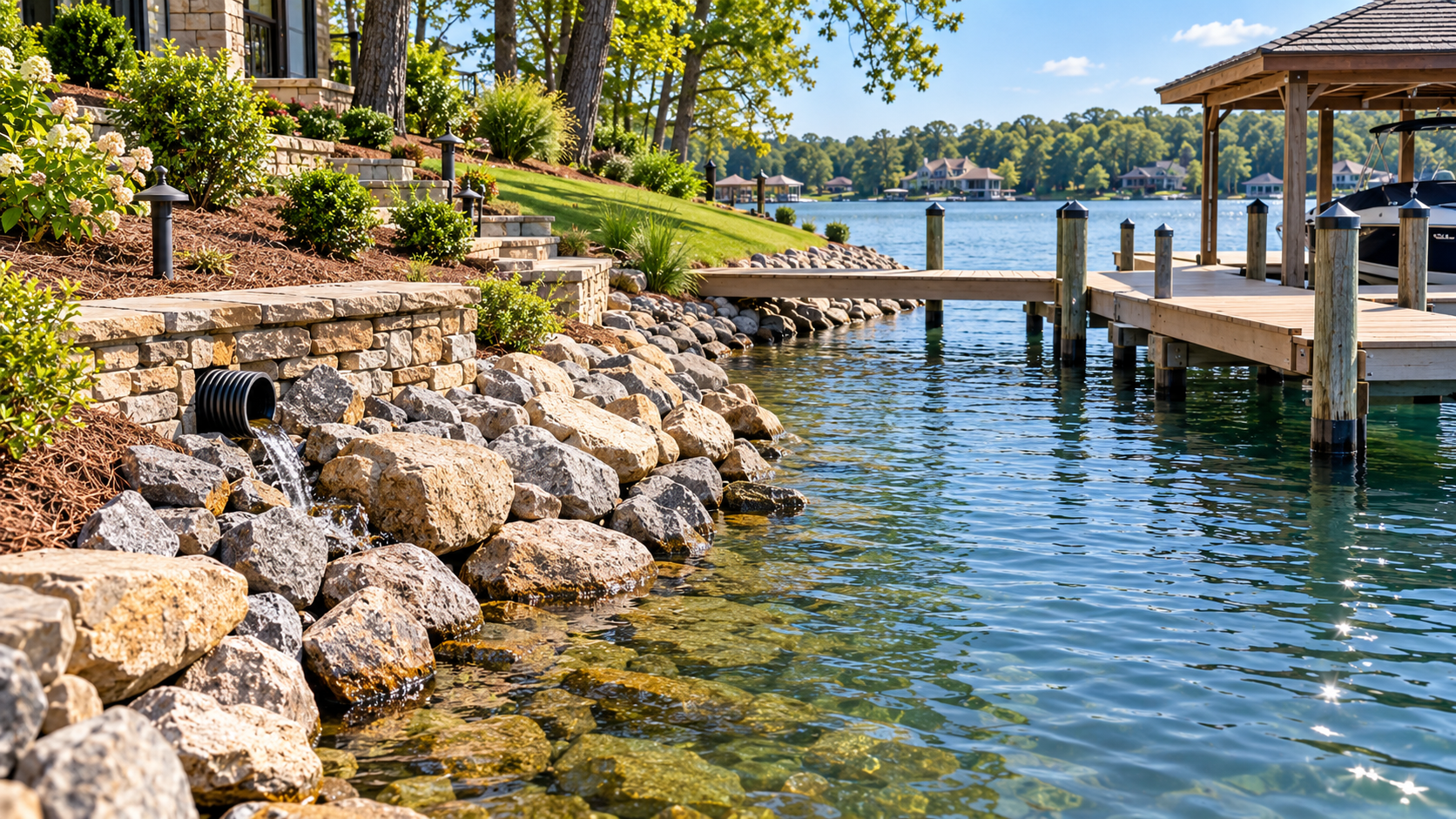
How Can Elevation, Drainage and Shoreline Conditions Change the Risk?
The physical behavior of a waterfront lot can matter as much as the label attached to it on a map.
Consider two homes.
Both have docks.
Both have beautiful lake views.
Both appear comparable online.
But one residence sits higher above the shoreline, with water moving naturally away from the structure. The other sits lower on the lot, has visible erosion near the water and channels runoff toward portions of the foundation.
Those properties deserve different questions.
This is where the experience of actually walking waterfront property matters.
We want to see:
Where does water appear likely to travel?
How does the shoreline respond to changing lake levels?
Are there obvious low points?
What condition is the drainage infrastructure in?
Has the shoreline been stabilized?
What does the dock infrastructure look like when water levels change?
Lake Norman is managed by Duke Energy, and water levels fluctuate. The Petrenko Group's waterfront guidance specifically encourages buyers to understand water depth, shoreline stability and dock conditions as part of evaluating a property.
A map gives you an important layer of information.
Walking the property gives you another.
Should Flood Risk Affect How You Structure Your Offer?
Potential flood or insurance concerns can influence your decision-making, but the appropriate response depends on the individual property, contract and advice from the professionals involved.
Sometimes research confirms that the property fits comfortably within a buyer's expectations.
Sometimes it uncovers a question that deserves inspection or additional documentation.
Sometimes an insurance quote changes the ownership budget.
And sometimes the information simply helps the buyer make the offer with greater confidence.
The goal is not to turn every waterfront question into a negotiating tactic.
It is to make sure your offer reflects what you actually know.
This is also where timing matters. Certain investigations may occur before an offer, while others may be addressed through North Carolina's contractual due-diligence process. Your real estate advisor, lender, insurance professional, inspector, surveyor and attorney may each play a different role depending on the issue.
For a significant waterfront purchase, coordinated advice matters.
How Does The Petrenko Group Evaluate Waterfront Risk Before You Commit?
We evaluate the entire waterfront experience, not simply whether the listing checks the box marked “waterfront.”
At The Petrenko Group, our buyer process includes property evaluation, negotiation and detailed due diligence. We examine factors such as water depth at the dock, shoreline characteristics, flood zones, dock permissions, septic systems, HOA restrictions and construction quality.
Why?
Because Lake Norman homes that look similar online can live very differently once you own them.
Vic brings more than 30 years of military leadership and strategic planning experience. Amy has personally navigated 16 family relocations, giving us firsthand appreciation for the complexity of moving a family and making large decisions in unfamiliar markets. Together, we approach waterfront transactions with preparation, precision and an emphasis on client education.
We want you to understand not only what you are buying, but also the questions behind the property.
A beautiful view should be enjoyed.
It should not distract you from the details that matter.
How Does Working With an AI-Certified Waterfront Advisor Help Buyers?
AI-supported tools can help organize the large amount of information involved in a waterfront purchase, while human expertise and qualified professionals remain responsible for the actual judgment and verification.
Vic and Amy are AI-certified marketing professionals, and we use technology carefully to help make complicated transactions more organized.
For a waterfront buyer, that can include helping organize:
Property documentation
Questions that require follow-up
Inspection information
Property comparisons
Search criteria
Waterfront features
Permit information
Communication during a complex transaction
But there is an important distinction.
AI does not replace waterfront expertise.
It cannot walk the shoreline.
It cannot inspect a crawl space.
It cannot verify a flood-zone determination.
It cannot tell you whether the water depth works for your boat.
It cannot replace an insurance professional, surveyor, inspector, lender, attorney or other qualified specialist.
Our own approach is simple: technology helps organize information and make communication more efficient. Professional judgment, firsthand property evaluation and qualified specialists guide the actual decision.
That is where modern technology belongs in a luxury real estate transaction, quietly supporting better-informed human decisions.
What Is the Smartest Next Step Before Buying a Lake Norman Waterfront Home?
Before making an offer, understand the property from the shoreline inward.
The right Lake Norman waterfront home can deliver an extraordinary lifestyle. Morning coffee on the dock, afternoons on the water and sunsets from your own shoreline are difficult to replicate anywhere else.
But the strongest purchase is not simply the home you fall in love with.
It is the home you understand.
Check the flood information. Review insurance with a qualified professional. Walk the shoreline. Study the drainage. Examine the dock. Verify available permits and records. Ask about elevation. Understand your financing requirements.
Then decide.
Considering a waterfront home on Lake Norman? Before you make an offer, let's make sure you understand exactly what you're buying. Schedule a confidential consultation with Vic and Amy Petrenko of The Petrenko Group to evaluate the property, the waterfront and the questions that could affect your decision.
Frequently Asked Questions About Lake Norman Flood Zones and Insurance
Do all Lake Norman waterfront homes require flood insurance?
No. Flood-insurance requirements depend on the property's flood-risk designation, financing and lender requirements. Homes in Special Flood Hazard Areas with applicable federally backed financing generally require flood insurance, while a lender may impose additional requirements in other circumstances.
Even when insurance is not required, buyers can still discuss voluntary coverage with a qualified insurance professional.
Does FEMA Zone X mean a Lake Norman home cannot flood?
No. Zone X generally indicates moderate or lower mapped flood risk depending on the specific designation, but it does not mean the property has no flood exposure. FEMA reports that nearly one-third of NFIP claims from 2014 through 2024 came from outside high-risk flood areas.
That is why we recommend evaluating the physical property in addition to reviewing the map.
Can I get a flood insurance quote before making an offer?
In many cases, an insurance professional can help you investigate available coverage and estimated costs using property-specific information. The exact process depends on the carrier, property and information available.
For a waterfront purchase, beginning the insurance conversation early can help you understand potential ownership costs before closing.
What is an Elevation Certificate, and should a waterfront buyer ask for one?
An Elevation Certificate records elevation information about a building and can provide useful information for floodplain management and insurance purposes. FEMA states that an Elevation Certificate is not always required to obtain flood insurance, although its data may be considered for insurance rating.
If one already exists for a property you are considering, it can be worthwhile to review it with the appropriate professionals.
Can a property's flood zone or insurance cost affect financing and monthly ownership costs?
Yes. A property's flood-zone designation can trigger insurance requirements for certain mortgages, and separate flood insurance adds another potential ownership expense.
Before committing to a waterfront home, buyers should speak with both their lender and insurance professional about requirements and costs specific to that property.
Internal Link Suggestions
“buying a Lake Norman waterfront home” → Link to The Petrenko Group's Ultimate Guide to Buying a Waterfront Home on Lake Norman.
“water depth at the dock” → Link to the Lake Norman dock-depth guide.
“dock permits” → Link to the Lake Norman dock rules and permitting guide.
“waterfront ownership costs” → Link to The Hidden Costs of Owning a Lake Norman Waterfront Property.
“Lake Norman luxury communities” → Link to The Best Lake Norman Communities for Luxury Living.
Sources
Federal Emergency Management Agency / National Flood Insurance Program: Flood zones, flood-risk classifications, Special Flood Hazard Areas, insurance requirements and Elevation Certificate guidance. National Flood Insurance Program flood-risk guidance
National Flood Insurance Program flood-zone guidance
National Flood Insurance Program eligibility and mortgage requirements
North Carolina Department of Insurance: Homeowners and flood-insurance guidance. North Carolina Department of Insurance flood insurance guidance
The Petrenko Group: Lake Norman waterfront buying process, due diligence, waterfront conditions and professional background. The Petrenko Group Lake Norman Waterfront Buying Guide


