
Can You Build, Replace or Expand a Dock on Lake Norman? What Buyers Should Verify Before Closing
A Lake Norman dock permit can affect far more than whether a property has a place to tie up your boat today. It can determine whether the waterfront will support the lifestyle you are picturing five or ten years from now.
Here is the part many buyers miss: an existing dock does not automatically mean you can replace it with whatever you want, enlarge it, redesign it, add another slip, or build a completely different structure later. Duke Energy manages shoreline permitting within the Catawba-Wateree lake system, including permitting associated with piers and docks. According to Duke Energy, its Shoreline Management Plan helps govern activities such as docks, piers, landscaping, and other shoreline uses.
That distinction matters when the waterfront is one of the primary reasons you are buying the home.
We are Vic and Amy Petrenko of The Petrenko Group at Premier Sotheby's International Realty, and we specialize in Lake Norman luxury and waterfront real estate. Our approach to waterfront buying goes beyond bedrooms, finishes, and square footage. We look closely at water depth, dock access, shoreline conditions, community restrictions, and how those details fit the way you actually want to live on the lake.
Can You Build, Replace or Expand a Dock on Lake Norman?
Potentially, yes, but the answer is property-specific and should be verified before you rely on it in a purchase decision.
A waterfront lot that looks perfect from the house may have physical or regulatory limitations that affect future dock plans. Similarly, seeing a large dock next door does not prove that the same configuration can be approved on the property you are considering.
Duke Energy operates Lake Norman as part of the Catawba-Wateree hydroelectric system under federal oversight. Court records describing that framework confirm that Duke's Shoreline Management Plan and related guidelines provide for permits involving docks and other recreational facilities on Lake Norman.
This is why we encourage buyers to separate two questions:
What does the property have today?
What can the property reasonably support in the future?
Those are not always the same thing.
Buyer Takeaway: If your purchase depends on installing, replacing, enlarging, or redesigning a dock, treat that goal as a due-diligence item, not an assumption.
Who Controls Dock Permits on Lake Norman?
Duke Energy Lake Services is a key authority buyers should contact when evaluating docks, piers, and related shoreline activities on Lake Norman.
The Lake Norman Marine Commission directs property owners with questions about docks, piers, shoreline management, and dredging to Duke Energy Lake Use Permitting and Duke's Shoreline Management Plan and guidelines.
Duke Energy has also stated that its federal license provides the framework for permitting piers, seawalls, and other recreational shoreline activities, while requiring structures to remain safe and properly maintained.
That does not mean Duke Energy is the only organization you may need to consider. Depending on the project and property, local building requirements, zoning regulations, environmental requirements, HOA covenants, and other approvals can also matter.
So when someone tells you, “You can definitely make the dock bigger,” there is a better follow-up question:
Who verified that, and based on what documentation?
That question can save you a major disappointment after closing.
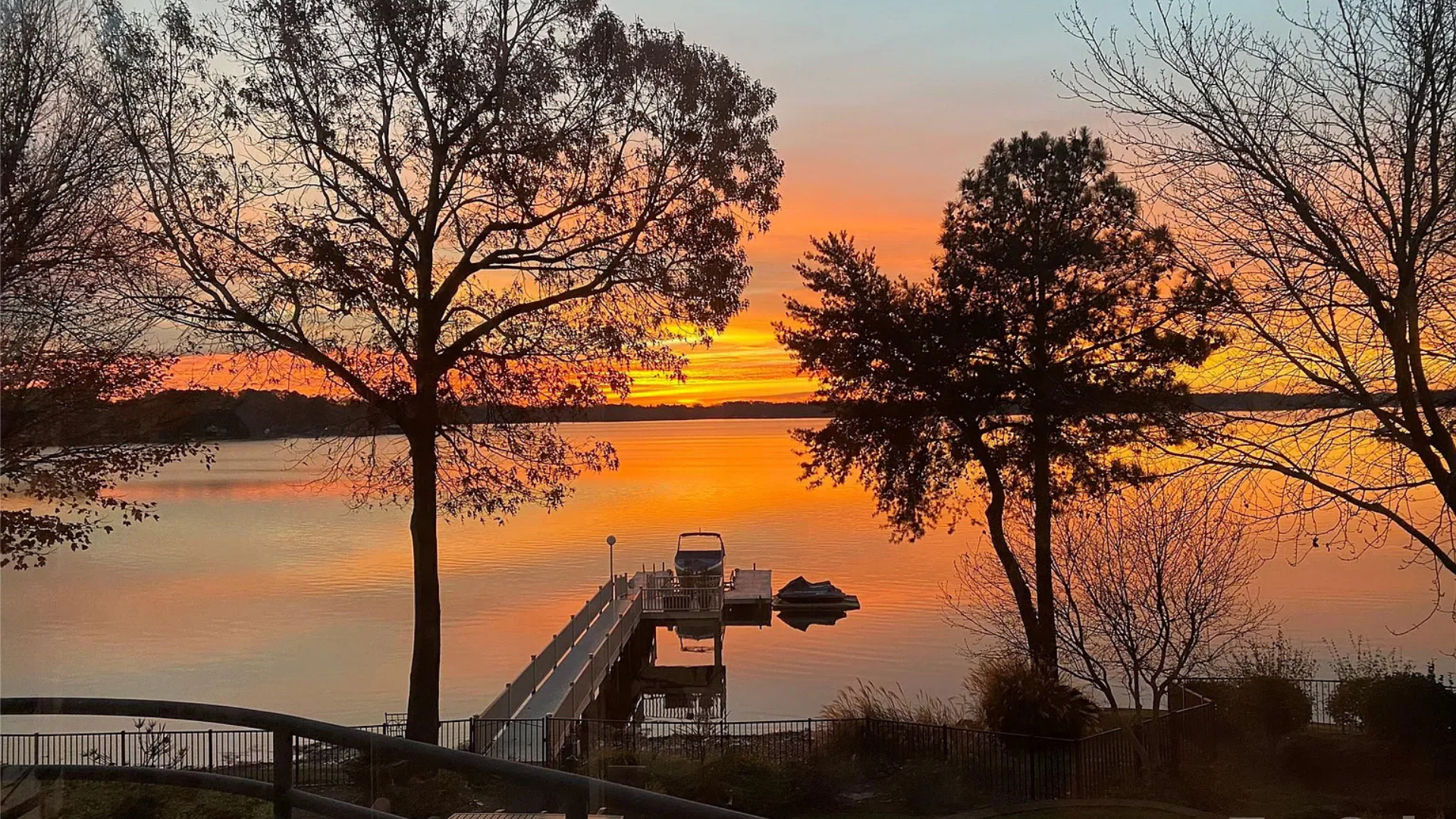
Can You Build a New Dock on a Lake Norman Waterfront Property?
Owning waterfront property does not, by itself, guarantee that your preferred dock can be constructed.
Before buying an undeveloped waterfront lot or a property without a dock, we recommend confirming the shoreline's permitting circumstances directly with the appropriate authorities.
Duke Energy explains that its Catawba-Wateree Shoreline Management Plan is designed to manage shoreline development and environmental resources throughout the reservoir system. It also advises property owners to contact Lake Services before undertaking work along shoreline property.
A buyer should investigate questions such as:
Is a private dock potentially approvable at this location?
What type and configuration may be considered?
Are there shoreline or environmental constraints?
Could neighboring facilities affect placement?
Are additional local permits required?
Does the HOA impose restrictions beyond Duke Energy requirements?
Does the proposed dock reach water deep enough for your actual boat?
That last point deserves more attention than it usually gets.
A technically possible dock is not necessarily a useful dock.
Our own Lake Norman buyer guidance emphasizes that there is no single water-depth number appropriate for every boat. Your draft, lift, cove, and seasonal lake-level changes all influence whether the dock will function the way you expect.
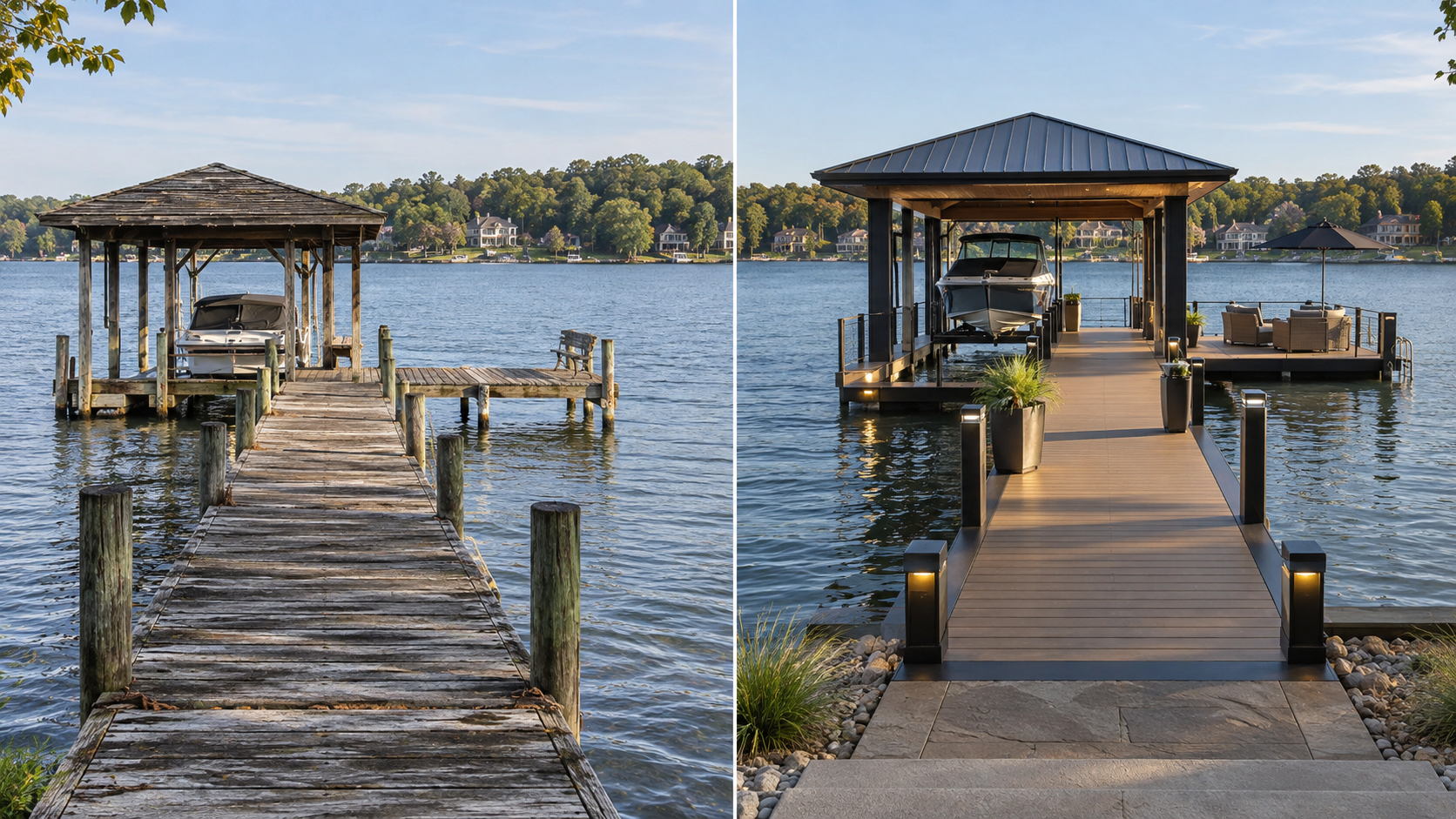
Can You Replace an Existing Dock on Lake Norman?
You should not assume that replacing an aging dock is simply a matter of demolishing the old structure and rebuilding a newer version.
The safest approach is to determine what documentation applies to the existing facility and what authorization Duke Energy Lake Services requires for the work you are considering.
Duke Energy has long maintained a program addressing the condition and safety of shoreline structures, and it directs owners to coordinate repairs or removal when significant deficiencies are identified.
That becomes especially important when you walk onto an older Lake Norman dock and immediately start imagining a renovation.
Maybe the decking needs replacement.
Maybe the pilings look tired.
Maybe you want an aluminum structure instead of wood.
Maybe the existing layout works for a pontoon but not the boat you intend to purchase.
Before mentally adding the renovation cost to your post-closing budget, find out what work can be performed and what approval path applies.
In other words, do not price the waterfront renovation until you understand the waterfront permissions.
Can You Expand a Dock or Add a Boat Lift After Closing?
Possibly, but buyers should verify the proposed modification before assuming an existing dock gives them permission to build more.
This is one of the most common mental shortcuts in waterfront real estate.
You tour a beautiful house with a modest dock and think:
We can add another slip later.
Or:
We will just put a larger lift over there.
Or:
There is plenty of shoreline. We can make the dock bigger.
Maybe you can.
But that future improvement is too important to base on “maybe.”
Duke Energy's shoreline-management responsibilities specifically include permitting piers and docks, which means significant changes should be evaluated within the applicable permitting framework.
At The Petrenko Group, we encourage buyers to describe their waterfront vision before closing. If your plans include a larger boat, multiple watercraft, jet ski ports, a covered slip, a different lift, or a substantially different dock configuration, those goals belong in the property evaluation process.
The lake should fit your life, not merely photograph beautifully.
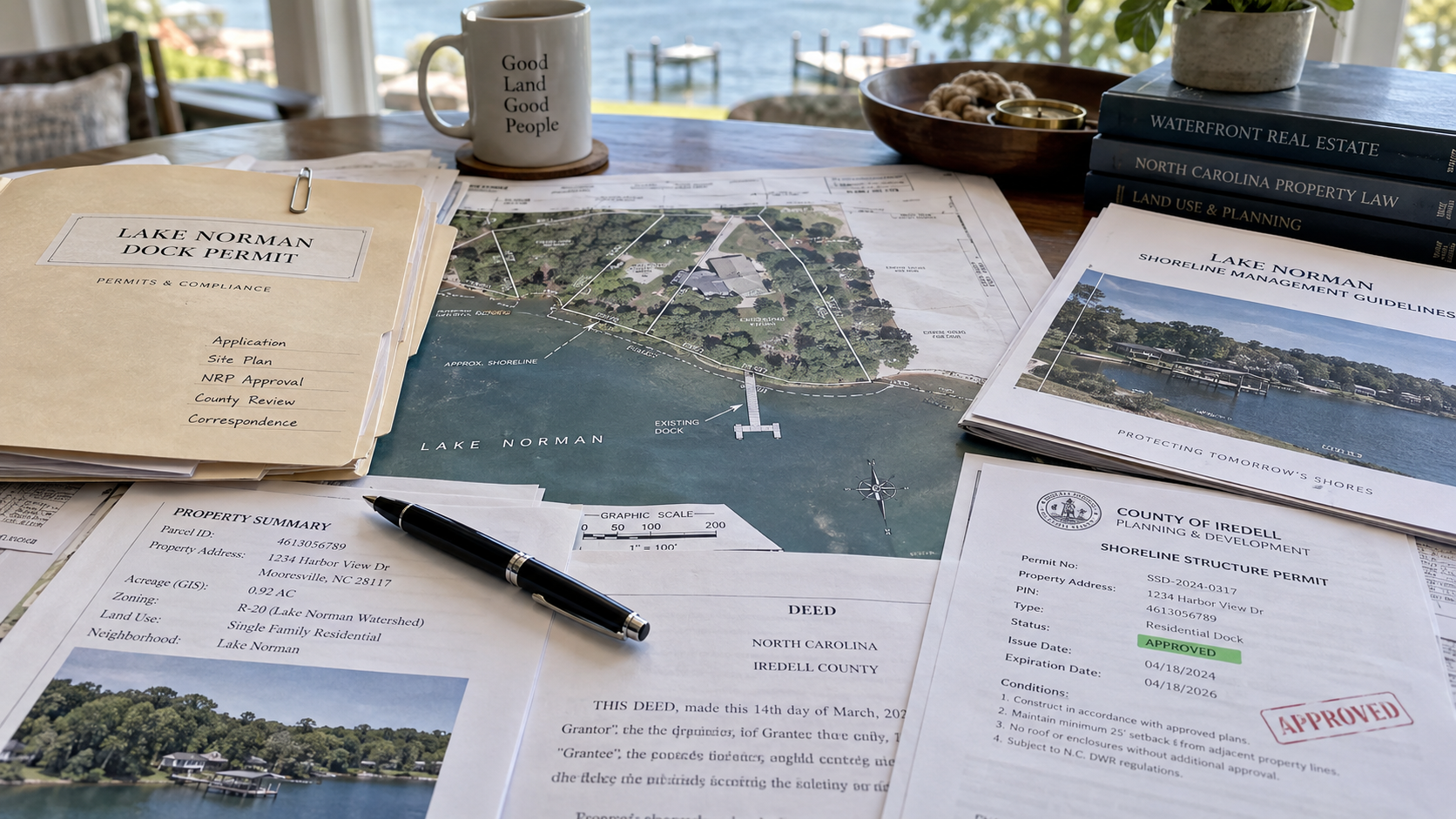
What Should Lake Norman Buyers Verify About an Existing Dock?
Buyers should verify the dock's documentation, physical condition, current configuration, and suitability for their intended use before treating it as a fully understood asset.
The Lake Norman Marine Commission specifically directs dock and shoreline permitting questions to Duke Energy Lake Use Permitting.
A practical buyer checklist includes:
Ask for available permit and shoreline documentation.
Compare the documents with what physically exists at the property.
Ask whether later additions or alterations were approved.
Review the boat lift, electrical components, decking, flotation, pilings, and roof condition.
Clarify what Lake Services requires when ownership changes.
Ask about any known compliance issues or unresolved shoreline matters.
Verify HOA rules separately.
Measure or investigate water depth with your actual boating plans in mind.
If future changes are important, verify their feasibility before closing.
Think about this the same way you would approach a major home addition.
You would not buy a house solely because someone casually told you that a 2,000-square-foot addition “should be fine.”
A waterfront improvement deserves the same discipline.
Does the Dock Actually Work for Your Boat and Lifestyle?
A permitted dock is valuable only if it works for the way you intend to use the lake.
Water depth is one of the most important variables.
Lake Norman's level changes, and Duke Energy provides current lake-level information for recreational users and property owners.
A boat that works beautifully at the dock under one set of conditions may have far less margin when water levels decline.
This is where generic advice falls short.
A pontoon owner may evaluate a dock differently from someone planning to keep a larger cruiser or performance boat. Lift requirements also matter. The number written on a depth measurement means very little until you connect it with your particular vessel and the conditions under which you expect to use it.
We regularly encourage waterfront buyers to ask:
What will this dock be like when conditions are less than perfect?
That question can reveal much more than looking at the water on a beautiful summer afternoon.
Our Lake Norman waterfront guide also treats water depth, shoreline condition, dock status, and lot orientation as core buyer-due-diligence considerations because they can materially change how a property functions.
Can an HOA Restrict Your Lake Norman Dock Plans Too?
Yes, private community restrictions may add another layer of requirements even when shoreline permitting is handled through Duke Energy.
Duke Energy manages shoreline activities within its jurisdiction, but buyers should separately review the covenants, architectural rules, and regulations that apply to the community.
That distinction is important.
An HOA rule does not replace Duke Energy's shoreline requirements, and Duke Energy approval does not necessarily eliminate private obligations you accepted by purchasing in a particular community.
Before closing, ask for:
Current HOA covenants and architectural guidelines
Waterfront or dock-specific restrictions
Rules regarding roof styles or colors
Boat-lift restrictions
Lighting requirements
Construction-hour or contractor rules
Any approval process for waterfront alterations
According to Duke Energy, shoreline activity occurs within a broader management framework intended to protect environmental, recreational, and cultural resources across the Catawba-Wateree system.
For buyers, the practical lesson is simple: verify each regulatory layer separately.
What Should You Verify Before Closing on a Lake Norman Waterfront Home?
Before closing, make sure the waterfront itself has received the same level of scrutiny as the house.
That means looking beyond the granite countertops, sunset view, and beautifully staged patio.
Here is the short version we would want a waterfront buyer to remember:
Verify the existing dock documentation.
Determine whether the structure you see matches the available records.
Evaluate the dock's physical condition.
Understand water depth for your boat and lift.
Review shoreline condition and existing improvements.
Check HOA and community restrictions.
Investigate local requirements relevant to your proposed work.
Ask Duke Energy Lake Services about any future dock change that is important to your purchase decision.
Do not assume a neighboring dock establishes what your property can support.
Resolve material waterfront questions before closing whenever possible.
The Lake Norman Marine Commission identifies Duke Energy Lake Use Permitting as the point of contact for dock, pier, shoreline-management, and dredging questions.
The goal is not to make waterfront buying complicated. The goal is to discover complications while you still have options.
How Do Vic and Amy Petrenko Help Buyers Evaluate Lake Norman Waterfront Property?
We help buyers evaluate the entire waterfront experience, not simply whether a listing checks the box marked “waterfront.”
Vic and Amy Petrenko are luxury real estate advisors with Premier Sotheby's International Realty who specialize in Lake Norman and Charlotte-area luxury and waterfront homes. The Petrenko Group's current brand emphasizes water depth, shoreline conditions, dock access, cove location, privacy, community rules, and how each factor fits the buyer's lifestyle.
That approach matters because Lake Norman properties that look similar online can behave very differently in real life.
One dock may sit in protected water.
Another may experience considerable boat traffic.
One property may have exceptional depth.
Another may have breathtaking views but less flexibility for the kind of boat you own.
One existing dock may already fit your needs beautifully.
Another may turn your desired renovation into the most important question in the entire transaction.
Vic brings more than 30 years of military leadership and strategic planning experience, while Vic and Amy have personally navigated 16 family relocations. Their current company profile describes them as AI-certified marketing professionals, combining advanced digital tools with hands-on advisory service.
For buyers, we use technology to organize information, communicate efficiently, and support research. But technology does not replace standing at the waterfront, asking the right questions, reviewing documentation, and understanding what matters to your family.
A.I. can make the process more efficient. Experienced human judgment still guides the decision.
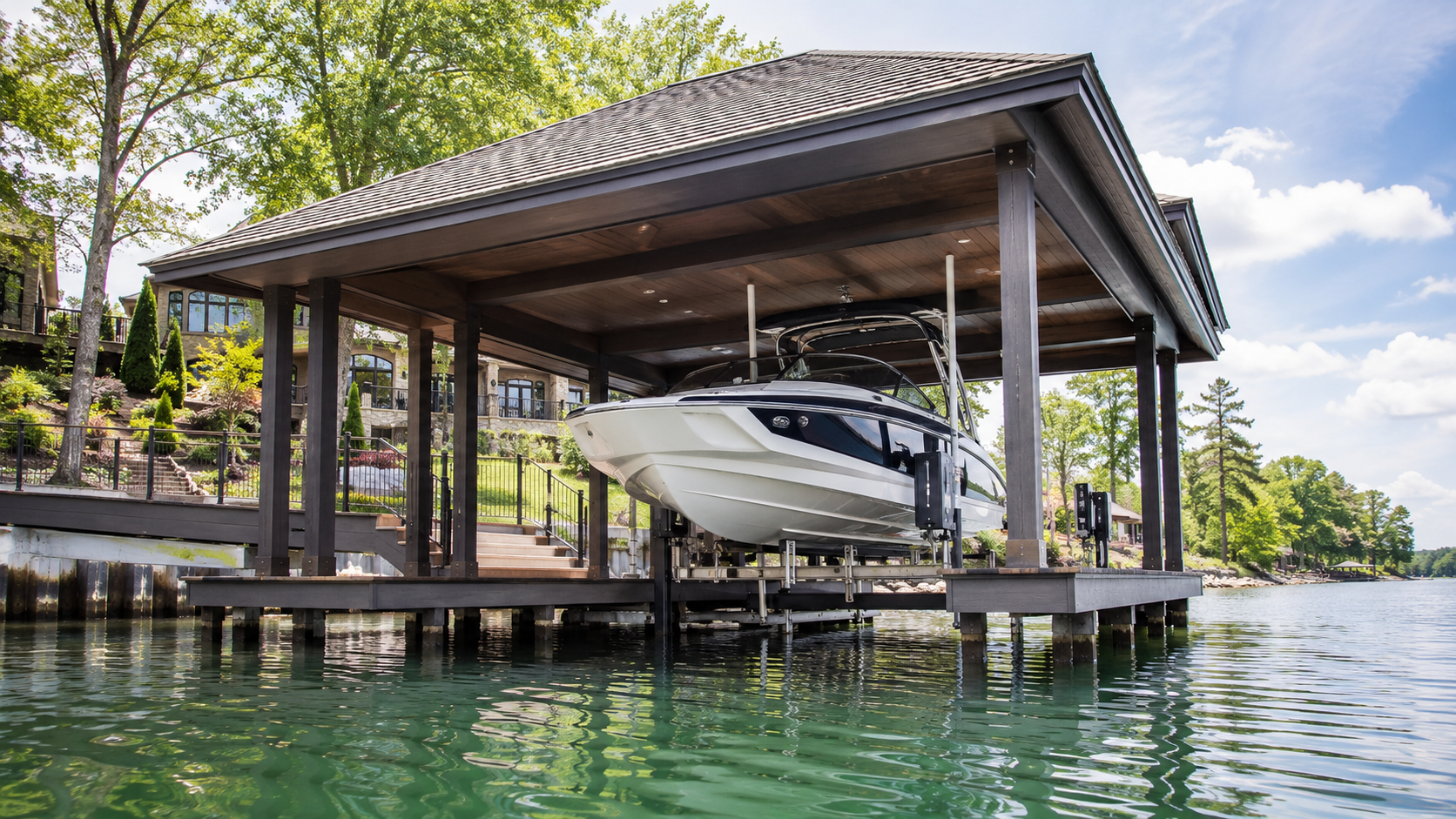
Before You Buy the Dock, Understand the Waterfront
A private dock is often one of the most exciting parts of owning a Lake Norman home.
It is where mornings begin.
It is where the boat waits.
It is where children jump into the lake, friends gather at sunset, and some of the best parts of waterfront ownership happen.
That is exactly why the dock deserves more attention than a quick walk-through during a showing.
Do not ask only whether the home has a dock. Ask whether the dock, shoreline, water depth, and future options fit the way you want to live.
And if your purchase depends on being able to build, replace, expand, or substantially change a dock, verify that possibility with the appropriate authorities before you base your decision on it.
Ready to Explore Lake Norman Waterfront Homes?
Considering a waterfront home on Lake Norman? Before you fall in love with the dock, make sure the waterfront can support the way you actually plan to use it.
Contact Vic and Amy Petrenko of The Petrenko Group at Premier Sotheby's International Realty for a confidential Lake Norman buyer consultation and a more thoughtful approach to waterfront due diligence.
Frequently Asked Questions About Lake Norman Dock Permits
Do you need approval to replace an existing dock on Lake Norman?
You should confirm the approval requirements with Duke Energy Lake Services before beginning replacement work. Duke Energy manages shoreline permitting for piers, docks, and related activities within the Catawba-Wateree system, and the exact requirements can depend on the proposed work.
Can I make a Lake Norman dock bigger after I buy the home?
Possibly, but you should not assume expansion is available simply because a dock already exists. The proposed configuration and property need to be evaluated under the applicable shoreline rules, along with any community or local requirements. If expansion is important to your purchase, investigate it before closing.
Does buying a Lake Norman house with a dock mean the dock is automatically approved?
The existence of a dock should not substitute for reviewing its documentation. Ask for the available permit records and determine whether the current structure and any later additions are properly documented. Duke Energy Lake Services is the appropriate resource for property-specific shoreline-permitting questions.
Can an HOA stop me from changing my dock?
An HOA may have private architectural or community restrictions that affect your plans, while Duke Energy separately administers shoreline permitting within its jurisdiction. Buyers should review both rather than assuming approval from one resolves every requirement.
What should I ask the seller for before buying a Lake Norman home with a dock?
Ask for existing dock and shoreline documentation, records of alterations, information about the boat lift and electrical system, maintenance history, surveys, HOA documents, and any known correspondence involving shoreline issues. Then compare those records with what physically exists at the property and verify important unanswered questions before closing.
Sources
Duke Energy, shoreline management and lake-neighbor guidance: Duke Energy shoreline management guidance
Duke Energy, shoreline structure inspection and permitting framework: Duke Energy Lake Norman shoreline structure program
Lake Norman Marine Commission, dock and shoreline permitting contact guidance: Lake Norman Marine Commission dock and pier FAQ
The Petrenko Group, Lake Norman waterfront buyer guide: The Ultimate Guide to Buying a Waterfront Home on Lake Norman
The Petrenko Group, water depth guidance: How Deep Should the Water Be at a Lake Norman Dock?
The Petrenko Group, Vic and Amy Petrenko bio and credentials: About The Petrenko Group
The article follows the approved Triple Engine structure by front-loading answers, using question-based headings, incorporating local buyer intent, and adding concise FAQs for answer-engine visibility.


