
Septic Systems and Waterfront Homes: What Charlotte-Area Lake Buyers Need to Investigate
Buying a waterfront home with a septic system in the Charlotte area requires a level of due diligence that goes well beyond admiring the view, checking the dock, and ordering a standard home inspection. On Lake Norman and Lake Wylie, what is underground can have a significant impact on how you use, renovate, expand, and enjoy the property above it.
Here is the important part many buyers do not realize: a beautiful waterfront lot does not automatically mean every part of that lot is available for a pool, addition, guest suite, garage, or outdoor living project. Septic systems are approved based on specific site conditions, and those conditions can include soil characteristics, topography, system layout, wastewater capacity, and other improvements on the property. Mecklenburg County specifically notes that septic approvals are site-specific and that soil conditions can vary dramatically even between adjoining properties.
We are Vic and Amy Petrenko of The Petrenko Group, Brokers in North Carolina and South Carolina, GRIs, and Global Real Estate Advisors with Premier Sotheby’s International Realty. Our work throughout Charlotte, Lake Norman, and Lake Wylie is built around discreet, detail-oriented representation and deep local knowledge. For waterfront buyers, that means helping you look beyond what is immediately visible and identify questions that deserve answers before closing.
Why Do Septic Systems Require Extra Due Diligence on Lake Norman and Lake Wylie?
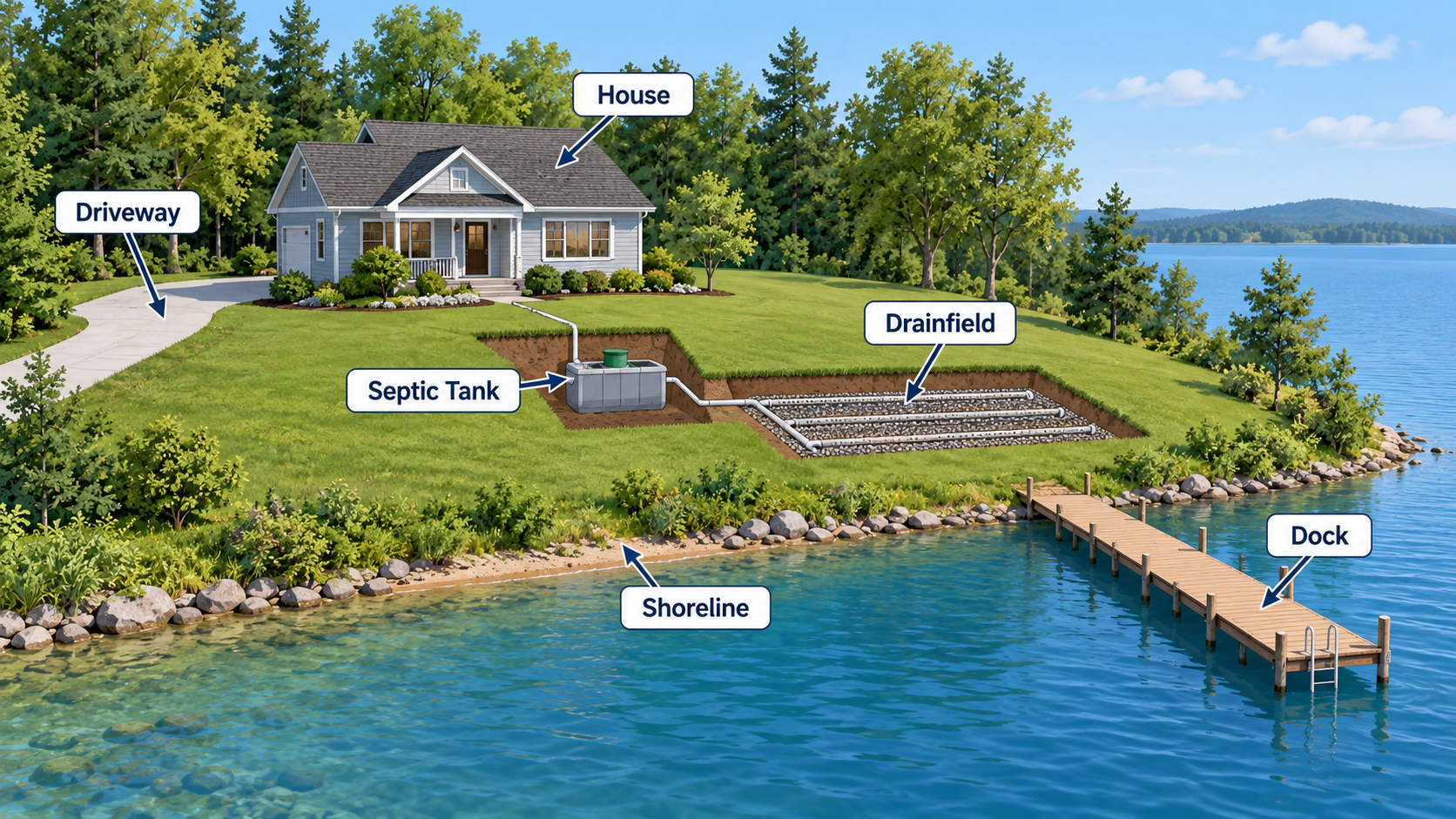
Septic systems deserve additional attention on waterfront properties because the system, the home, the shoreline, and future improvements all have to coexist on a finite piece of land.
Unlike a home connected to municipal sewer, a septic property treats wastewater onsite. That means part of the property is performing an essential infrastructure function, even though much of that infrastructure may be hidden underground.
A typical system includes a septic tank and a drainfield or dispersal area. Depending on the property and system design, there may also be pumps, additional treatment components, or other equipment requiring inspection and maintenance.
For a lake buyer, the bigger question is not simply, “Does the septic system work today?”
You also want to know:
What system is actually installed?
Where is it located?
What was it permitted to serve?
Is the current home consistent with the permitting history?
Where is the drainfield?
Is there an area intended for repair or replacement?
Could your future plans interfere with the septic system?
Has the system been altered or repaired?
Are there components that require ongoing maintenance?
Catawba County's septic permitting process illustrates why the entire site matters. Its required plans identify structures, driveways, rights of way, wells or septic systems, streams, gullies, pools, decks, gazebos, and other features when applicable.
Takeaway: The septic system should be evaluated as part of the property, not as an isolated mechanical component.
How Do You Verify a Waterfront Home’s Septic Permit and Approved Capacity?
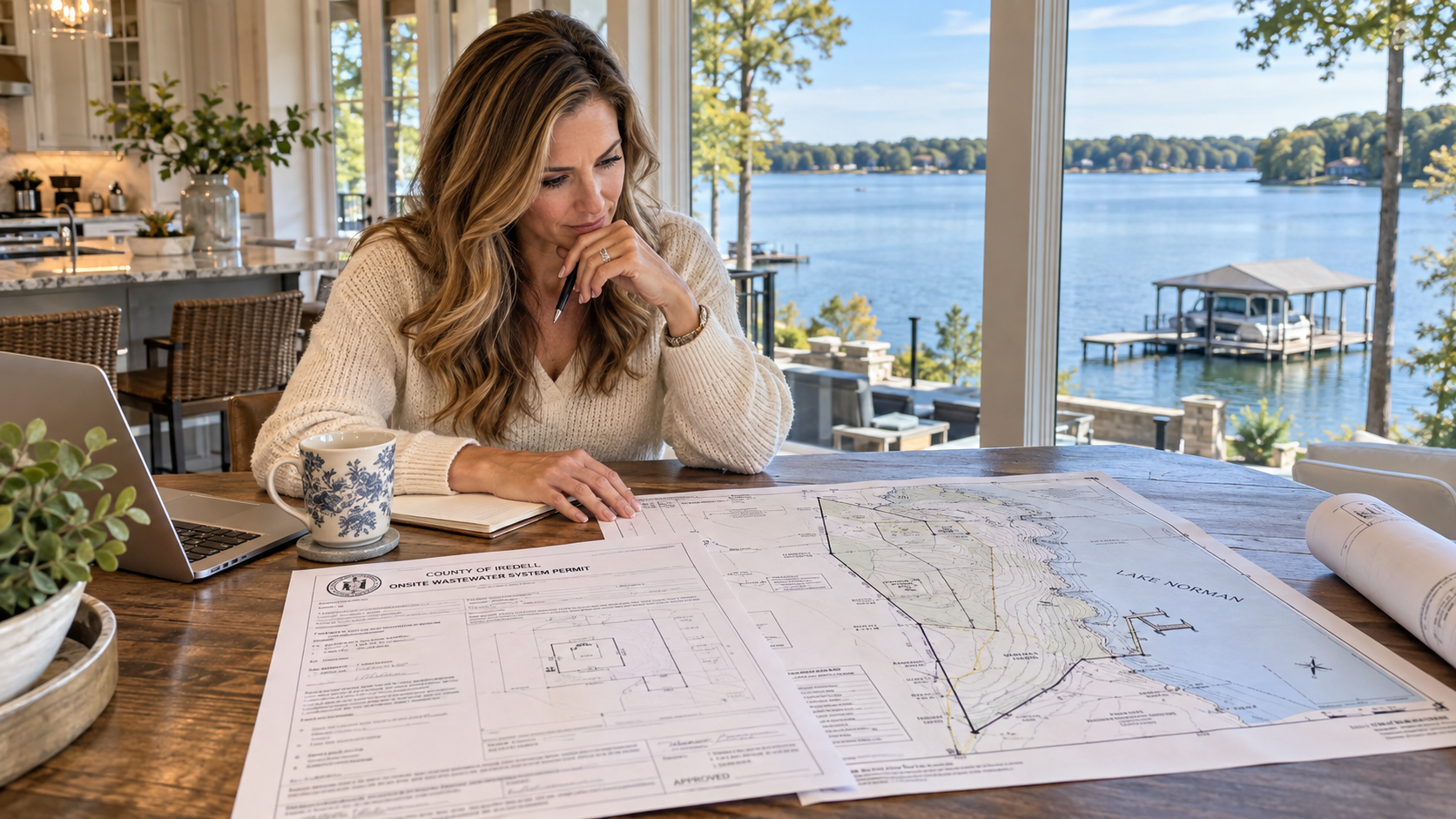
Start by locating the available septic records and comparing them with the house you are actually purchasing.
Do not assume the listing description tells the complete septic story.
In Iredell County, where many Lake Norman properties are located, the county provides an online process for locating septic records through its GIS system. Property owners and buyers can search the address, select the parcel, and review available septic records associated with the property.
Catawba County also provides a process for requesting copies of existing septic permits.
Why does this matter?
Imagine falling in love with a renovated lake home featuring several sleeping spaces, a finished lower level, and multiple entertaining areas. Visually, everything may feel perfectly suited to the way you intend to use the home.
The septic documentation may tell another story.
North Carolina's onsite wastewater rules contemplate permitting based partly on design flow, bedrooms, occupants, and proposed use. Catawba County's environmental health application specifically instructs applicants to count rooms intended for sleeping, including those contemplated for future use.
That is why we want buyers to compare what exists physically, what is represented in the transaction, and what the septic records support.
A record discrepancy does not automatically mean you should walk away from a property. It means you need answers.
Does the Septic System Match the Home’s Current Bedroom Count?
Bedroom count can be directly relevant to septic capacity, so buyers should investigate whether the permitted system aligns with the home's current configuration.
This issue matters because septic design is tied to expected wastewater use.
South Carolina's Department of Environmental Services explains that a residential septic tank and drainfield are sized according to the bedroom count of the home. Its guidance estimates wastewater capacity using the number of bedrooms and anticipated occupants.
North Carolina permitting materials also address bedroom count when evaluating septic systems. Catawba County specifically directs applicants to identify any room intended for sleeping, including rooms contemplated for future sleeping use.
This becomes especially important with renovated lake houses.
A property might have:
A finished basement
A bonus room
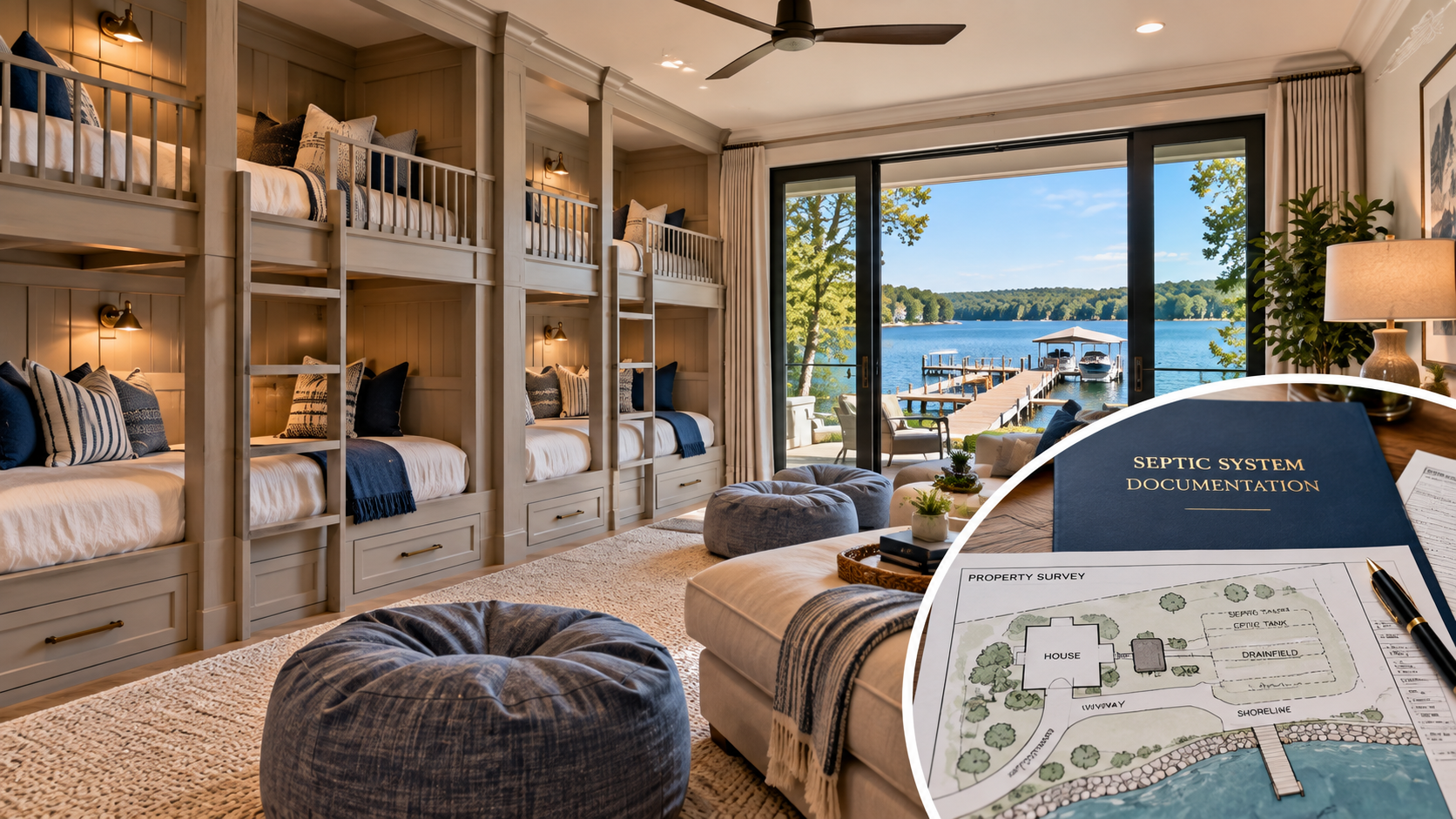
A bunk room
An office converted into sleeping space
A guest suite
A planned future bedroom addition
The physical house may therefore appear capable of accommodating more overnight guests than the original septic documentation contemplated.
Before purchasing, understand the permitted capacity instead of relying solely on how the rooms are currently labeled or furnished.
This is exactly the kind of detail that can be overlooked when buyers become understandably captivated by sunset views, outdoor kitchens, docks, and entertaining spaces.
The view is important.
So is what the property was approved to support.
Where Are the Septic Tank, Drainfield, and Repair Area Located?
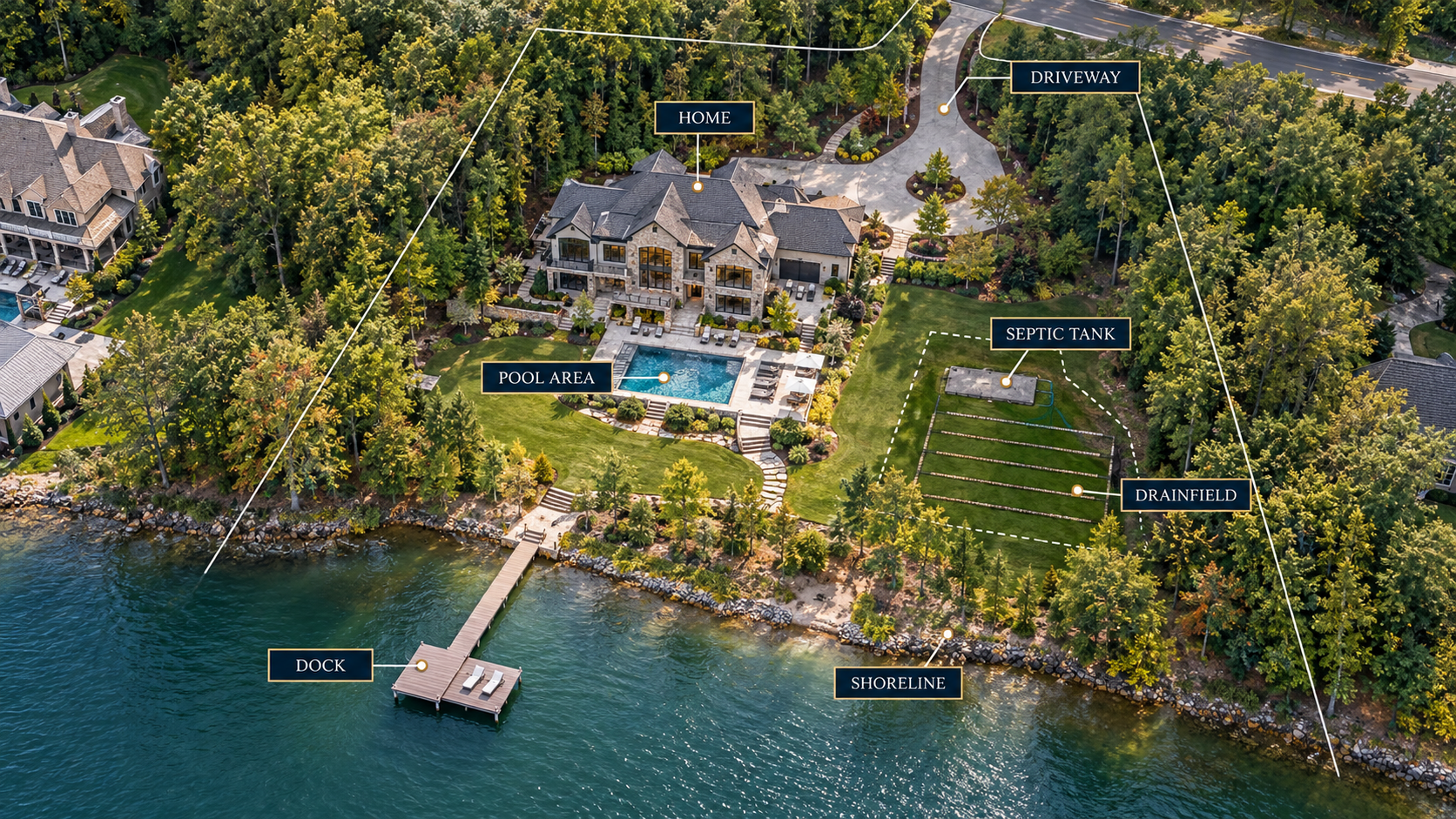
Knowing that a home has septic is not enough. You should understand where the system's major components are located in relation to the house and the rest of the lot.
That becomes particularly important if you plan to personalize the property.
Could your future pool overlap an area needed for the wastewater system?
What about a detached garage?
A guest house?
An expanded patio?
A home addition?
New landscaping?
A sport court?
Those are very different questions from whether the system flushes properly during a home showing.
Mecklenburg County requires site plans for septic permitting that depict improvements such as the residence, grading, paving, decks, walkways, and other buildings. The county also emphasizes that permit approval is highly site-specific.
Iredell County likewise tells property owners to maintain required setbacks between wastewater systems and improvements such as foundations, porches, decks, accessory buildings, and pools. If the exact septic location is uncertain, its guidance directs owners to have a qualified professional locate it.
This is why a spacious lawn can sometimes be misleading.
Open grass is not necessarily buildable grass.
For luxury waterfront buyers, we encourage thinking about the property you want five or ten years from now, not just the property you see on closing day.
What Should a Septic Inspection Include Before You Buy a Lake Home?
A septic evaluation should help you understand the system's condition, configuration, location, and any issues that warrant further investigation before closing.
The exact scope will depend on the property, the system type, local requirements, and the professional performing the work.
This is not an area where we recommend assuming that a general home inspection tells you everything you need to know.
Depending on the circumstances, buyers may want qualified septic professionals to help investigate:
The location of the tank and drainfield
Visible signs of failure or surfacing wastewater
Tank condition
Accessible components
Pumps or mechanical equipment, if present
Available maintenance or pumping history
Evidence of repairs or modifications
Whether the physical layout appears consistent with available records
Iredell County's Environmental Health program performs site evaluations, permits septic installations and repairs, and conducts existing-system inspections in certain situations. The county also maintains a process for applying for an existing system inspection.
For South Carolina properties, SCDES regulates onsite wastewater systems and licenses professionals who install, repair, or clean septic systems.
A clean inspection does not replace permit research, and permit research does not replace a physical evaluation. For an important waterfront acquisition, the two can complement each other.

Can a Septic System Limit a Future Addition, Pool, Guest House, or Renovation?
Yes. The location and capacity of an existing septic system can affect future improvements, which is why renovation plans should enter the conversation before you buy whenever possible.
This is one of the most overlooked parts of waterfront due diligence.
Consider a buyer purchasing a lake property with plans to transform it into a long-term family retreat.
The vision may include:
Adding another bedroom.
Building a swimming pool.
Creating a detached guest house.
Expanding outdoor entertaining space.
Adding a garage or workshop.
Each project may interact differently with the wastewater system and applicable approvals.
Iredell County specifically lists pools, decks, and additions among projects for which Environmental Health guidance may be relevant when septic is involved.
Mecklenburg County also requires septic site planning to account for proposed development and emphasizes that soil and topography influence system suitability and design.
And in Catawba County, proposed structures including pools and decks are among the features that may need to appear during the site evaluation and permitting process.
The lesson is simple:
If a future improvement is important enough that it affects whether you want the home, investigate its feasibility during due diligence rather than assuming it will be possible later.
That does not mean every buyer needs architectural plans before making an offer. It means important future intentions should become due-diligence questions early.
What Warning Signs Should Buyers Look for on a Waterfront Septic Property?
Warning signs can appear in the paperwork, on the property, or in the history of the system, so buyers should pay attention to both documents and physical conditions.
Potential questions worth investigating include:
Are septic records missing or difficult to reconcile with the current house?
Has the home been expanded since the original system was installed?
Are there more apparent sleeping rooms than expected from the septic documentation?
Has the system undergone previous repairs?
Is the location of the tank or drainfield uncertain?
Are there odors, wet areas, unusually lush patches, or signs of wastewater surfacing?
Does the property rely on pumps or other components requiring additional maintenance?
Could existing landscaping, hardscape, or structures interfere with system areas?
Are major renovations planned immediately after closing?
On the South Carolina side of Lake Wylie, SCDES warns that improperly installed septic systems can affect water quality and public health, which is why site approvals and permitting are required.
The goal is not to make buyers afraid of septic systems.
Many lake homes operate successfully with onsite wastewater systems for years when they are properly designed, used, and maintained.
The goal is simply to replace assumptions with information.
How Does the County Affect Septic Due Diligence Around Charlotte’s Lakes?
The location of the property matters because septic records, permitting procedures, inspection resources, and responsible agencies can differ by jurisdiction.
That is particularly relevant in the Charlotte lake market.
A Lake Norman search can take you across multiple counties and municipalities. A Lake Wylie search may involve property in either North Carolina or South Carolina.
For example, Iredell County maintains online septic record access and its own Onsite Water Protection program.
Catawba County Environmental Health manages onsite wastewater permitting and allows requests for copies of existing septic permits.
Mecklenburg County has its own Groundwater and Wastewater Services permitting and inspection framework for septic properties.
On the South Carolina side, onsite wastewater systems fall under the South Carolina Department of Environmental Services, which handles permitting and maintains resources for septic homeowners and contractors.
This is why waterfront due diligence should be property-specific.
A checklist is useful, but the actual investigation should follow the jurisdiction, records, system, improvements, and future plans associated with that particular property.
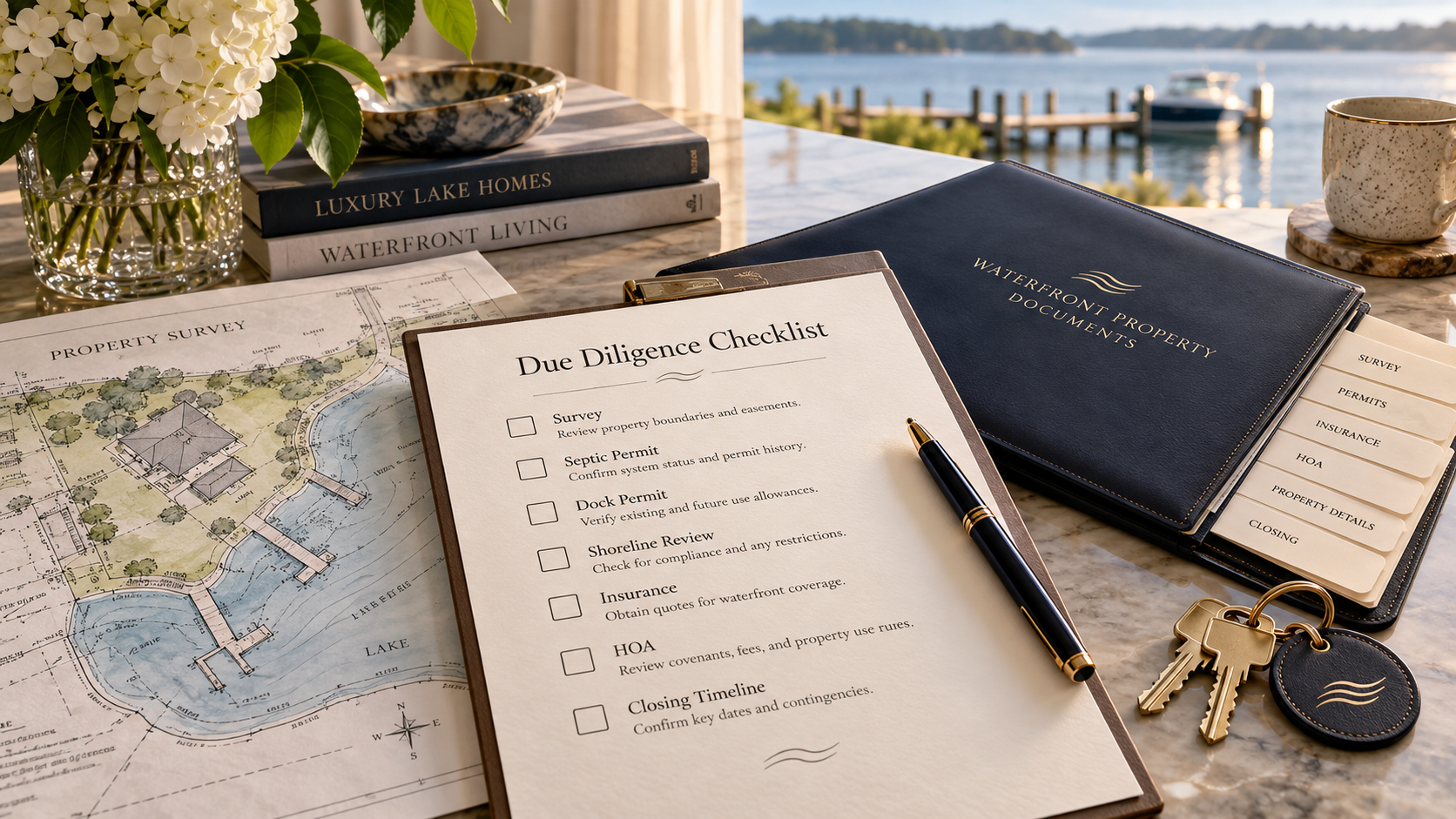
What Should Lake Norman and Lake Wylie Buyers Verify Before Due Diligence Ends?
Before your due diligence period concludes, try to answer the septic questions that could materially affect your decision to purchase or your plans for the property.
A practical buyer checklist includes:
1. Identify the wastewater system.
Confirm whether the property uses conventional septic, another onsite wastewater system, or available public/community sewer.
2. Obtain available permits and records.
Compare the documents with the existing property.
3. Understand permitted use and capacity.
Pay particular attention to bedroom-related information and later additions.
4. Locate the major system components.
Know where the tank and drainfield are, and investigate other relevant septic areas shown in the records.
5. Order appropriate professional evaluation.
Use qualified professionals suitable for the jurisdiction and system.
6. Review repair and maintenance history when available.
Past work can provide useful context.
7. Compare the system with your future plans.
If a pool, addition, guest house, bedroom, garage, or major landscaping project matters to you, raise the question now.
8. Investigate discrepancies.
If the permit, listing, home configuration, survey, or physical system does not seem to align, obtain clarification.
9. Coordinate the pieces.
Your real estate advisor, septic professional, surveyor, environmental health department, contractor, attorney, or other specialists may each provide a different piece of the picture.
The goal is not perfection. The goal is informed ownership.

How Do Vic and Amy Petrenko Help Buyers Investigate Waterfront Property Before Closing?
Our role is to help buyers approach a waterfront purchase as a complete property acquisition, not simply a beautiful house with a lake view.
At The Petrenko Group, we believe exceptional representation requires both perspective and attention to detail.
A waterfront property may involve the residence, septic system, survey, shoreline, dock, easements, permitting history, future improvement plans, and other property-specific considerations. No single inspection answers every question.
Our job is to help you identify the questions, organize the due-diligence process, connect the appropriate professionals, and keep important issues in view while you evaluate the larger opportunity.
As NC and SC Brokers, GRIs, and Global Real Estate Advisors with Premier Sotheby’s International Realty, we serve clients throughout Charlotte and the Lake Norman and Lake Wylie markets with the confidential, white-glove guidance that defines The Petrenko Group.
For us, luxury is not simply a price point.
It is the quality of the advice, the depth of preparation, and the confidence of knowing you investigated the property carefully before making it yours.
Before You Buy the View, Understand the Property Beneath It
A waterfront home on Lake Norman or Lake Wylie can offer an extraordinary lifestyle, but the smartest purchase decisions happen when buyers evaluate more than what they can see from the dock.
Confirm the septic records. Understand the system's capacity. Locate its components. Investigate its condition. And, importantly, consider whether the system and the lot can accommodate the way you hope to use the property in the future.
That additional layer of due diligence can turn uncertainty into clarity.
Considering a waterfront home on Lake Norman, Lake Wylie, or elsewhere in the Charlotte region? Vic and Amy Petrenko can help you look beyond the view and investigate the details that matter to your ownership plans. Contact The Petrenko Group for confidential, white-glove guidance before making your next waterfront move.
The Petrenko Group
Vic and Amy Petrenko
Broker NC & SC | GRIs | Global Real Estate Advisors
Premier Sotheby’s International Realty
ThePetrenkoGroup.com
Vic: 910.916.4308
Amy: 910.916.4305
[email protected]
Frequently Asked Questions
Should I get a separate septic inspection when buying a Lake Norman home?
A septic-specific evaluation is worth considering when a Lake Norman property relies on an onsite wastewater system. A standard home inspection may not provide the same level of evaluation of the tank, drainfield, system configuration, records, and related components. Iredell County, for example, has a specific process for existing septic system inspections.
How do I find the septic permit for a waterfront home in North Carolina?
Start with the county Environmental Health department or county records system where the property is located. Iredell County makes many septic permits accessible through its GIS property records, while Catawba County provides a process for requesting existing permits. Procedures differ by jurisdiction, so verify the correct agency for the particular property.
Can a septic system prevent me from adding another bedroom or expanding the house?
It can affect whether and how certain improvements are approved. Septic systems are designed around factors including wastewater demand, site conditions, and available suitable land. Adding bedrooms or constructing improvements near septic components may trigger additional review or approval, so investigate significant future plans before purchasing.
What happens if the septic system does not match the advertised bedroom count?
Treat the discrepancy as something that requires further investigation rather than making assumptions. Ask for septic permits, building records, and other relevant documents, then consult the appropriate county and qualified professionals. Because bedroom count can relate to septic design capacity, understanding the difference may be important before your due diligence period ends.
What should I check if a Lake Wylie home has septic instead of sewer?
Verify the permitting authority, available septic records, system layout, condition, capacity, and how the system affects your future plans for the property. On the South Carolina side, SCDES regulates onsite wastewater systems, provides homeowner resources, and maintains information on licensed septic professionals. Older properties may require additional investigation if original permit records cannot readily be located.
Sources
Mecklenburg County Public Health, Basic Steps for a New Septic System:
Mecklenburg County septic system guidance
Mecklenburg County Public Health, Septic System Permitting and Inspection:
Mecklenburg County septic permitting information
Iredell County, Onsite Water Protection:
Iredell County Onsite Water Protection
Iredell County, Septic Records Online:
Iredell County septic record lookup guidance
Catawba County Environmental Health, Septic Systems:
Catawba County septic systems guidance
South Carolina Department of Environmental Services, Residential Septic Systems:
South Carolina DES septic permitting guidance
South Carolina Department of Environmental Services, Homeowner Resources:
South Carolina DES septic homeowner resources
South Carolina Department of Environmental Services, Locating a Septic Tank:
South Carolina DES septic tank location guidance


