
8 Questions to Ask Before Buying a Lake Norman Lakefront Home
8 Questions to Ask Before Buying a Lake Norman Lakefront Home
A beautiful lake view can make you forget to ask practical questions.
You step onto the back deck, see sunlight moving across the water, and imagine quiet mornings, sunset cruises, and weekends with the people you love. The home feels right. The setting feels rare. You begin picturing your life there before you fully understand what you may be buying.
That emotional connection matters. It is part of what makes lakefront living so special. But a smart Lake Norman waterfront purchase requires you to look beyond the view.
A dock, shoreline, water depth, septic system, flood zone, and even the shape of a cove can affect how you enjoy the property, what you may change, and how easily you can sell it later.
Before buying a Lake Norman lakefront home, ask these eight important questions.
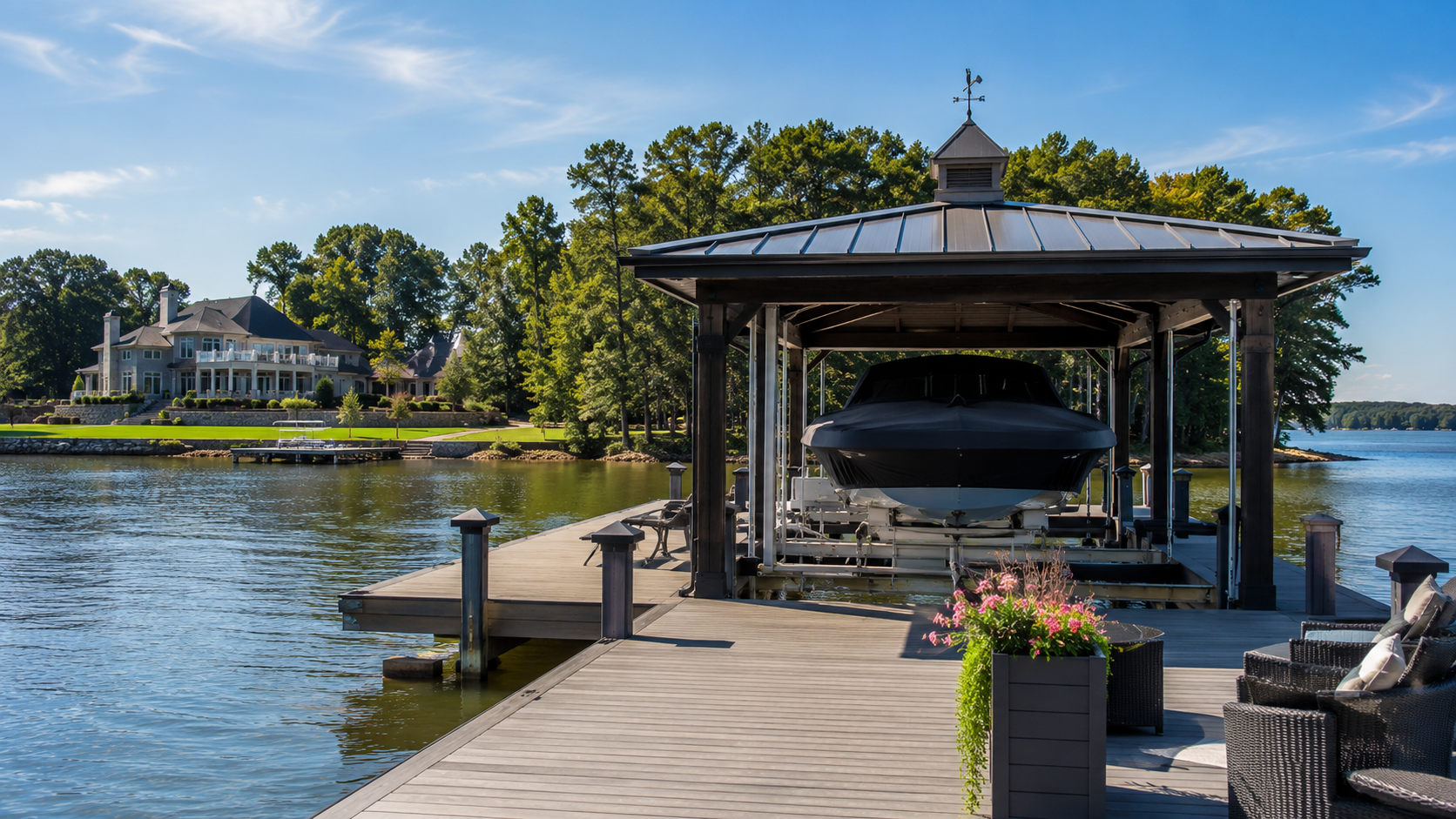
1. Does the Property Have a Permitted Dock?
Do not assume that an existing dock is fully permitted simply because it is already in the water.
Duke Energy manages shoreline activities on Lake Norman as part of the Catawba-Wateree lake system. Activities such as constructing or modifying a dock, stabilizing a shoreline, or completing certain work within the project boundary may require approval. Duke Energy’s application process may require surveys, facility drawings, local permits, insurance documents, and other supporting records.
Before making an offer, confirm:
Whether the dock has current documentation
Whether previous additions or modifications were approved
Whether boat lifts, roofs, personal watercraft ports, or other features are included
Whether repairs or replacement would require new approval
Whether the shoreline is eligible for the improvements you want
A dock is not simply an accessory. It is a major part of the property’s use, value, and future potential.
2. How Deep Is the Water at the Dock?
“Waterfront” does not always mean reliable boating water.
Some Lake Norman properties sit on deep-water coves with easy access throughout much of the year. Others may experience shallow conditions, exposed lakebed, sediment buildup, or limited navigation when lake levels change.
Duke Energy provides current lake-level information because reservoir levels and water conditions can fluctuate.
Ask for the water depth:
At the end of the dock
During normal lake levels
During lower seasonal conditions
Along the route from the dock to the main channel
Visit the property by boat when possible. A cove that looks peaceful from the porch may feel very different when you test its depth, width, traffic, and access.
The right question is not only, “Does it have a dock?” It is, “Can this dock support the way you plan to use the lake?”
3. What Kind of Lake Access Does the Property Offer?
Your ideal lakefront experience may differ from another buyer’s dream.
You may want quick access to open water for boating. You may prefer a protected cove for paddleboarding, swimming, or peaceful mornings. You may value privacy more than a long-range view.
Consider:
Distance to the main channel
Typical boat traffic
Wake exposure
Cove width and turning space
Nearby bridges or shallow passages
Proximity to marinas, restaurants, and fuel
Ease of swimming, kayaking, and launching water toys
There is no single “best” location on Lake Norman. There is only the location that best fits your lifestyle.
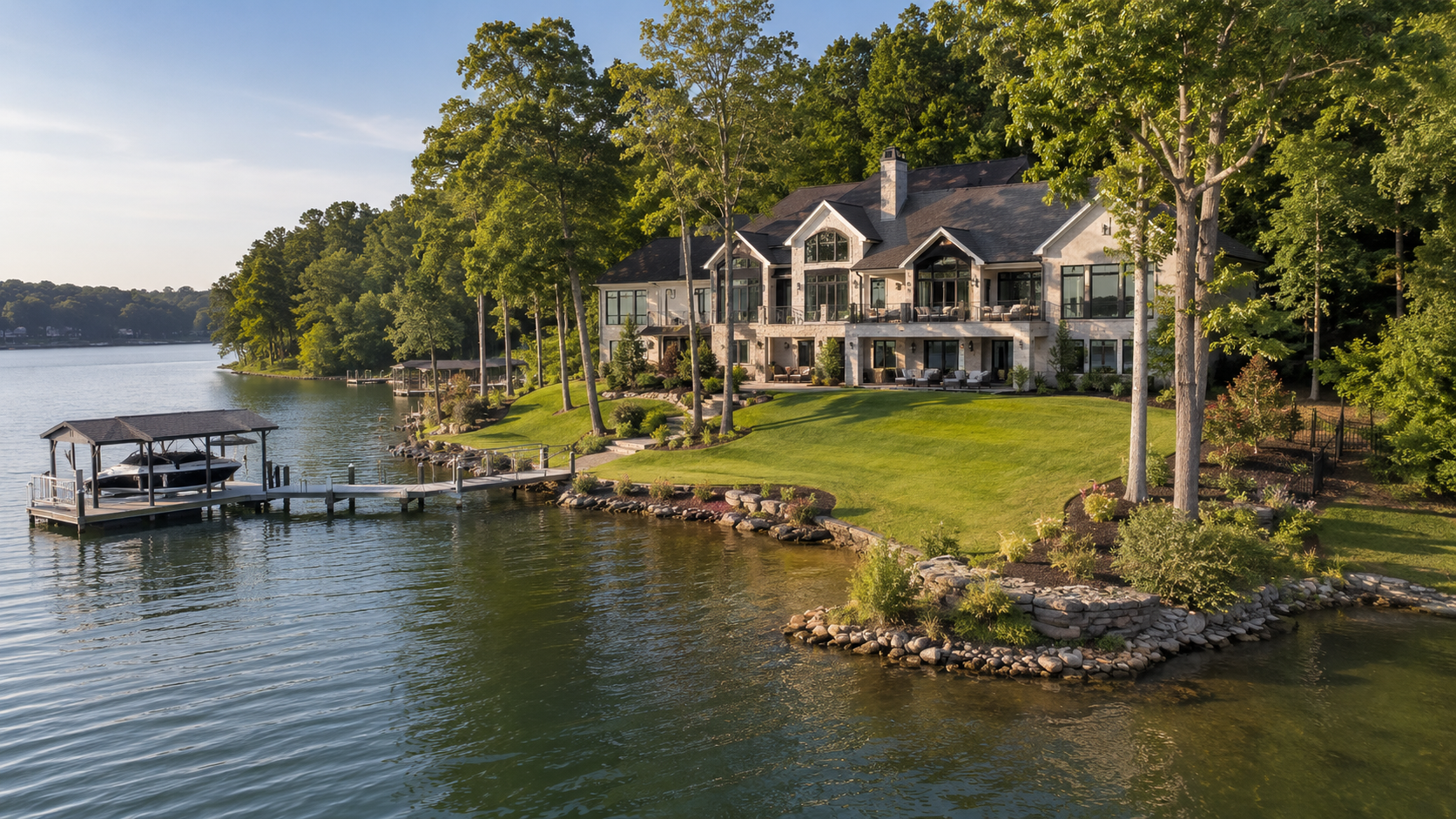
4. Who Controls the Shoreline?
This question surprises many first-time Lake Norman waterfront buyers.
Owning a lakefront lot does not necessarily mean you have complete freedom to change the shoreline. Duke Energy regulates certain construction and shoreline activities within its reservoir project boundaries, and additional local or state permits may also apply.
Before planning a larger dock, seawall, beach area, landscaping project, or shoreline renovation, determine:
Where your property line ends
Where the applicable project boundary is located
Which improvements already have approval
Whether vegetation removal is restricted
What permits would be needed for future work
That outdoor vision may still be possible, but you need accurate information before you attach your plans to the property.
5. Is the Home in a Flood Zone?
A lakefront home can sit above the water and still have flood-risk considerations.
Review current flood maps, elevation information, drainage patterns, and insurance requirements. Mecklenburg County, for example, provides GIS and three-dimensional flood-zone mapping tools that can help property owners research land and flood conditions.
Ask:
Is any part of the home in a mapped flood zone?
Are the dock, yard, driveway, or accessory structures affected?
Has water ever entered the home or crawl space?
Is flood insurance required or recommended?
Are there drainage or erosion concerns?
A qualified insurance professional can also help you understand possible coverage and cost before your due-diligence period ends.
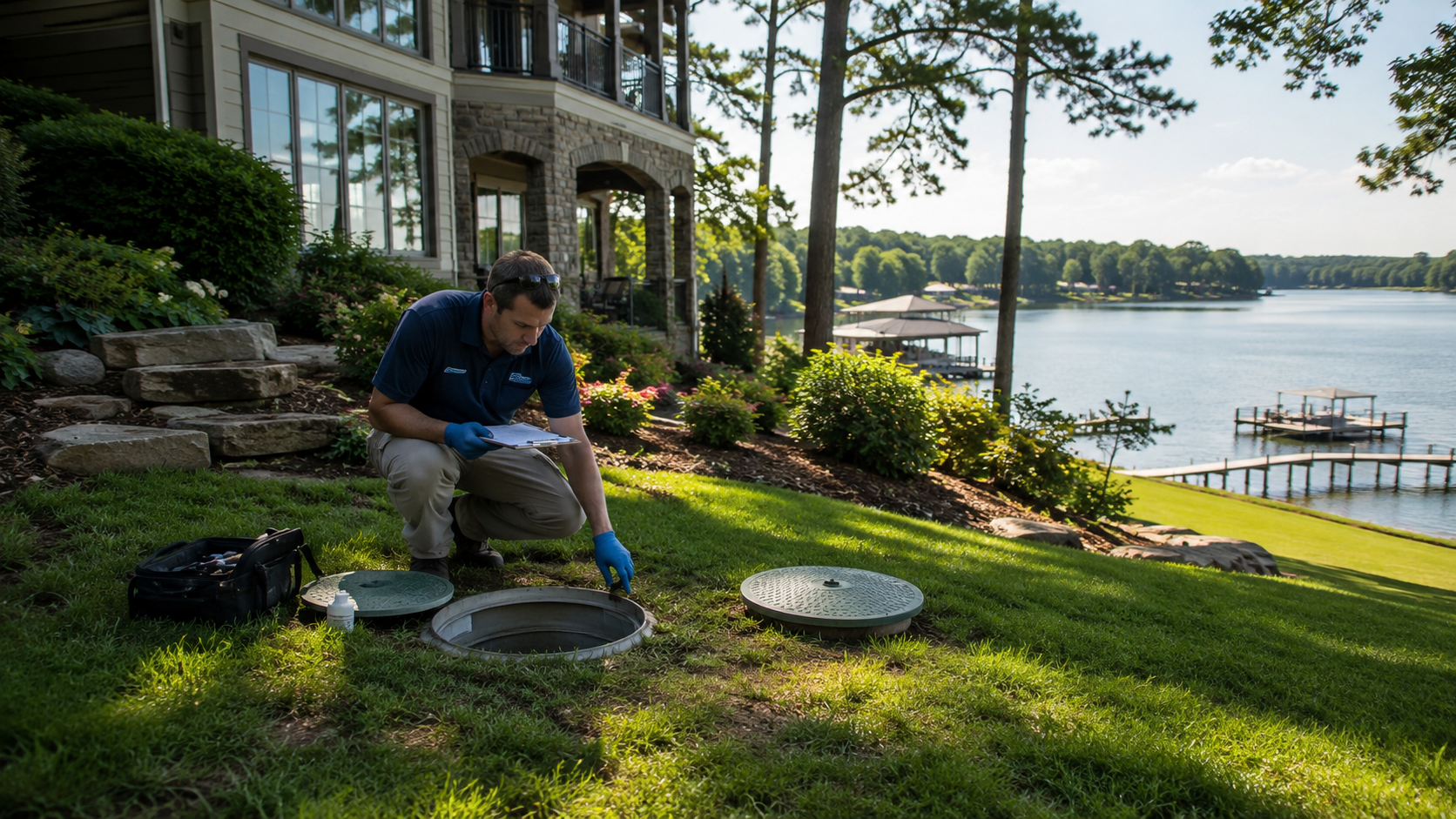
6. Is the Home Connected to Sewer or Septic?
Many Lake Norman homes use septic systems, particularly in areas outside municipal sewer service.
The septic permit may affect how many bedrooms the home is legally designed to support. It may also influence expansion plans, pool placement, additions, guesthouses, and future construction.
North Carolina’s Department of Environmental Quality notes that septic records are generally maintained by local health departments rather than the state environmental agency.
Before closing, review:
The original septic permit
The permitted bedroom count
The location of the tank and drain field
Repair or replacement history
Available expansion or repair area
Inspection and pumping records
A five-room sleeping layout does not automatically mean the property has a five-bedroom septic permit.
7. What Will It Cost to Maintain the Waterfront?
Lakefront ownership creates experiences that are difficult to duplicate, but it also comes with added maintenance.
Your budget may need to include:
Dock inspection and repairs
Boat-lift servicing
Seawall or shoreline maintenance
Tree care
Erosion control
Exterior cleaning
Increased insurance
Boat storage and winterization
Irrigation or landscaping near the shoreline
Ask for service records and inspect the dock, electrical systems, pilings, flotation, decking, roof, seawall, and shoreline condition.
A home may look move-in ready while the waterfront infrastructure is approaching a costly repair cycle.
8. Will This Property Protect Its Resale Appeal?
You may plan to stay for years, but your future buyer will ask many of the same questions you should ask today.
The strongest Lake Norman lakefront properties often combine several desirable features:
Usable water depth
A functional, documented dock
Attractive shoreline
Convenient lake access
Privacy
Strong outdoor living
A well-maintained home
A location near shopping, dining, schools, or major roads
The house can often be renovated. The lot, shoreline, cove, orientation, and water access are much harder to change.
Buy the waterfront as carefully as you buy the home.
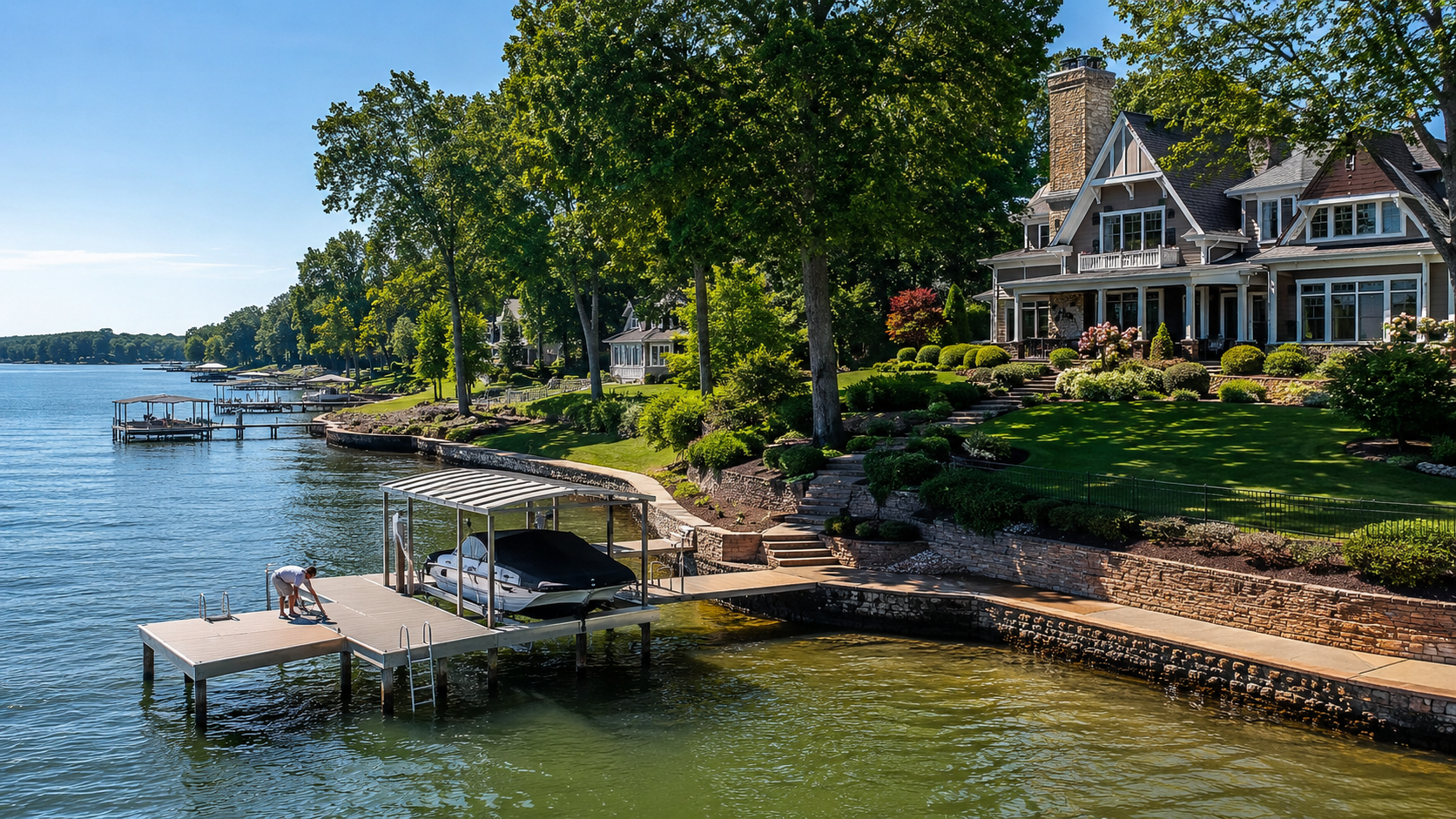
How Do You Make a Confident Lake Norman Lakefront Purchase?
Follow this simple process:
Define how you want to use the lake.
Tour properties from both the road and the water.
Verify dock and shoreline documentation.
Review water depth and navigation access.
Investigate septic, flood, drainage, and insurance factors.
Inspect the home and waterfront structures.
Compare the property with other lakefront options.
Work with an advisor who understands Lake Norman waterfront real estate.
The dream is not simply to own a home beside the water.
The dream is to wake up knowing you chose the right shoreline, the right access, the right setting, and the right property for the life you want to live.
Contact The Petrenko Group for Expert Lake Norman Advice
A lakefront purchase deserves more than a standard home search.
Amy and Vic Petrenko of The Petrenko Group help buyers evaluate the details that can shape both daily enjoyment and long-term value. From dock questions and water access to location, lifestyle, negotiation, and resale potential, you receive experienced guidance before making one of your most important decisions.
Contact The Petrenko Group for expert advice before buying a Lake Norman lakefront home. The right conversation today can help you avoid expensive surprises and move forward with confidence.
Frequently Asked Questions About Buying a Lake Norman Lakefront Home
Is every Lake Norman waterfront home allowed to have a dock?
No. Dock eligibility may depend on shoreline conditions, existing permits, project-boundary requirements, environmental factors, and current regulations.
Can I replace or expand an existing dock?
Possibly, but approval may be required. Review the existing permit and contact the appropriate authorities before assuming you can expand or rebuild it.
What is considered deep water on Lake Norman?
There is no single depth that works for every boat. The right depth depends on your watercraft, lake-level changes, sediment, and access from the dock to navigable water.
Should I view a lakefront home by boat?
Yes, whenever practical. A boat tour helps you evaluate water depth, cove access, traffic, nearby properties, bridges, and distance to open water.
Do Lake Norman homes use septic systems?
Many do, while others have public sewer. Always verify the utility type, septic permit, permitted bedroom count, and system condition.
Does homeowners insurance cover docks?
Coverage varies. Ask your insurance provider whether the dock, boat lift, seawall, and other waterfront structures are included or require added coverage.
Is a main-channel property better than a cove property?
Not always. Main-channel homes may offer wide views and faster boating access, while cove homes may provide calmer water and greater privacy. Your lifestyle determines the better choice.
Who are experienced Lake Norman lakefront real estate agents?
Amy and Vic Petrenko of The Petrenko Group specialize in luxury, waterfront, and lifestyle real estate throughout the Lake Norman area, including Cornelius, Davidson, Mooresville, Huntersville, Denver, Terrell, and surrounding communities.


